

Have you ever wondered if that stunning ruby ring or sparkling diamond pendant you purchased is the real deal? You’re not alone. The global gemstone market is flooded with synthetic stones, treated gems, and outright counterfeits that can fool even experienced buyers.
Whether you’re a jewelry collector, a first-time buyer, or someone who inherited precious stones, knowing how to identify real vs fake gemstones is an essential skill that can save you thousands of dollars and protect you from fraud.
In this comprehensive guide, you’ll discover proven authentication techniques used by professional gemologists, simple at-home tests you can perform today, and expert insights on spotting synthetic and imitation stones. By the end of this article, you’ll have the knowledge and confidence to verify gemstone authenticity like a professional.
Understanding Gemstone Categories: Natural, Synthetic, and Imitation
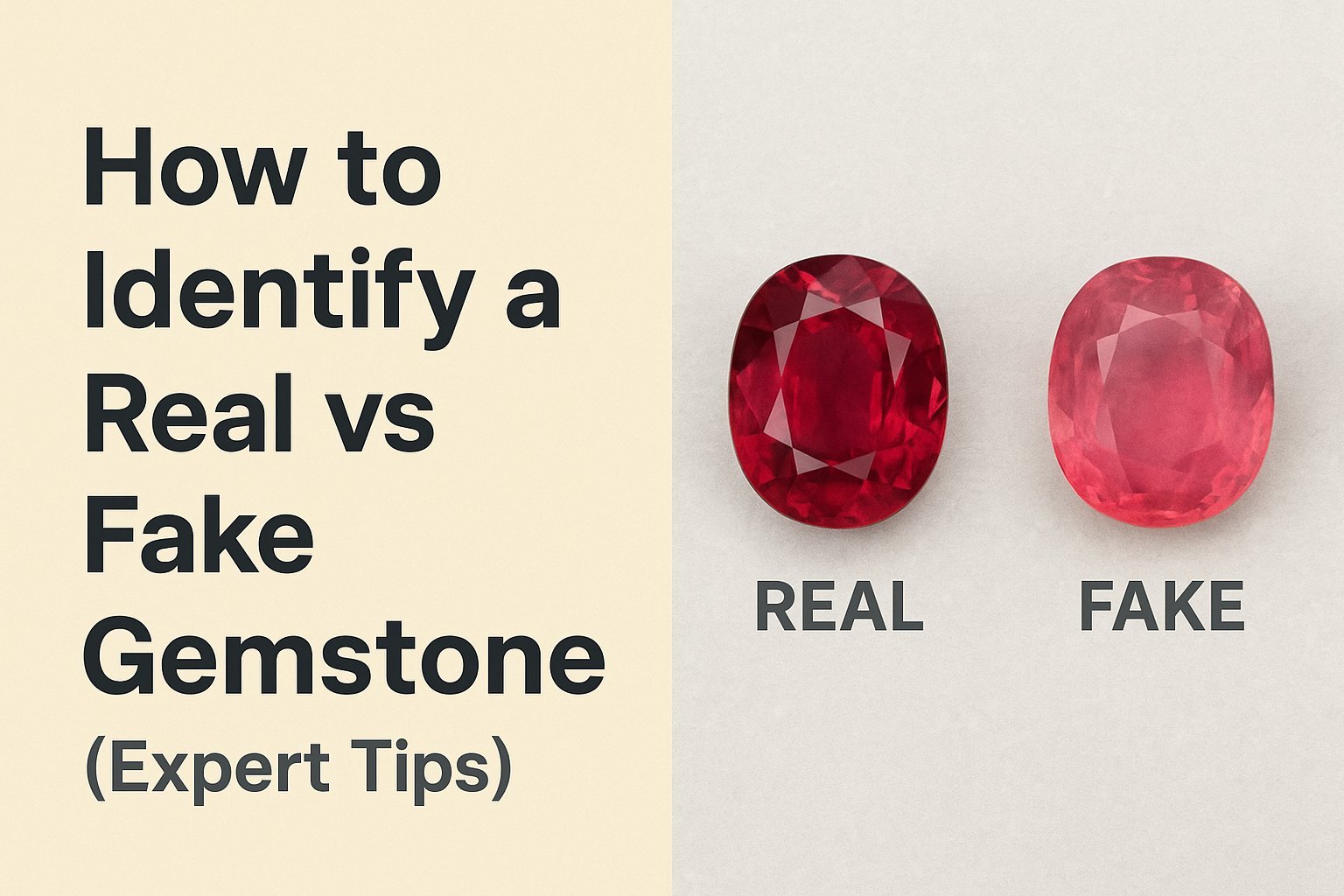
Before diving into identification methods, it’s crucial to understand the three main categories of gemstones you’ll encounter in the market. This knowledge forms the foundation of effective gemstone authentication.
Natural Gemstones: Earth’s Treasures
Natural gemstones form deep within the Earth over millions of years through geological processes involving heat, pressure, and specific mineral compositions. These stones are mined from the ground and possess unique characteristics that reflect their organic origin. Natural gems often contain inclusions, which are tiny imperfections that actually serve as proof of authenticity. Think of these inclusions as nature’s fingerprint, making each stone genuinely one-of-a-kind.
Synthetic Gemstones: Lab-Created Alternatives
Synthetic gemstones share the same chemical composition, crystal structure, and physical properties as their natural counterparts. However, they’re created in controlled laboratory environments within weeks or months rather than millennia. While technically “real” in terms of composition, synthetic stones lack the rarity and natural formation process that gives natural gems their value. Common synthetic gems include lab-created diamonds, rubies, sapphires, and emeralds.
Imitation Gemstones: Look-Alikes and Simulants
Imitation stones are materials designed to mimic the appearance of precious gems but have completely different chemical compositions. Glass, cubic zirconia, and plastic are common imitation materials. These simulants may look attractive at first glance, but they lack the durability, optical properties, and intrinsic value of genuine gemstones.
Quick Comparison: Natural vs Synthetic vs Imitation Gemstones
| Characteristic | Natural | Synthetic | Imitation |
| Chemical Composition | Natural minerals | Same as natural | Different materials |
| Formation Time | Millions of years | Weeks to months | Hours to days |
| Inclusions | Natural imperfections | Minimal or none | Bubbles, swirls |
| Value | Highest | Moderate | Lowest |
| Rarity | Rare | Unlimited supply | Abundant |
Visual Inspection Methods: What Your Eyes Can Tell You
The first step in gemstone verification involves careful visual examination. While not definitive on its own, visual inspection can reveal obvious signs of fake or treated stones and guide you toward more specific testing methods.
Examining Color Consistency and Saturation
Natural gemstones rarely display perfectly uniform color throughout. Look for subtle color zoning, which appears as slight variations in hue intensity across different areas of the stone. Genuine rubies, for example, often show silk-like inclusions that create a soft, velvety appearance. If a colored gemstone appears too perfect with absolutely uniform saturation, it may be synthetic or treated.
- Hold the stone under different light sources including natural daylight, incandescent, and fluorescent
- Rotate the gem slowly and observe how color changes at different angles
- Compare the stone’s color to reference images of authenticated specimens
- Be suspicious of colors that appear overly vivid or “too good to be true”
Inspecting for Natural Inclusions
Inclusions are internal characteristics within gemstones that form during the crystallization process. Natural gems almost always contain some form of inclusions, while synthetic stones tend to be remarkably clean. Using a 10x jeweler’s loupe or magnifying glass, examine the interior of the stone carefully.
Natural inclusions may appear as tiny crystals, needle-like structures, liquid-filled cavities, or wispy feathers. Synthetic stones might contain curved growth lines, gas bubbles, or an unusual absence of any inclusions whatsoever. Glass imitations typically show round air bubbles and swirl patterns that are distinctly different from natural formations.
Assessing Surface Characteristics
The surface quality of a gemstone provides valuable authentication clues. Examine the stone’s facets for sharpness and consistency. Natural gems cut by skilled craftsmen display crisp, well-defined facet edges. Cheap imitations often have slightly rounded or uneven facet junctions.
Check for surface scratches and wear patterns. Softer materials like glass scratch easily, while harder gemstones like diamonds, sapphires, and rubies resist everyday abrasion. If a stone claiming to be a diamond shows noticeable surface scratches, it’s almost certainly fake.
Physical Testing Methods: Hands-On Authentication Techniques
Beyond visual inspection, several physical tests can help determine gemstone authenticity. These methods assess measurable properties like hardness, thermal conductivity, and specific gravity.
The Fog Test for Diamonds
One of the simplest tests for diamond authentication involves thermal conductivity. Diamonds are exceptional heat conductors, meaning they dissipate heat almost instantly. Hold the suspected diamond close to your mouth and breathe on it, creating a light fog similar to fogging a mirror.
A genuine diamond will clear the fog almost immediately, typically within one to two seconds. Fake diamonds made from glass or cubic zirconia retain the fog for several seconds because they conduct heat much more slowly. While this test isn’t foolproof, it’s a quick preliminary check that can identify obvious fakes.
The Scratch Test: Understanding Hardness
The Mohs hardness scale rates minerals from 1 (softest) to 10 (hardest) based on scratch resistance. Diamonds rank at 10, sapphires and rubies at 9, topaz at 8, and quartz at 7. Understanding these values helps identify imitations made from softer materials.
Important caution: The scratch test can damage gemstones and should only be performed on inconspicuous areas or by professionals. Never scratch a valuable stone without understanding the risks involved.
Mohs Hardness Scale for Common Gemstones
| Gemstone | Mohs Hardness | Scratch Resistance |
| Diamond | 10 | Exceptional |
| Ruby & Sapphire | 9 | Excellent |
| Emerald | 7.5-8 | Very Good |
| Topaz | 8 | Very Good |
| Quartz/Amethyst | 7 | Good |
| Glass (Imitation) | 5-6 | Poor |
| Cubic Zirconia | 8-8.5 | Very Good |
The Water Test for Specific Gravity
Specific gravity measures how dense a gemstone is compared to water. Different gems have characteristic density ranges that can help confirm identity. For a basic test, fill a glass with water and gently drop the loose stone into it.
Most genuine gemstones sink quickly due to their high density. Glass imitations may sink more slowly or behave differently. However, this test has limitations and works best when comparing suspected fakes to verified authentic stones of the same type.
Temperature Sensitivity Test
Natural gemstones feel cool to the touch and take longer to warm up when held in your hand. Glass and plastic imitations tend to reach body temperature more quickly. While subtle, this temperature difference can provide another data point in your authentication assessment.
Pick up the suspected gemstone and hold it against your cheek or the inside of your wrist where skin is more sensitive. A genuine stone should feel noticeably cool for several seconds before warming. Fake materials typically feel closer to room temperature immediately.
Stone-Specific Identification Techniques
Different gemstone varieties require specific testing approaches. Here are targeted authentication methods for the most commonly counterfeited precious and semi-precious stones.
How to Identify Real Diamonds
Diamonds remain the most frequently faked gemstones due to their high value and symbolic importance. Beyond the fog test mentioned earlier, several additional methods help verify diamond authenticity.
The Newspaper Test: Place a loose diamond flat side down on printed text. Due to the way diamonds refract light, you should not be able to read the print through a genuine diamond. Cubic zirconia and glass allow text to remain partially visible.
The Sparkle Test: Genuine diamonds display a unique brilliance pattern. When light enters a diamond, it reflects internally and exits as white light (brilliance) and rainbow-colored flashes (fire). The combination creates a distinctive sparkle that simulants struggle to replicate exactly.
UV Light Response: Many natural diamonds fluoresce blue under ultraviolet light due to trace nitrogen content. About 30% of diamonds show this fluorescence. While not definitive, blue fluorescence in a claimed diamond supports authenticity.
Authenticating Rubies and Sapphires
Rubies and sapphires belong to the corundum family and share similar testing approaches. Natural specimens typically display silk-like rutile needle inclusions that create a soft, glowing appearance when properly lit.
- Look for natural color zoning with subtle variations in saturation
- Examine for rutile silk inclusions visible under magnification
- Check for curved growth lines that indicate synthetic origin
- Test hardness since genuine corundum should scratch topaz
- Be wary of stones with overly saturated, uniform color
Verifying Emerald Authenticity
Natural emeralds almost always contain visible inclusions, often called “jardin” (garden) due to their plant-like appearance. A completely flawless emerald is extremely rare and should raise immediate suspicion. Colombian emeralds may contain three-phase inclusions with solid, liquid, and gas components visible under magnification.
Synthetic emeralds and glass imitations lack these characteristic inclusions. Additionally, genuine emeralds typically show a subtle red flash when viewed through a Chelsea filter, a specialized tool used by gemologists.
Testing Pearls: Natural vs Cultured vs Fake
Pearls present unique authentication challenges since both natural and cultured pearls are considered genuine, while imitation pearls are worthless. The classic tooth test involves gently rubbing a pearl against the edge of your front teeth. Genuine pearls feel slightly gritty due to their layered nacre structure, while fake pearls feel smooth like glass or plastic.
Additional pearl tests include examining the drill holes for layered nacre structure and checking surface temperature since real pearls feel cool initially. Imitation pearls often show uniform color and lack the subtle overtones present in genuine specimens.
Professional Testing Equipment and Methods
While at-home tests provide valuable preliminary information, definitive gemstone authentication often requires professional equipment. Understanding these tools helps you know when to seek expert evaluation.
Refractometer Testing
A refractometer measures how much light bends when passing through a gemstone. Each gem type has a characteristic refractive index range. For example, diamonds have a refractive index of approximately 2.42, while cubic zirconia measures around 2.15 to 2.18. This difference makes refractometer testing highly effective for diamond verification.
Spectroscope Analysis
Spectroscopes analyze the light absorption patterns of gemstones. Different minerals absorb specific wavelengths of light, creating unique spectral signatures. Natural rubies, for example, display a distinctive absorption pattern in the red portion of the spectrum that synthetic rubies may not perfectly replicate.
Thermal Diamond Testers
Electronic diamond testers measure thermal conductivity to distinguish diamonds from simulants. These affordable devices provide quick results but cannot differentiate between natural diamonds, lab-created diamonds, and moissanite, which also conducts heat exceptionally well. More advanced testers measure electrical conductivity to separate diamonds from moissanite.
Microscope Examination
Gemological microscopes with magnification up to 60x or higher reveal internal features invisible to the naked eye. Professional gemologists use microscopes to identify growth patterns, inclusion types, treatment evidence, and other diagnostic characteristics. This detailed examination often provides the conclusive evidence needed for definitive authentication.
Gemstone Certification: Your Ultimate Protection
While personal testing skills are valuable, professional certification remains the gold standard for gemstone authentication. Reputable laboratories provide independent verification that protects both buyers and sellers.
Understanding Gemological Certificates
A gemstone certificate documents the physical characteristics, origin determination, and treatment status of a stone as assessed by qualified gemologists. Certificates from respected laboratories carry significant weight in the jewelry industry and provide peace of mind for buyers investing in valuable gems.
Key information included on reputable certificates includes carat weight, measurements, color grade, clarity assessment, cut quality, origin determination when possible, any detected treatments, and the laboratory’s unique identification number.
Trusted Gemological Laboratories
Several internationally recognized laboratories maintain strict standards for gemstone certification. These organizations employ experienced gemologists using state-of-the-art equipment to ensure accurate assessments.
- GIA (Gemological Institute of America): The most widely recognized authority, particularly for diamond grading
- AGS (American Gem Society): Known for rigorous cut grading standards
- IGI (International Gemological Institute): Global presence with consistent grading practices
- Gübelin: Respected for colored gemstone analysis and origin determination
- SSEF (Swiss Gemmological Institute): Specializes in high-value colored stones
Warning Signs: Red Flags When Buying Gemstones
Protecting yourself from gemstone fraud requires awareness of common deceptive practices. These warning signs should prompt additional scrutiny before making a purchase.
Price Too Good to Be True
Quality gemstones command premium prices based on rarity, quality, and market demand. A “genuine” ruby offered at a fraction of typical market value almost certainly isn’t genuine. Research current market prices for the specific stone type and quality level before buying.
Vague or Missing Documentation
Reputable dealers provide detailed information about their gemstones including origin, treatments, and grading characteristics. Sellers who avoid specifics or claim documentation isn’t necessary may be hiding problematic details. Always request certificates for significant purchases.
Pressure Sales Tactics
High-pressure sales techniques designed to rush your decision often accompany fraudulent gemstone sales. Legitimate dealers understand that buyers need time to verify authenticity and make informed decisions. Walk away from anyone pushing you to buy immediately without allowing inspection or independent verification.
Unrealistic Perfection
Natural gemstones form under variable geological conditions that produce unique characteristics including slight color variations and inclusions. Stones that appear absolutely flawless with perfectly uniform color may be synthetic or enhanced beyond natural appearance. Remember that some imperfection actually indicates authenticity.
Protecting Your Gemstone Investment: Best Practices
Once you’ve acquired authentic gemstones, protecting your investment requires ongoing attention. These practices help maintain value and provide proof of authenticity for future transactions.
Document Everything
Maintain comprehensive records for each valuable gemstone including purchase receipts, certification documents, appraisal reports, and high-quality photographs. Store copies in multiple secure locations including digital backups. This documentation proves ownership, supports insurance claims, and facilitates future sales.
Get Independent Appraisals
Have valuable gemstones independently appraised by qualified professionals separate from the seller. Regular reappraisals every few years ensure insurance coverage keeps pace with market value changes. Choose appraisers with recognized credentials and no conflict of interest.
Proper Storage and Care
Store gemstones separately to prevent harder stones from scratching softer ones. Keep gems away from extreme temperature changes, harsh chemicals, and prolonged direct sunlight. Clean stones gently using appropriate methods for each gem type. Professional cleaning and inspection annually helps identify issues before they cause damage.
Conclusion: Becoming a Confident Gemstone Buyer
Learning to identify real vs fake gemstones empowers you to make informed purchasing decisions and avoid costly mistakes. While professional certification remains the ultimate authentication standard, the techniques covered in this guide provide valuable preliminary screening tools.
Remember these key takeaways as you evaluate gemstones:
- Visual inspection reveals obvious fakes through color uniformity, suspicious inclusions, and surface quality
- Physical tests like the fog test, temperature test, and hardness assessment provide additional data points
- Stone-specific techniques target the unique characteristics of diamonds, rubies, emeralds, and other popular gems
- Professional equipment offers definitive results for conclusive authentication
- Certification from reputable laboratories provides the ultimate protection for valuable purchases
Whether you’re shopping for an engagement ring, building a collection, or evaluating inherited jewelry, these skills serve you well throughout your gemstone journey. When in doubt, always consult a certified gemologist for expert verification before making significant investments.
Ready to put your new knowledge to the test? Start by examining gemstones in your current collection using the visual and physical techniques described above. With practice, you’ll develop an eye for authenticity that protects your investments and enhances your appreciation of these remarkable natural treasures.
Frequently Asked Questions About Gemstone Authentication
Can I use a UV flashlight to test gemstones at home?
Yes, a UV flashlight can provide useful information, though results vary by stone type. Many natural diamonds fluoresce blue under UV light, while some synthetic stones may show different fluorescence patterns or none at all. However, fluorescence alone isn’t definitive since about 70% of natural diamonds don’t fluoresce. Use UV testing as one data point among multiple authentication methods rather than relying on it exclusively.
Are lab-created gemstones considered fake or real?
Lab-created gemstones occupy a unique category since they share identical chemical composition and physical properties with natural stones. They’re technically “real” in terms of their material makeup but lack the geological origin and rarity that give natural gems their premium value. Ethical sellers always disclose lab-created origin. The distinction matters most for investment purposes and collector value rather than aesthetic enjoyment or durability.
How much does professional gemstone certification typically cost?
Certification costs vary based on the laboratory, stone type, and services requested. Basic diamond grading from GIA typically ranges from $50 to $150 for standard turnaround. Colored gemstone reports may cost $75 to $300 depending on complexity. Origin determination reports for fine colored stones can exceed $500. Consider certification costs as insurance for significant purchases since the expense is minimal compared to potential losses from buying fakes.
Do treated gemstones have any value, or should I always avoid them?
Treated gemstones can offer excellent value when disclosed properly and priced appropriately. Heat treatment of rubies and sapphires is widely accepted and enhances natural beauty. Other treatments like fracture filling or surface coating require more caution since they may affect durability. The key is full disclosure, meaning you should know exactly what treatments a stone has received before purchasing. Undisclosed treatment is deceptive, but properly disclosed treatment at fair prices provides affordable alternatives to untreated specimens.
What should I do if I discover a gemstone I purchased is fake?
If you discover a gemstone misrepresentation, document everything immediately including the original sale receipt, any certificates provided, and your independent verification results. Contact the seller to request a refund or exchange. For significant purchases, consult with a consumer protection attorney about your options. File complaints with relevant consumer protection agencies and leave honest reviews to warn other buyers. Credit card purchases may offer additional protection through chargeback rights if the seller refuses resolution.