
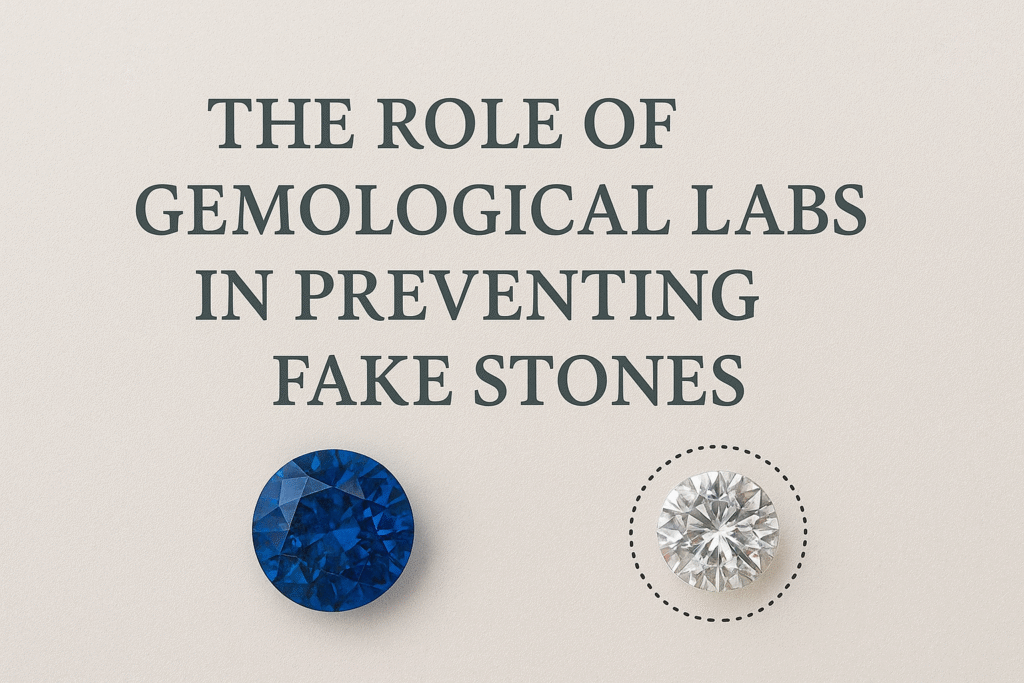
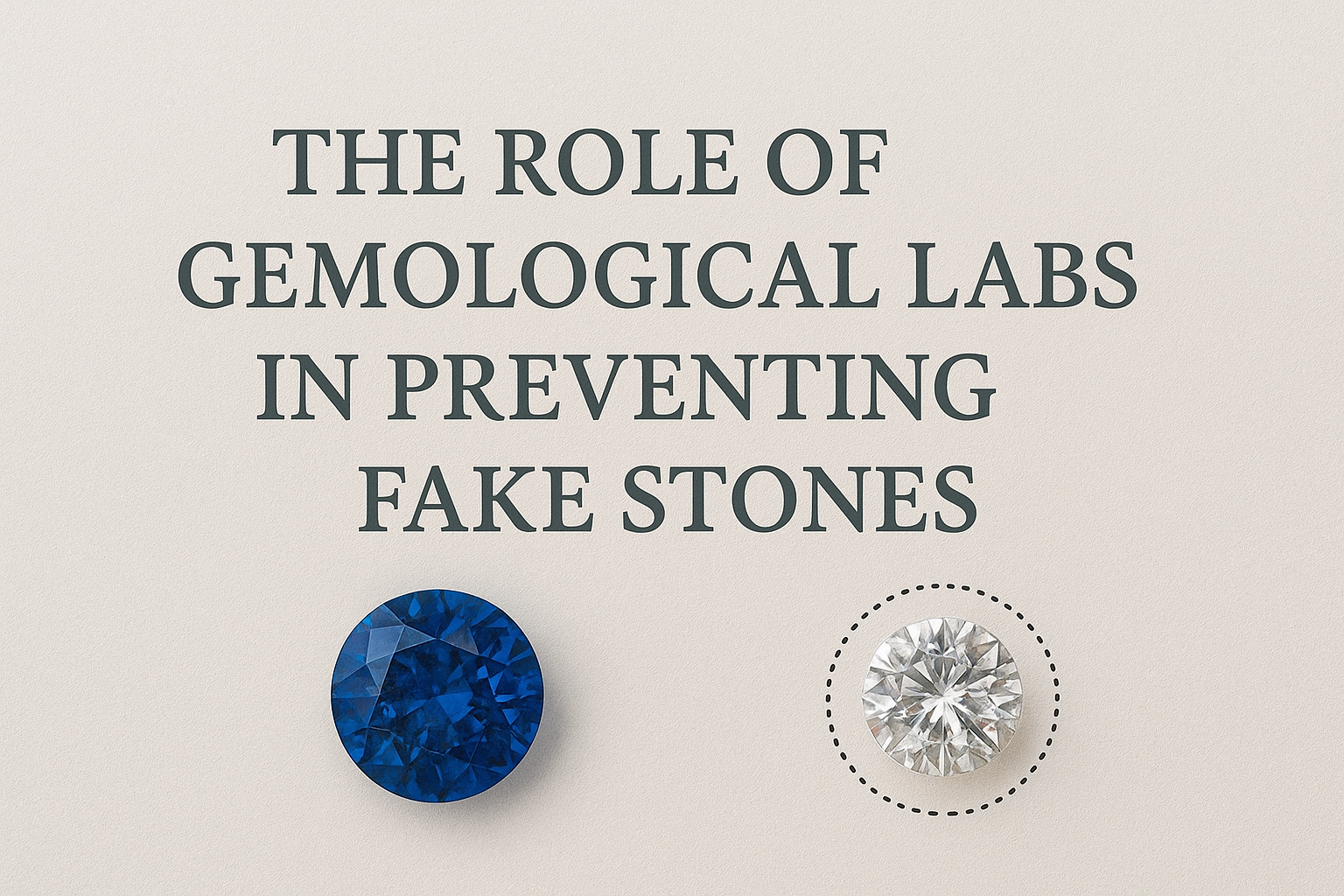
Gemological Labs in Preventing Fake Stones: Have you ever wondered if that sparkling diamond or vivid ruby you’re eyeing is genuinely natural or an elaborate fake? You’re not alone. The global gemstone market, valued at billions of dollars annually, faces an increasing threat from sophisticated counterfeits, synthetic stones misrepresented as natural, and fraudulent certification schemes.
This is where gemological laboratories become the unsung heroes of the jewelry industry. These specialized institutions serve as the gatekeepers of authenticity, employing cutting-edge technology and expert analysis to separate genuine treasures from clever imitations. From photoluminescence spectroscopy to advanced microscopy, gemological labs use scientific methods that can detect fraud invisible to the naked eye.
In this comprehensive guide, we’ll explore exactly how these laboratories protect consumers and maintain trust in the gemstone market. Whether you’re purchasing an engagement ring, investing in colored stones, or simply curious about gemstone science, understanding the role of gemological labs will empower you to make informed decisions and avoid costly mistakes.
What Are Gemological Laboratories and Why Do They Matter?
Gemological laboratories are specialized scientific facilities dedicated to analyzing, grading, and certifying gemstones and diamonds. These institutions combine advanced technology with expert human assessment to provide accurate, unbiased evaluations of precious stones.
The importance of these labs cannot be overstated. In a market where a natural diamond can cost thousands of dollars more than an identical-looking synthetic, the difference between authentic and fake stones has enormous financial implications. Gemological labs provide the independent verification that consumers, retailers, and insurers need to conduct business with confidence.
The Mission of Independent Gemological Labs
Independent gemological laboratories operate with a clear mission: to protect buyers and sellers by establishing and maintaining standards for evaluating gemstone quality. The Gemological Institute of America (GIA), founded in 1931, pioneered this approach and developed the now-universal “Four Cs” grading system for diamonds.
Key functions of gemological laboratories include:
- Authenticating natural versus synthetic or simulant origin
- Detecting treatments and enhancements applied to stones
- Grading quality characteristics such as color, clarity, cut, and carat weight
- Issuing certification reports that document findings
- Providing education and research to advance gemological science
Leading Gemological Certification Organizations Worldwide
Several prestigious laboratories have established themselves as global authorities in gemstone authentication. Understanding these institutions helps consumers recognize trustworthy certification.
| Laboratory | Founded | Primary Specialization |
| GIA (Gemological Institute of America) | 1931 | Diamonds, colored stones, research |
| IGI (International Gemological Institute) | 1975 | Lab-grown diamonds, jewelry grading |
| HRD Antwerp | 1973 | European diamond certification |
| Gübelin Gem Lab | 1923 | Colored gemstone origin determination |
| SSEF (Swiss Gemmological Institute) | 1974 | High-value colored stones, pearls |
The Growing Threat of Fake and Synthetic Gemstones
The gemstone industry faces unprecedented challenges from increasingly sophisticated counterfeits and misrepresentation schemes. Understanding these threats helps appreciate why gemological laboratories have become essential.
Common Types of Gemstone Fraud and Misrepresentation
Gemstone fraud takes many forms, from simple glass imitations to complex schemes involving fraudulent certifications. The most concerning development is the submission of synthetic diamonds with forged natural diamond inscriptions and certificates.
Synthetic Stones Sold as Natural
Laboratory-grown diamonds and synthetic gemstones are legitimate products when properly disclosed. The problem arises when unscrupulous sellers attempt to pass them off as natural stones. In recent years, major gemological labs have intercepted numerous cases of CVD (Chemical Vapor Deposition) and HPHT (High Pressure High Temperature) diamonds bearing fraudulent inscriptions matching natural diamond certificates.
Simulants and Imitation Stones
Simulants are materials that visually resemble gemstones but have entirely different chemical compositions. Cubic zirconia, moissanite, and synthetic spinel are commonly used to imitate diamonds. Glass, plastic, and various composites may substitute for colored gemstones. While these materials have legitimate uses, selling them as natural gems constitutes fraud.
Undisclosed Treatments and Enhancements
Many gemstones undergo treatments to improve their appearance. Heat treatment can enhance color in sapphires and rubies. Fracture filling improves the clarity of emeralds and diamonds. Oil and resin treatments mask surface-reaching inclusions. While treatments are often industry-standard practice, failure to disclose them constitutes misrepresentation and can significantly affect a stone’s value.
Counterfeit Certificates and Fraudulent Inscriptions
Perhaps the most alarming trend involves sophisticated certificate fraud. Criminals create fake grading reports from reputable labs or laser-inscribe fraudulent report numbers onto synthetic stones. The IGI uncovered a case involving a 6-carat lab-grown diamond inscribed with a GIA report number for a natural stone of matching description. Such schemes exploit consumer trust in laboratory certification.
Advanced Technologies Used to Detect Fake Stones
Gemological laboratories employ an impressive array of scientific instruments and techniques to identify gemstones and detect fraud. These technologies can reveal information invisible to even the most trained human eye.
Spectroscopic Analysis Methods
Spectroscopy forms the backbone of modern gemstone identification. By analyzing how stones interact with different types of light and radiation, laboratories can determine composition, detect treatments, and distinguish natural from synthetic origin.
Photoluminescence (PL) Spectroscopy
Photoluminescence spectroscopy measures the fluorescence emitted when a gemstone is stimulated by lasers of various wavelengths. This technique is particularly valuable for separating natural from lab-grown diamonds. CVD-grown diamonds typically show a distinctive doublet at 737 nanometers due to Silicon Vacancy defects, while HPHT diamonds display characteristic Nickel-related features. Natural diamonds exhibit different defect signatures that develop over geological timescales.
Fourier-Transform Infrared (FTIR) Spectroscopy
FTIR spectroscopy analyzes how gemstones absorb infrared light, revealing information about their internal structure and impurities. This technique helps identify nitrogen aggregation states in diamonds, detect polymer treatments in emeralds, and recognize heat treatment in sapphires and rubies. The absorption patterns serve as molecular fingerprints unique to each stone’s history.
Raman Spectroscopy
Raman spectroscopy identifies gemstones by their characteristic vibrational signatures. When laser light interacts with a crystal lattice, it produces a unique spectrum that can positively identify the material. This technique is especially useful for colored stone identification and can distinguish between natural gemstones and their synthetic counterparts by detecting subtle differences in crystal structure.
Advanced Microscopy and Imaging
Visual examination remains fundamental to gemology, but modern laboratories employ sophisticated imaging technologies that reveal details far beyond what traditional microscopes can show.
DiamondView Imaging
The DiamondView instrument uses ultraviolet light below 225 nanometers to excite luminescence in diamonds. The resulting fluorescence patterns reveal growth structures that clearly distinguish natural diamond formation from CVD or HPHT laboratory growth. Natural diamonds show distinctive “tatami” or cuboctahedral patterns, while synthetic stones display layered or sectoral growth characteristic of their manufacturing process.
Inclusion Analysis and Clarity Mapping
Gemological microscopes equipped with various lighting techniques allow gemologists to examine internal characteristics called inclusions. These “fingerprints” provide crucial information about a stone’s origin and history. Natural gemstones contain mineral inclusions, fluid inclusions, and growth features that develop over millions of years. Synthetic stones typically show metallic inclusions, curved growth lines, or unnatural clarity that signals laboratory creation.
Chemical Composition Analysis
Energy-Dispersive X-Ray Fluorescence (EDXRF)
EDXRF spectroscopy determines elemental composition by analyzing the X-ray fluorescence emitted when samples are irradiated. This non-destructive technique identifies trace elements that distinguish natural gemstones from synthetics and can even determine geographic origin for some colored stones. Different geological environments leave distinct chemical fingerprints in the gems they produce.
Laser Ablation Inductively Coupled Plasma Mass Spectrometry (LA-ICP-MS)
For detailed trace element analysis, laboratories use LA-ICP-MS, which vaporizes microscopic samples for mass spectrometric analysis. This technique provides precise measurements of elements present in parts per million or even parts per billion concentrations. Such sensitivity enables origin determination for colored stones and detection of sophisticated treatments that might escape other methods.
Diamond Screening: Separating Natural from Lab-Grown
The rapid growth of the lab-grown diamond market has made reliable screening more critical than ever. Gemological laboratories have developed specialized instruments and protocols to address this challenge efficiently.
Professional Diamond Screening Devices
Several sophisticated instruments help gemologists quickly screen diamonds for potential synthetic origin. The GIA iD100 uses fluorescence spectroscopy to identify natural diamonds, lab-grown stones, and simulants in under two seconds. De Beers’ automated melee screening instruments can process thousands of small diamonds per hour, identifying stones that require further testing.
These screening devices typically operate by detecting Type IIa diamonds, which lack nitrogen impurities and represent only about 2% of natural diamonds but describe most lab-grown stones. Stones flagged by screening instruments undergo additional testing using spectroscopic methods to confirm their origin.
Key Differences Between Natural and Synthetic Diamonds
| Natural Diamonds | Lab-Grown Diamonds |
| Form over 1-3 billion years | Created in weeks to months |
| Contain natural mineral inclusions | May contain metallic flux inclusions |
| Nitrogen aggregated over geological time | Often Type IIa (nitrogen-free) |
| Distinctive natural growth patterns | Layered (CVD) or sectoral (HPHT) growth |
| N3 fluorescence at 415nm common | SiV or NV defects in CVD stones |
The Gemstone Certification Process Explained
Understanding how gemological laboratories evaluate and certify stones helps consumers appreciate the value of proper documentation and recognize quality certification.
The Diamond Grading Process
When a diamond enters a gemological laboratory, it undergoes a systematic evaluation process. First, screening instruments verify that the stone is natural diamond rather than a synthetic or simulant. The diamond is then measured precisely and weighed to determine carat weight.
Color grading compares the diamond to master stones under controlled lighting conditions. Multiple gemologists independently assess the stone to ensure accuracy. Clarity grading involves examining the diamond under 10x magnification to identify and map internal and external characteristics.
Cut grading evaluates proportions, symmetry, and polish using precise measurements and standardized criteria. The laboratory assigns grades for each of the Four Cs and documents all findings in a grading report that serves as the diamond’s permanent record.
Colored Gemstone Certification
Colored stone evaluation requires different expertise than diamond grading. Laboratories identify the gemstone species and variety, determine whether the stone is natural or synthetic, and detect any treatments present. For high-value stones, origin determination provides additional information valued by collectors and investors.
Color assessment for colored stones considers hue, saturation, and tone. Unlike diamonds, colored stone grading lacks universal standardization, making the reputation and expertise of the grading laboratory particularly important. Leading labs like Gübelin and SSEF specialize in detailed colored stone analysis and origin reports.
Verifying Gemological Reports
Every legitimate gemological report includes security features and verification mechanisms. Major laboratories maintain online databases where consumers can check report numbers and view digital copies of certificates. Physical reports include security printing, holograms, and microprint lines that make counterfeiting difficult.
When purchasing a certified gemstone, always verify the report through the issuing laboratory’s website. Compare the stone’s characteristics with those documented in the report. If purchasing a diamond with a laser inscription, use a loupe or microscope to confirm the inscription matches the report number.
How Gemological Labs Protect Consumers
The consumer protection role of gemological laboratories extends beyond individual stone certification. These institutions actively combat fraud and educate the public about gemstone authenticity.
Active Fraud Prevention Measures
When laboratories detect fraudulent stones, they alert the industry through trade publications and professional networks. The GIA and IGI regularly publish warnings about new fraud schemes and counterfeit inscriptions. This rapid information sharing helps prevent the same fraudulent stones from being sold to unsuspecting buyers.
Some laboratories offer same-day verification services at their facilities. The GIA’s New York lab, for example, provides complimentary testing for stones bearing GIA inscriptions. Such services give dealers a way to quickly verify authenticity when suspicious stones appear in the market.
Establishing and Maintaining Industry Standards
Gemological laboratories contribute to consumer protection by establishing consistent grading standards. The GIA’s International Diamond Grading System, introduced in 1953, created a common language for describing diamond quality. This standardization enables meaningful comparison shopping and provides a foundation for pricing.
Industry organizations work together to address emerging challenges. The disclosure of lab-grown diamonds, treatment standards for colored stones, and ethical sourcing verification all benefit from collaborative standard-setting among laboratories, trade associations, and regulatory bodies.
How to Choose a Reputable Gemological Laboratory
Not all gemological laboratories maintain equal standards. Understanding what distinguishes reputable labs from questionable ones helps consumers make informed choices about certification.
Red Flags: Identifying Unreliable Certification
Be cautious of laboratories with names similar to established institutions, as this naming strategy often attempts to confuse consumers. Labs that consistently grade stones higher than their actual quality inflate values artificially. Certificates without verification systems, security features, or traceable documentation provide no real protection.
Some sellers provide “in-house” certificates that represent nothing more than their own claims about a stone. These documents carry no independent verification value. Legitimate certification requires assessment by a laboratory with no financial interest in the transaction.
Characteristics of Trustworthy Laboratories
Reputable gemological laboratories share several important characteristics:
- Independence from gemstone trading operations
- Transparent grading methodologies and standards
- Online report verification systems
- Advanced testing equipment and trained gemologists
- Recognition by major jewelry trade organizations
- History of research and education contributions
The Future of Gemological Testing and Authentication
As technology advances, both gemstone production and detection methods continue to evolve. Understanding emerging trends helps consumers anticipate how certification practices may change.
Emerging Detection Technologies
Laboratories continuously develop new testing methods to stay ahead of sophisticated fraud. Machine learning algorithms now assist with pattern recognition in spectroscopic data. Blockchain technology offers potential for creating immutable records of gemstone provenance. Advanced imaging techniques provide increasingly detailed analysis of growth structures and treatment signatures.
Growing Challenges in Authentication
Lab-grown diamond technology continues to improve, producing stones that more closely resemble natural diamonds. Post-growth treatments can modify the characteristics of synthetic stones, potentially complicating detection. Hybrid stones combining natural and lab-grown material present new identification challenges. Laboratories must constantly innovate to maintain their ability to distinguish authentic from artificial.
Conclusion: The Indispensable Role of Gemological Labs
Gemological laboratories stand as essential guardians of authenticity in the gemstone market. Through sophisticated technology, expert analysis, and rigorous certification processes, these institutions protect consumers from fraud and provide the confidence necessary for fair transactions.
Whether you’re purchasing a diamond engagement ring, investing in colored gemstones, or simply curious about the science behind gem authentication, understanding the role of gemological labs empowers you to make informed decisions. Always insist on certification from reputable laboratories, verify reports through official channels, and remember that the small investment in proper certification provides invaluable protection for your gemstone purchases.
Ready to purchase a certified gemstone? Start by researching established gemological laboratories and looking for sellers who provide verifiable certification from recognized institutions. Your confidence in knowing your gemstone is authentic begins with proper laboratory certification.
Frequently Asked Questions (FAQs)
How much does gemological certification typically cost?
Certification costs vary by laboratory and stone size. For diamonds, basic grading reports typically range from $50 to $150 for stones under 2 carats. Larger diamonds and comprehensive colored stone reports with origin determination can cost several hundred dollars. The IGI generally charges about 12% less than GIA for comparable services. Consider certification as an investment that protects your purchase and supports resale value.
Can synthetic diamonds ever be mistaken for natural by gemological labs?
Reputable gemological laboratories using modern equipment can reliably distinguish natural from lab-grown diamonds. Techniques like photoluminescence spectroscopy and DiamondView imaging reveal growth characteristics that definitively identify origin. However, fraudsters occasionally submit synthetics inscribed with natural diamond report numbers. This is why verification through the issuing laboratory’s database is essential, as it ensures the physical stone matches its documented characteristics.
How long does the gemstone certification process take?
Standard diamond grading typically takes three to four weeks at major laboratories. Rush services are available for additional fees and can reduce turnaround to days. Lab-grown diamond certification often processes faster, within one to two weeks. Colored stone certification with origin determination may take longer due to the additional testing required. Processing times vary by season and laboratory workload.
Are online gemstone certificates reliable?
Digital certificates from reputable laboratories are equally valid as paper reports. Major labs maintain secure online databases where you can verify reports and view digital copies. However, be cautious of PDF certificates that cannot be verified through the issuing laboratory’s official website. Fraudsters can easily create fake digital documents. Always cross-reference any certificate through the laboratory’s verification system before accepting it as authentic.
What should I do if I suspect my gemstone is fake?
If you have concerns about a gemstone’s authenticity, submit it to a reputable gemological laboratory for independent evaluation. Document the stone’s current condition with photographs before sending it. If the stone came with certification, verify the report through the issuing laboratory’s database. If you purchased from a seller who misrepresented the stone, document all communications and consider consulting with consumer protection authorities.
Do gemological labs test jewelry with mounted stones?
Yes, many laboratories offer testing for mounted stones and finished jewelry. However, some tests cannot be performed without removing the stone from its setting. Mounted stone analysis may have limitations, and laboratories typically note these restrictions in their reports. For comprehensive certification, especially for high-value stones, unmounting is often recommended. The IGI pioneered jewelry grading reports that assess mounted pieces while acknowledging testing limitations.