
Your gemstone collection represents more than just monetary value—it holds memories, sentimental meaning, and perhaps generations of family history. Whether you own a single cherished diamond ring or an extensive collection of precious and semi-precious stones, knowing how to store and protect gemstones from damage is essential for preserving their beauty and value for years to come.
The unfortunate truth? Many gemstone owners unknowingly damage their precious pieces through improper storage, careless handling, or exposure to harmful substances. Scratches, chips, discoloration, and structural damage can occur silently, diminishing both the aesthetic appeal and resale value of your treasured stones.
In this comprehensive guide, you’ll learn professional-grade techniques for gemstone storage, proven methods to prevent damage, and expert tips that jewelers use to keep precious stones in pristine condition. By the end of this article, you’ll have all the knowledge needed to create the perfect storage environment and protection plan for your gemstone collection.
Understanding Gemstone Vulnerability: Why Protection Matters
Before diving into storage solutions, it’s crucial to understand what makes gemstones vulnerable to damage. Different gems have different hardness levels, measured on the Mohs Hardness Scale, which directly affects how easily they can be scratched or damaged.
Gemstone Hardness and Care Requirements
| Gemstone | Mohs Hardness | Vulnerability | Care Level |
| Diamond | 10 | Scratch-resistant | Low |
| Ruby/Sapphire | 9 | Very durable | Low |
| Emerald | 7.5-8 | Prone to chipping | Moderate |
| Amethyst/Citrine | 7 | Moderate scratch risk | Moderate |
| Opal | 5.5-6.5 | Highly sensitive | High |
| Pearl | 2.5-4.5 | Very delicate | Very High |
Common Causes of Gemstone Damage
Understanding what damages gemstones helps you prevent costly mistakes. Here are the primary threats to your precious stones:
- Physical impact and scratching: Harder stones can scratch softer ones when stored together
- Chemical exposure: Perfumes, lotions, cleaning products, and chlorine can damage many gems
- Temperature extremes: Rapid temperature changes can cause thermal shock and cracking
- UV light exposure: Prolonged sunlight can fade certain gemstones like amethyst and kunzite
- Humidity fluctuations: Opals and pearls are particularly sensitive to moisture changes
Best Practices for Storing Your Gemstones Safely
Proper gemstone storage is the foundation of protection. The right storage solution keeps your precious stones safe from physical damage, environmental factors, and everyday wear.
Choosing the Right Jewelry Storage Solutions
Not all jewelry boxes are created equal. When selecting storage for your gemstones, consider these essential features:
Individual Compartments and Soft Linings
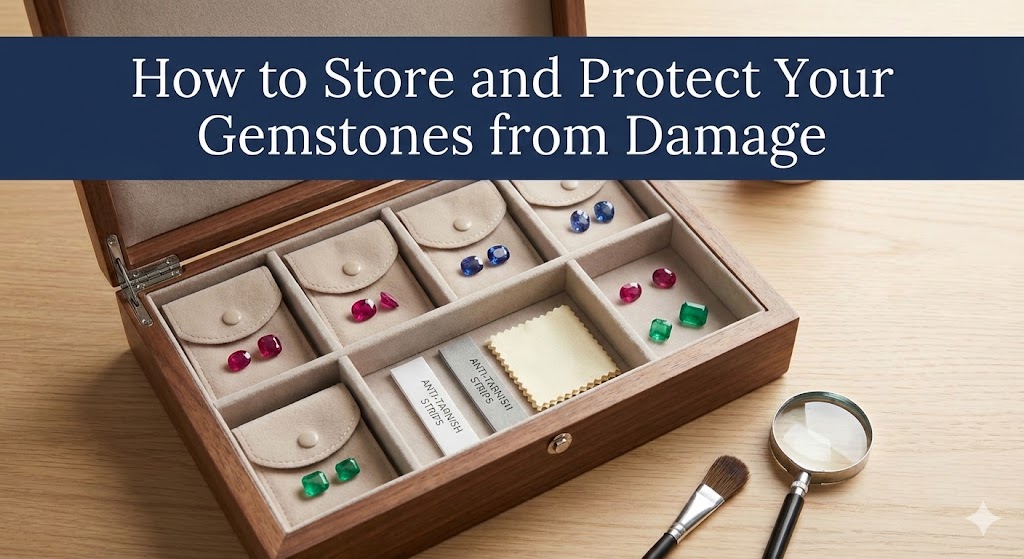
The golden rule of gemstone storage is simple: never let stones touch each other. Invest in a jewelry box with individual compartments lined with soft fabric such as velvet, silk, or microfiber. These materials cushion your gems and prevent scratching.
Pro Tip: For valuable pieces, consider individual fabric pouches even within compartmentalized boxes for double protection.
Climate-Controlled Storage Options
For collections that include moisture-sensitive stones like opals, pearls, or turquoise, maintaining stable humidity is critical. Consider these options:
- Silica gel packets: Place these in your jewelry box to absorb excess moisture
- Humidity monitors: Small hygrometers help you track storage conditions
- Climate-controlled safes: For high-value collections, these offer optimal protection
Separating Gemstones by Hardness
One of the most important principles of gemstone care is storing stones separately based on their hardness. A diamond, being the hardest natural substance, can easily scratch sapphires, emeralds, and softer stones if stored in the same compartment.
Follow this simple rule: always store gems with a Mohs hardness difference of 2 or more in separate compartments. This prevents harder stones from damaging softer ones during storage or retrieval.
Light and Temperature Considerations
Where you place your jewelry storage matters significantly. Keep these environmental factors in mind:
- Store jewelry boxes away from direct sunlight to prevent fading
- Avoid placing storage near heat sources like radiators or heating vents
- Keep gemstones away from air conditioning units that create temperature fluctuations
- Choose a location with consistent room temperature, ideally between 65-75°F (18-24°C)
Safe Cleaning Methods for Different Gemstones
Regular cleaning keeps your gemstones sparkling, but using the wrong cleaning method can cause irreversible damage. Different stones require different approaches to safe gemstone cleaning.
The Universal Gentle Cleaning Method
For most gemstones, this gentle approach works safely:
- Mix lukewarm water with a few drops of mild dish soap
- Soak the gemstone for 15-20 minutes
- Gently brush with a soft-bristled toothbrush
- Rinse thoroughly with clean lukewarm water
- Pat dry with a lint-free microfiber cloth
Stone-Specific Cleaning Guidelines
| Gemstone Type | Safe Methods | Methods to Avoid |
| Diamonds | Soap and water, ultrasonic, steam | None (very durable) |
| Emeralds | Mild soap, soft cloth only | Ultrasonic, steam, harsh chemicals |
| Pearls | Damp cloth, air dry | Soaking, any chemicals, ultrasonic |
| Opals | Soft dry cloth only | Water, ultrasonic, steam, chemicals |
| Turquoise | Soft dry cloth, very light damp cloth | Soaking, chemicals, ultrasonic |
When to Seek Professional Cleaning
While regular at-home cleaning maintains your gemstones, professional cleaning offers deeper care. Consider professional cleaning in these situations:
- Before special occasions like weddings or important events
- When you notice persistent dullness despite regular cleaning
- For annual maintenance of high-value pieces
- When settings feel loose or prongs appear worn
Protecting Gemstones During Travel
Traveling with gemstones presents unique challenges. Temperature changes, physical jostling, and security concerns all require special attention to ensure your jewelry travels safely.
Essential Travel Storage Accessories
- Hard-shell travel jewelry cases: Protect against crushing and impact
- Individual soft pouches: Prevent pieces from touching during transit
- Anti-tarnish strips: Essential for silver settings during longer trips
- Carry-on storage: Always keep valuable jewelry in your carry-on luggage, never checked bags
Travel Insurance Considerations
Before traveling with valuable gemstones, verify your insurance coverage. Many homeowner’s policies have limits on jewelry coverage away from home. Consider:
- Obtaining a jewelry floater or rider on your existing policy
- Purchasing specific travel insurance for high-value items
- Keeping appraisals and photographs accessible while traveling
Daily Habits to Prevent Gemstone Damage
The best protection comes from consistent daily practices. Incorporating these habits into your routine will significantly extend the life and beauty of your gemstones.
The “Last On, First Off” Rule
Professional jewelers universally recommend this simple principle: put your jewelry on last when getting ready, and take it off first when you return home. This protects your gems from:
- Perfume and hairspray chemicals
- Lotion and makeup residue
- Sunscreen that can dull stone surfaces
- Accidental drops while handling other items
Activities That Require Jewelry Removal
To prevent damage, always remove your gemstone jewelry before:
- Swimming: Chlorine and salt water damage many gemstones and metals
- Exercising: Sweat contains acids that can affect certain stones and settings
- Cleaning: Household chemicals are highly damaging to most gemstones
- Gardening: Soil, fertilizers, and physical activity risk damage
- Sleeping: Pressure and friction during sleep can loosen settings
Regular Inspection Routine
Make it a habit to inspect your gemstone jewelry monthly. Check for:
- Loose stones that move or rattle
- Worn or bent prongs
- Scratches or chips on stone surfaces
- Discoloration or cloudiness
Long-Term Gemstone Preservation Techniques
For collectors and those with heirloom pieces, long-term preservation requires additional considerations beyond daily care.
Professional Appraisals and Documentation
Maintaining proper documentation protects your investment and aids in insurance claims. Professional appraisals should be updated every 3-5 years and include:
- Detailed photographs from multiple angles
- Current market value assessment
- Gemological certifications when available
- Detailed description of stone characteristics
Safe Deposit and Home Safe Options
For valuable pieces not worn regularly, consider secure storage options:
- Bank safe deposit boxes: Excellent security but limited access
- Home safes: Choose fire-rated models with humidity control
- Concealed storage: Combination of accessibility and security
Conclusion: Protecting Your Gemstone Investment
Learning how to store and protect your gemstones from damage is an investment in preserving both monetary value and sentimental meaning. By implementing proper storage solutions, following safe cleaning practices, and developing protective daily habits, you can ensure your precious stones remain beautiful for generations.
Remember these key principles: separate stones by hardness, maintain stable environmental conditions, clean gently and appropriately, and remove jewelry before activities that pose risks. Regular inspections and professional maintenance complete your comprehensive protection strategy.
Start today by evaluating your current storage setup and making necessary improvements. Your gemstones deserve the care that will keep them sparkling for years to come. Consider scheduling a professional appraisal and cleaning for your most valuable pieces, and invest in quality storage solutions that provide the protection your collection deserves.
Frequently Asked Questions (FAQs)
Can I store all my gemstone jewelry together in one box?
While storing all jewelry in one box is convenient, it’s not recommended without proper separation. Each piece should have its own compartment or individual pouch to prevent scratching. Harder gems like diamonds can easily scratch softer stones like opals or pearls. Use a compartmentalized jewelry box with soft fabric lining, or wrap each piece individually in soft cloth.
How often should I have my gemstone jewelry professionally inspected?
Professional inspections are recommended at least once per year for pieces you wear frequently, and every 2-3 years for occasionally worn items. During these inspections, jewelers check prong integrity, stone security, and overall condition. More frequent inspections may be needed for engagement rings or pieces with heavy daily wear.
Is it safe to wear gemstone rings while washing dishes?
It’s best to remove gemstone rings before washing dishes. Dish soap can leave residue on stones, reducing their brilliance over time. Additionally, sudden temperature changes from hot water can cause thermal shock in some gemstones, and accidental impacts against hard surfaces in the sink can chip or damage both stones and settings.
What is the best way to store pearls to prevent damage?
Pearls require special care due to their organic nature. Store them flat in a soft fabric pouch or lined compartment, away from other jewelry that could scratch them. Never store pearls in plastic bags or airtight containers, as they need some humidity to prevent drying and cracking. Wipe them gently with a soft, damp cloth after wearing to remove body oils.
Can humidity damage gemstones, and how do I prevent it?
Yes, extreme humidity levels can damage certain gemstones. High humidity can cause some porous stones like turquoise to absorb moisture and change color, while very low humidity can cause opals to crack. Maintain storage humidity between 40-60% using silica gel packets in dry climates or dehumidifiers in humid areas. A small hygrometer in your jewelry storage area helps monitor conditions.
Should I insure my gemstone collection, and what coverage do I need? Insurance is highly recommended for valuable gemstone collections. Standard homeowner’s policies often have low limits for jewelry, typically around $1,000-$2,500 total. For adequate coverage, consider a jewelry floater or scheduled personal property endorsement that covers specific pieces for their appraised value. Ensure your policy covers loss, theft, damage, and mysterious disappearance, and update appraisals every 3-5 years to maintain accurate coverage.