
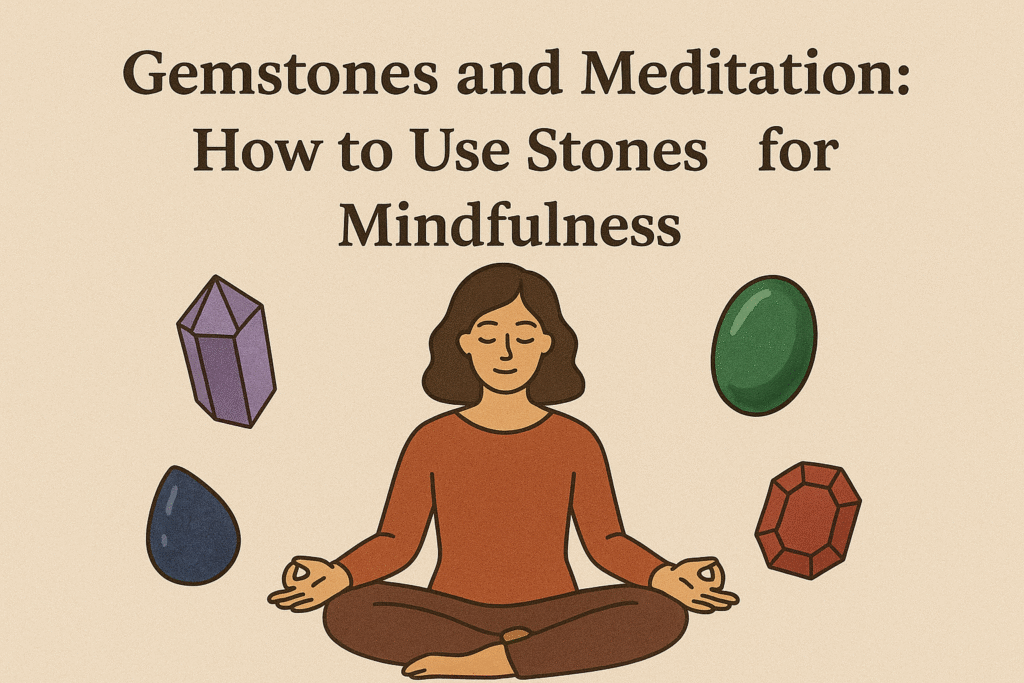
Have you ever felt like something was missing from your meditation practice? You sit quietly, close your eyes, and try to focus—but your mind keeps wandering to tomorrow’s meetings or yesterday’s conversations.
You’re not alone. Millions of people struggle to achieve the deep, restorative states that meditation promises. This is exactly where gemstones and meditation come together to create something remarkable.
For thousands of years, cultures across the globe have used healing stones to enhance spiritual practices. Ancient Egyptians adorned themselves with lapis lazuli for wisdom. Buddhist monks meditated with mala beads crafted from sacred gemstones. Indigenous cultures worldwide incorporated crystals into their spiritual ceremonies.
Today, combining gemstones with meditation has become one of the most accessible ways to deepen your mindfulness practice. Whether you’re a complete beginner or an experienced meditator looking for new dimensions to explore, this comprehensive guide will show you exactly how to harness the power of meditation crystals.
By the end of this article, you’ll understand which stones work best for different meditation goals, learn step-by-step techniques for crystal meditation, and discover how to build your own collection of mindfulness stones that resonate with your unique energy.
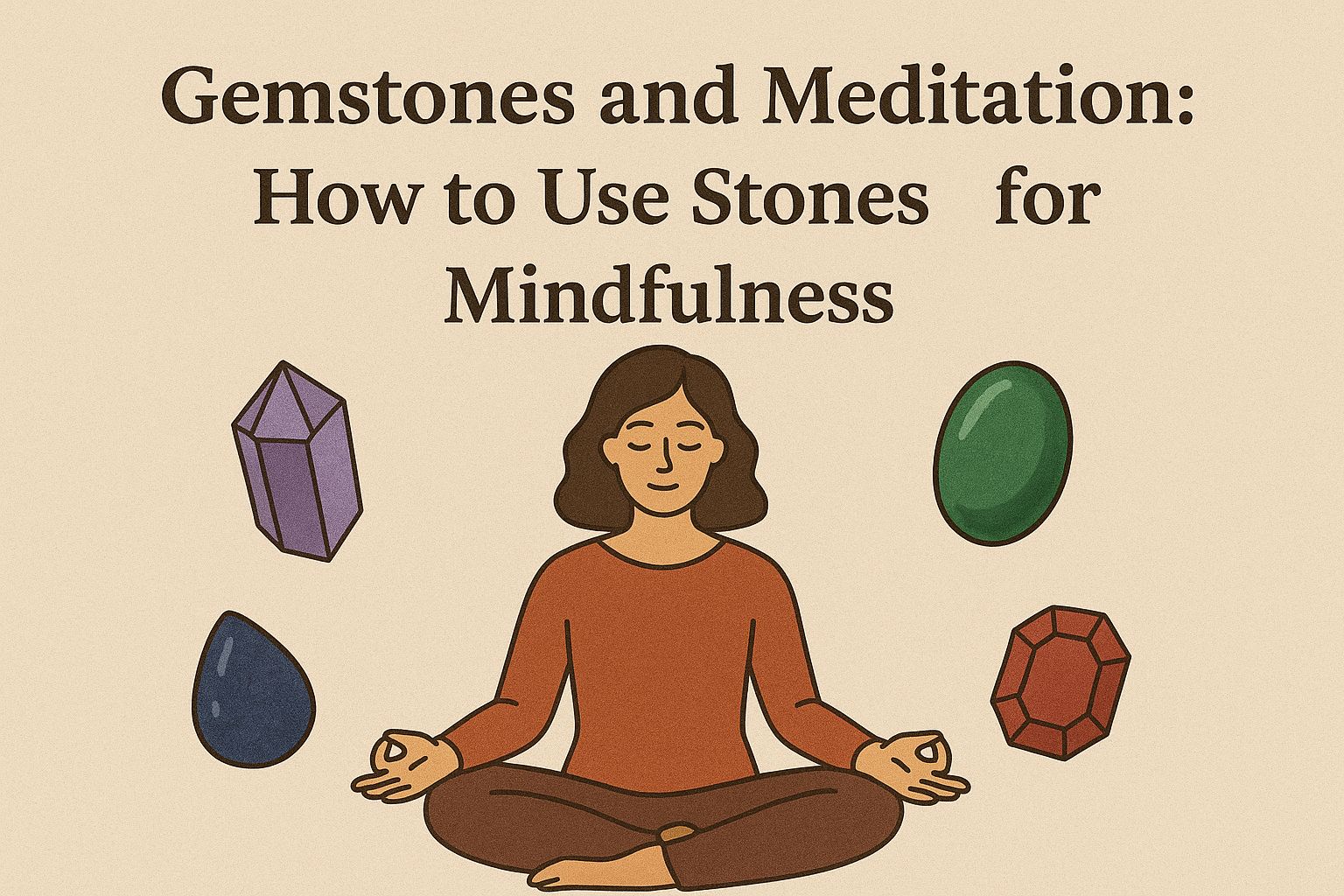
What Is Crystal Meditation?
Crystal meditation is the practice of incorporating gemstones into your mindfulness routine to enhance focus, promote relaxation, and support specific intentions. This approach combines traditional meditation techniques with the intentional use of healing stones.
Unlike conventional meditation where you rely solely on breath awareness or visualization, crystal meditation adds a tactile, visual, and energetic dimension to your practice. The stones serve as focal points, helping anchor your attention and creating a more immersive experience.
How Gemstones Support Mindfulness
When you hold a smooth amethyst in your palm or place a rose quartz over your heart, something shifts. The weight of the stone grounds you in the present moment. Its texture gives your wandering mind something tangible to return to.
Many practitioners report that gemstones help them in several ways:
- Anchoring attention: The physical presence of a stone creates a sensory focal point
- Setting intention: Choosing a specific crystal helps clarify your meditation goals
- Creating ritual: The act of selecting and placing stones establishes a meaningful practice
- Enhancing relaxation: The smooth, cool surface of gems can have a naturally calming effect
While scientific research on crystal energy remains limited, the psychological benefits of ritual, intention-setting, and sensory focus are well-documented in mindfulness literature.
The History of Using Stones for Spiritual Practice
The connection between gemstones and spiritual practice spans virtually every ancient civilization. Understanding this rich history helps us appreciate why so many people today find meaning in crystal meditation.
Ancient Traditions
Ancient Egypt: Pharaohs and priests used lapis lazuli, turquoise, and carnelian in religious ceremonies. They believed these stones held divine power and facilitated communication with the gods.
Ancient Greece and Rome: Amethyst got its name from the Greek word “amethystos,” meaning “not intoxicated.” Greeks wore amethyst believing it promoted clear thinking—a quality essential for meditation.
Chinese Medicine: Jade has been central to Chinese spiritual practice for over 5,000 years. Practitioners used jade in meditation to cultivate virtues like wisdom, courage, and compassion.
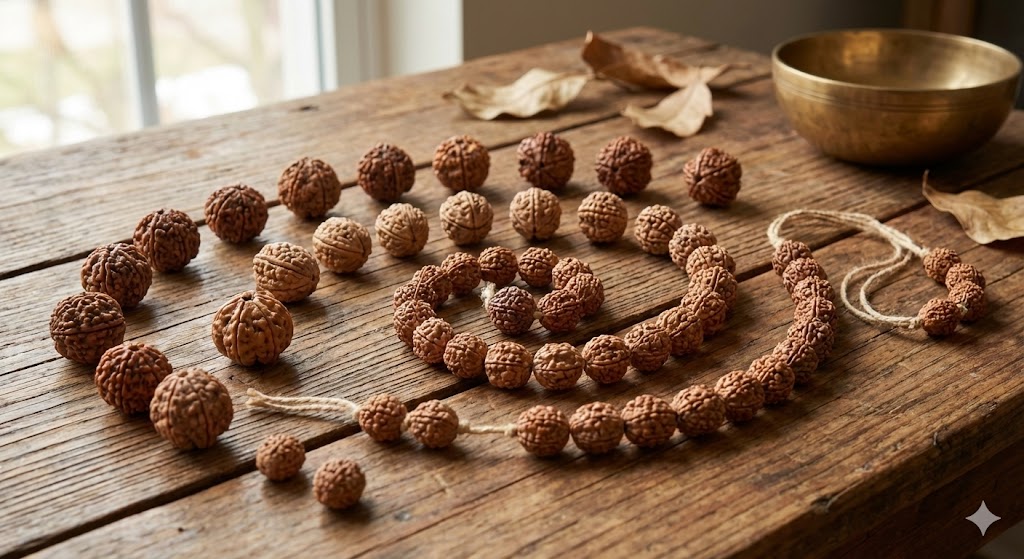
Hindu and Buddhist Traditions: Mala beads, often made from gemstones like tiger’s eye, lapis lazuli, or clear quartz, have guided meditation and mantra repetition for centuries.
Indigenous Cultures: Native American, Australian Aboriginal, and African tribal traditions all incorporate stones and crystals into spiritual ceremonies, healing practices, and meditation.
Modern Revival
The contemporary crystal meditation movement gained momentum in the 1970s and 1980s alongside growing interest in alternative wellness practices. Today, it has evolved into a mainstream approach embraced by millions seeking to enhance their mindfulness routines.
Best Gemstones for Meditation and Mindfulness
Choosing the right meditation crystals depends on your specific goals. Different stones are associated with different qualities, making some better suited for certain types of practice.
Gemstones for Calming and Stress Relief
| Gemstone | Color | Primary Benefits | Best For |
|---|---|---|---|
| Amethyst | Purple | Calming, clarity, intuition | Evening meditation, stress relief |
| Blue Lace Agate | Light blue | Soothing, communication, peace | Anxiety reduction, gentle meditation |
| Lepidolite | Lavender | Emotional balance, tranquility | Managing overwhelming emotions |
| Howlite | White/gray | Patience, calm, sleep support | Pre-bedtime meditation |
Gemstones for Focus and Clarity
| Gemstone | Color | Primary Benefits | Best For |
|---|---|---|---|
| Clear Quartz | Transparent | Amplification, clarity, energy | All-purpose meditation, enhancing intention |
| Fluorite | Various | Mental clarity, concentration | Study meditation, decision-making |
| Sodalite | Blue | Logic, truth, inner peace | Deep contemplation, analytical thinking |
| Black Tourmaline | Black | Grounding, protection, focus | Staying present, blocking distractions |
Gemstones for Emotional Healing
| Gemstone | Color | Primary Benefits | Best For |
|---|---|---|---|
| Rose Quartz | Pink | Love, compassion, emotional healing | Self-love meditation, heart opening |
| Rhodonite | Pink/black | Forgiveness, emotional recovery | Processing difficult emotions |
| Moonstone | Iridescent | Intuition, new beginnings, cycles | Emotional balance, feminine energy |
| Chrysocolla | Blue-green | Expression, empowerment, calm | Releasing emotional tension |
Gemstones for Grounding and Presence
| Gemstone | Color | Primary Benefits | Best For |
|---|---|---|---|
| Smoky Quartz | Brown/gray | Grounding, letting go, practicality | Releasing negative thoughts |
| Hematite | Metallic gray | Grounding, strength, courage | Staying rooted in the present |
| Red Jasper | Red | Stability, endurance, nurturing | Building meditation stamina |
| Obsidian | Black | Protection, truth, grounding | Shadow work, deep introspection |
How to Choose the Right Meditation Crystals
Selecting gemstones for your practice should feel intuitive and personal. Here’s a practical approach to building a meaningful collection.
Start With Your Intention
Before purchasing any stones, ask yourself these questions:
- What do I want from my meditation practice?
- Am I seeking calm, clarity, emotional healing, or spiritual connection?
- What challenges do I face when meditating?
Your answers will guide you toward appropriate stones. Someone struggling with anxiety might begin with amethyst or blue lace agate. Someone seeking sharper focus might choose clear quartz or fluorite.
Trust Your Intuition
Many experienced practitioners recommend choosing stones that you feel naturally drawn to. If you’re shopping in person, notice which crystals catch your eye or which ones you want to touch.
This intuitive approach often leads people to exactly the stones they need—sometimes ones they hadn’t considered before.
Consider Practical Factors
When building your collection, think about practical aspects:
- Size: Palm-sized stones work well for holding during meditation. Smaller tumbled stones are excellent for carrying throughout the day.
- Shape: Smooth, polished stones feel comfortable to hold. Pointed crystals can be used for directing energy or focusing attention.
- Budget: You don’t need expensive specimens. Small tumbled stones often work just as well as large, perfect crystals.
- Quality: Purchase from reputable sources to ensure you’re getting genuine gemstones.
Build Your Collection Gradually
There’s no need to acquire dozens of crystals immediately. Start with one or two stones that resonate with your primary meditation goals. Add to your collection over time as you explore different aspects of crystal meditation.
A thoughtful starter collection might include:
- Clear quartz (versatile, amplifies intention)
- Amethyst (calming, promotes deeper meditation)
- Rose quartz (heart-centered, emotional support)
- Black tourmaline or smoky quartz (grounding)
How to Cleanse and Prepare Your Gemstones
Before using stones for mindfulness practice, many practitioners cleanse them to clear any accumulated energy and prepare them for meditation work.
Why Cleanse Your Crystals?
Gemstones pass through many hands before reaching you—miners, processors, sellers, and shipping personnel. Some believe crystals absorb energy from their environments and the people who handle them.
Cleansing is also a meaningful ritual that helps you establish a personal connection with your stones. It marks the transition from ordinary object to sacred meditation tool.
Safe Cleansing Methods
Running Water: Hold stones under cool running water for 30 seconds to a minute while visualizing negative energy washing away. Note: Some stones like selenite, halite, and malachite are water-sensitive and should not be cleansed this way.
Moonlight: Place crystals on a windowsill or outside during a full moon overnight. This gentle method works for all stone types.
Smudging: Pass stones through the smoke of sage, palo santo, or incense. This traditional purification method is safe for all crystals.
Sound: Use singing bowls, bells, or tuning forks near your crystals. Sound vibrations are believed to reset the stones’ energy.
Selenite or Clear Quartz: Place smaller stones on a selenite slab or near clear quartz clusters. These crystals are thought to cleanse other stones without needing cleansing themselves.
Setting Intentions
After cleansing, take a moment to program your crystals with intention:
- Hold the stone in your hands
- Close your eyes and take several deep breaths
- Clearly state (aloud or silently) what you want this stone to support
- Visualize your intention flowing into the crystal
- Thank the stone for its assistance
This ritual, regardless of beliefs about crystal energy, creates psychological commitment to your meditation goals.
Step-by-Step Crystal Meditation Techniques
Now that you understand the foundations, let’s explore practical techniques for incorporating gemstones into your mindfulness practice.
Basic Hand-Held Crystal Meditation
This simple technique is perfect for beginners and works with any meditation stone.
Duration: 10-20 minutes
What You’ll Need: One palm-sized crystal of your choice
Instructions:
- Find a quiet, comfortable space where you won’t be disturbed
- Sit in a comfortable position with your spine straight
- Hold the crystal in your non-dominant hand (receiving hand) or cup it in both palms
- Close your eyes and take five deep breaths, allowing your body to relax
- Notice the weight, temperature, and texture of the stone
- As you breathe, imagine your intention flowing from your heart into the crystal and the crystal’s supportive energy flowing back to you
- When thoughts arise, gently return attention to the physical sensation of the stone
- Continue for your desired duration
- Slowly open your eyes and take a moment before standing
Chakra Crystal Meditation
This practice uses multiple stones placed on energy centers along the body.
Duration: 20-30 minutes
What You’ll Need: Seven stones corresponding to each chakra (see table below)
| Chakra | Location | Recommended Stones |
|---|---|---|
| Root | Base of spine | Red jasper, hematite, black tourmaline |
| Sacral | Below navel | Carnelian, orange calcite |
| Solar Plexus | Above navel | Citrine, tiger’s eye, yellow jasper |
| Heart | Center of chest | Rose quartz, green aventurine, jade |
| Throat | Throat | Blue lace agate, sodalite, aquamarine |
| Third Eye | Between eyebrows | Amethyst, lapis lazuli, fluorite |
| Crown | Top of head | Clear quartz, selenite, amethyst |
Instructions:
- Lie down comfortably on your back
- Place each stone on its corresponding chakra location
- Close your eyes and breathe deeply for several minutes
- Starting at the root chakra, focus attention on each stone for 2-3 minutes
- Visualize each chakra spinning and glowing with vibrant color
- Work your way up through all seven energy centers
- Spend a few minutes experiencing all chakras in balance
- Remove stones one at a time from crown to root
- Rest quietly for a few minutes before getting up
Walking Meditation With Crystals
Crystal meditation doesn’t require sitting still. This technique combines the grounding benefits of walking meditation with crystal energy.
Duration: 15-30 minutes
What You’ll Need: One small tumbled stone (grounding stones like hematite or smoky quartz work well)
Instructions:
- Choose a safe, quiet path for walking
- Hold the crystal loosely in one hand
- Begin walking at a slow, deliberate pace
- Synchronize your breathing with your steps (example: inhale for four steps, exhale for four steps)
- Feel the crystal in your palm with each step
- When your mind wanders, squeeze the stone gently to return to present awareness
- Notice how your feet connect with the ground, how air feels on your skin
- The crystal serves as your anchor to the present moment throughout the walk
Crystal Grid Meditation
Crystal grids arrange multiple stones in sacred geometric patterns to create focused energy fields for meditation.
Duration: 15-25 minutes
What You’ll Need: Multiple crystals (typically 7-13), a flat surface, optional grid template
Instructions:
- Set a clear intention for your grid
- Choose a center stone that represents your primary intention
- Select supporting stones that align with your goal
- Place the center stone first, then arrange others in a geometric pattern (circle, flower of life, or triangle)
- Sit comfortably facing your grid
- Close your eyes and visualize energy connecting all stones
- Focus on your intention while breathing deeply
- Meditate for your desired duration
- Leave the grid in place to continue supporting your intention, or disassemble mindfully
Creating a Sacred Space for Crystal Meditation
Your meditation environment significantly impacts your practice quality. Creating a dedicated space enhances focus and signals to your mind that it’s time for mindfulness.
Choosing Your Space
Look for an area with these qualities:
- Quiet and free from interruptions
- Comfortable temperature
- Natural light when possible
- Enough room to sit or lie down comfortably
- Privacy for uninterrupted practice
Even a small corner of a room can become a meaningful meditation space.
Essential Elements
Consider including these elements in your sacred space:
Comfortable Seating: A meditation cushion, yoga mat, or comfortable chair that supports good posture.
Crystal Storage: A dedicated place for your meditation stones. Many practitioners use wooden boxes, fabric pouches, or selenite charging plates.
Altar or Table: A small surface to display crystals, set intentions, or hold meaningful objects.
Lighting: Soft, natural light or candles create a peaceful atmosphere.
Sound Elements: Singing bowls, chimes, or a speaker for ambient meditation music.
Maintaining Your Space
Keep your meditation area clean and clutter-free. Regularly cleanse the energy of the space using sage, palo santo, or sound. Refresh your crystal arrangements periodically to maintain a sense of sacred purpose.
Common Mistakes to Avoid in Crystal Meditation
Even experienced practitioners sometimes fall into habits that diminish their practice. Awareness of these common pitfalls helps you avoid them.
Using Too Many Crystals
More isn’t always better. Beginners often collect numerous stones and try to use them all at once, which can feel overwhelming and scattered.
Better approach: Start with one or two crystals. Master working with these before adding more to your practice.
Neglecting Regular Cleansing
Forgetting to cleanse your meditation stones can leave them feeling energetically dull or carrying unwanted influences.
Better approach: Establish a regular cleansing routine—perhaps after each intense meditation or during each full moon.
Forcing Specific Experiences
Some practitioners expect dramatic visions or intense sensations from crystal meditation. Attachment to particular outcomes can prevent authentic experiences.
Better approach: Release expectations. Allow each meditation session to unfold naturally without judgment.
Inconsistent Practice
Occasional crystal meditation produces limited results. Like any mindfulness practice, consistency matters.
Better approach: Commit to regular sessions, even if brief. Ten minutes daily offers more benefits than occasional hour-long sessions.
Ignoring Physical Comfort
Focusing so intently on crystals that you ignore physical discomfort undermines meditation quality.
Better approach: Ensure your body is comfortable before beginning. Adjust positions as needed during practice.
Benefits of Combining Gemstones With Mindfulness Practice
Regular crystal meditation offers numerous potential benefits for mental, emotional, and spiritual wellbeing.
Enhanced Focus and Concentration
The tactile presence of stones provides an anchor for wandering attention. Many practitioners find it easier to maintain focus when holding or observing a crystal compared to unguided meditation.
Deeper Relaxation States
The ritual of crystal meditation—selecting stones, creating sacred space, setting intentions—signals to your nervous system that it’s time to shift from stress response to relaxation response.
Clearer Intention Setting
Choosing specific crystals for specific purposes clarifies your meditation goals. This intentionality often carries into daily life, supporting ongoing personal development.
Stronger Mind-Body Connection
Awareness of physical sensations while holding crystals strengthens the connection between mental focus and bodily awareness—a core component of effective mindfulness.
Meaningful Ritual
In our increasingly digital world, physical rituals provide grounding and meaning. Crystal meditation offers a tangible, sensory practice that many find deeply satisfying.
Personalized Practice
The vast variety of gemstones means you can customize your practice to match your evolving needs. Whether you seek calm, courage, clarity, or creativity, there’s a crystal to support your journey.
Integrating Crystal Energy Into Daily Life
Meditation sessions form the foundation of crystal practice, but you can extend these benefits throughout your day.
Carrying Crystals
Keep small tumbled stones in your pocket or purse. Touch them during stressful moments as a reminder to breathe and center yourself.
Wearing Crystal Jewelry
Gemstone necklaces, bracelets, and rings keep supportive energy close all day. Choose pieces that align with your current intentions.
Workplace Crystals
Place a grounding stone like black tourmaline on your desk to maintain focus during work. Clear quartz near your computer can serve as a visual reminder to take mindful breaks.
Bedside Stones
Amethyst or howlite on your nightstand supports peaceful sleep. Hold these stones while practicing brief evening meditation.
Mini-Meditation Moments
Throughout the day, take 30-second breaks to hold a crystal, breathe deeply, and return to present awareness. These micro-meditations compound into significant stress reduction over time.
Conclusion
Gemstones and meditation form a powerful partnership that has supported spiritual seekers for millennia. Whether you’re drawn to the calming purple depths of amethyst, the heart-opening warmth of rose quartz, or the grounding strength of black tourmaline, crystal meditation offers a rich, personalized path to mindfulness.
The key is to begin simply. Choose one or two stones that resonate with your intentions. Create a comfortable space for practice. Commit to regular sessions, even brief ones. Trust your intuition as you explore different crystals and techniques.
Remember that the greatest power lies not in the stones themselves but in your intention, attention, and consistent practice. Gemstones serve as beautiful, tangible tools that support and deepen the inner work you’re already doing.
Your journey with crystal meditation starts with a single breath, a single stone, and a single moment of presence. Begin today, and discover how these ancient allies can transform your modern mindfulness practice.
Frequently Asked Questions (FAQs)
Can I use any gemstone for meditation, or do certain stones work better?
While you can technically meditate with any stone, certain gemstones have properties traditionally associated with meditation. Amethyst, clear quartz, rose quartz, and black tourmaline are considered excellent starting points due to their versatile supportive qualities. However, the most effective stone is ultimately one you feel personally drawn to. Trust your intuition when selecting meditation crystals—your subconscious often guides you toward exactly what you need.
Can I use any gemstone for meditation, or do certain stones work better?
While you can technically meditate with any stone, certain gemstones have properties traditionally associated with meditation. Amethyst, clear quartz, rose quartz, and black tourmaline are considered excellent starting points due to their versatile supportive qualities. However, the most effective stone is ultimately one you feel personally drawn to. Trust your intuition when selecting meditation crystals—your subconscious often guides you toward exactly what you need.
How long should I meditate with crystals as a beginner?
Start with 5-10 minutes per session when beginning crystal meditation. This duration allows you to establish the habit without feeling overwhelmed. As your practice develops, gradually extend sessions to 15-30 minutes. Quality matters more than quantity—a focused 10-minute session offers more benefit than a distracted 30-minute one. Listen to your body and adjust timing based on what feels sustainable for your lifestyle.
Is it safe to sleep with crystals under my pillow or near my bed?
Many people safely keep crystals near their sleeping area. Stones like amethyst, howlite, and moonstone are popular choices for supporting restful sleep. However, some individuals find certain high-energy crystals like citrine or carnelian too stimulating for bedtime. Start with one gentle stone and observe how your sleep quality responds. If you experience restlessness or vivid dreams, try moving the crystal farther from your bed or choosing a different stone.
Do I need to believe in crystal energy for gemstone meditation to work?
No, belief in metaphysical crystal properties isn’t required to benefit from crystal meditation. Even from a purely practical standpoint, gemstones provide valuable functions: they serve as focal points for attention, create meaningful ritual, engage the senses, and help clarify intentions. The psychological benefits of ritual, sensory grounding, and intention-setting are well-documented regardless of beliefs about crystal energy. Approach the practice with openness and observe what you experience.
How often should I cleanse my meditation crystals?
Cleansing frequency depends on how intensely and often you use your stones. A general guideline is to cleanse meditation crystals at least once monthly, ideally during the full moon. Additionally, cleanse stones after particularly intense meditation sessions, after someone else handles them, or whenever they feel energetically “heavy” or less vibrant. Some practitioners cleanse before every meditation session as part of their preparation ritual. Trust your intuition about when your stones need refreshing.
Can children practice crystal meditation safely?
Yes, crystal meditation can be a wonderful mindfulness tool for children when introduced appropriately. Choose larger, smooth tumbled stones that don’t pose choking hazards. Supervise sessions with younger children. Keep practices brief (3-5 minutes) and playful—let children choose their own stones and describe what they notice. Avoid complex techniques; simple hand-held meditation or placing a stone on their belly while breathing works beautifully. Crystal meditation can help children develop focus, emotional regulation, and a positive relationship with mindfulness from an early age.
Disclaimer: This article is intended for informational and educational purposes only. The information provided about gemstones and meditation represents traditional and contemporary wellness practices. Crystal meditation is not a substitute for professional medical or mental health treatment. Always consult qualified healthcare providers for medical concerns.