
Understanding Diamond Quality: You’re standing in a jewelry store, staring at two diamonds that look identical to your eyes. One costs $3,000, the other $8,000. The salesperson throws around terms like “clarity grade,” “color scale,” and “cut proportions.” Your head spins.
Here’s the truth: understanding diamond quality isn’t just about avoiding overpaying—it’s about getting a stone that sparkles brilliantly, holds its value, and makes you proud every time you look at it.
This comprehensive guide will transform you from confused shopper to confident buyer. You’ll learn exactly what makes one diamond worth thousands more than another, which quality factors actually matter for beauty versus price, and how to spot the red flags that even experienced buyers miss.
Whether you’re shopping for an engagement ring, investment piece, or special gift, you’ll walk away knowing how to evaluate diamonds like a gemologist—without needing a decade of training.
What Is Diamond Quality? The Foundation Every Buyer Needs
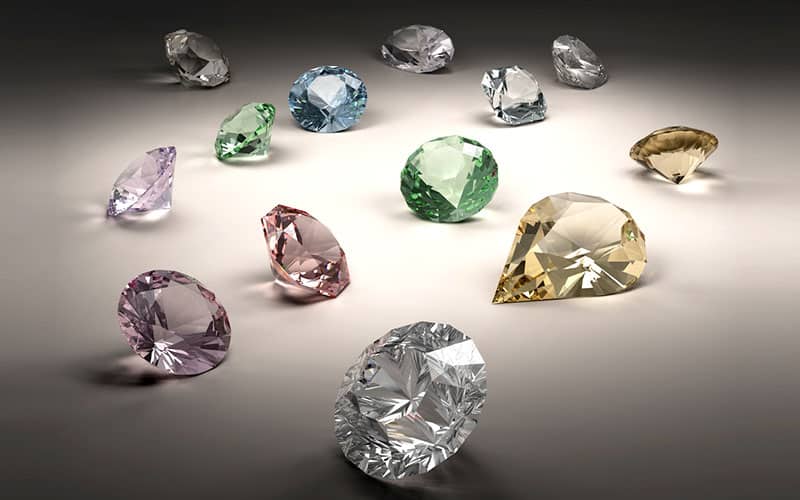
Diamond quality refers to the combination of characteristics that determine a diamond’s beauty, rarity, and value. Unlike gold, which has a straightforward purity measurement, diamonds are complex natural formations with multiple attributes that work together to create their overall appeal.
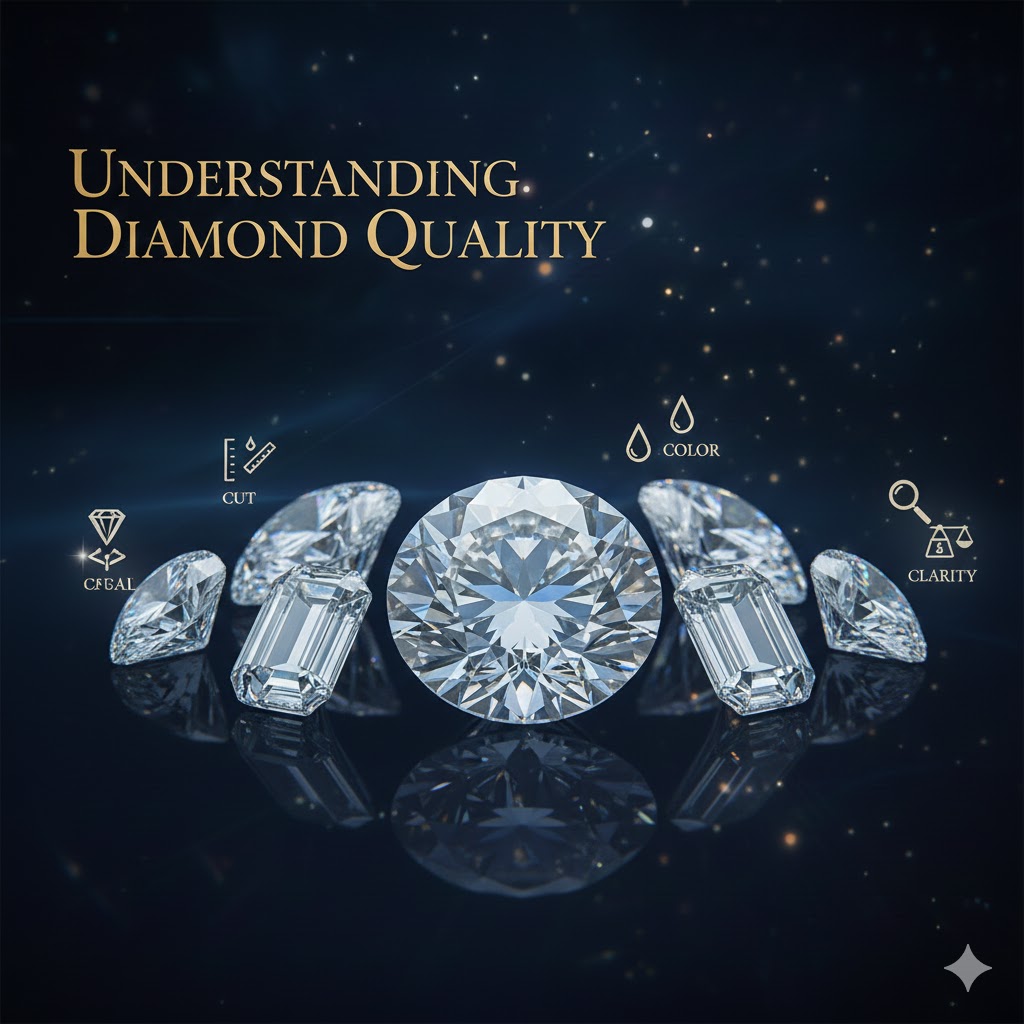
Think of diamond quality as a report card with four main subjects: Cut, Color, Clarity, and Carat Weight. These are known universally as the “4Cs of Diamond Quality.”
Why Quality Assessment Matters:
- Two diamonds with identical carat weights can differ in price by 300% or more
- Quality directly impacts how much a diamond sparkles and shines
- Higher quality diamonds typically maintain value better over time
- Understanding quality helps you prioritize what matters most within your budget
The gemological community has spent over a century developing standardised grading systems to bring objectivity to diamond evaluation. This means you can compare diamonds across different jewellers using the same quality language.
The 4Cs of Diamond Quality: Your Essential Framework
1. Cut Quality: The Most Important Factor for Brilliance
Cut quality is widely considered the most crucial of the 4Cs because it has the greatest impact on how beautiful a diamond appears. A well-cut diamond with lower color or clarity grades will outshine a poorly cut diamond with perfect color and clarity.
What Cut Actually Means:
Cut refers to how well a diamond’s facets interact with light. When a diamond is cut to ideal proportions, light enters through the table, bounces between the facets, and returns to your eye as brilliant white light and colorful flashes.
The Official Cut Grades:
- Excellent/Ideal: Maximum brilliance and fire. Light performance is optimized
- Very Good: Beautiful appearance with slightly less perfection in proportions
- Good: Nice appearance but noticeably less sparkle than higher grades
- Fair: Compromised light return. Diamond may appear dull
- Poor: Significant light leakage. Not recommended for purchase
Critical Cut Factors:
- Table Percentage: The flat top facet’s width relative to overall diameter (ideal: 53-58% for round diamonds)
- Depth Percentage: Total height relative to diameter (ideal: 59-62.5% for rounds)
- Crown Angle: Affects fire and brilliance (ideal: 34-35 degrees)
- Pavilion Angle: Critical for light return (ideal: 40.6-41 degrees)
- Symmetry: How precisely facets align with each other
- Polish: Surface finish quality
Budget Tip: Prioritize cut over other Cs. A well-cut diamond in a lower color or clarity grade will look more impressive than a poorly cut stone with perfect specs.
2. Color Grade: Understanding the Subtle Differences
Diamond color grading measures how colorless a diamond appears. The scale runs from D (completely colorless) to Z (light yellow or brown tint).
The Color Grading Scale Explained:
| Grade Range | Description | Visibility | Value |
|---|---|---|---|
| D-E-F | Colorless | No color visible even to trained eye | Premium pricing |
| G-H-I-J | Near Colorless | Slight color only detectable by experts when compared | Excellent value |
| K-L-M | Faint Color | Slight yellow tint visible to untrained eye | Budget-friendly |
| N-R | Very Light Color | Noticeable yellow tint | Rarely used in fine jewelry |
| S-Z | Light Color | Obvious yellow/brown color | Fashion jewelry grade |
Color Perception Factors:
The setting metal significantly affects how color appears. A near-colorless diamond (G-H) set in yellow or rose gold may appear whiter because of contrast, while the same stone in platinum or white gold shows more color.
Larger diamonds show color more readily than smaller stones. A J color in a 0.50-carat diamond might be imperceptible, but quite visible in a 2-carat stone.
Insider Secret: Most people cannot distinguish between D, E, and F color grades when diamonds are mounted in jewelry. G-H grades offer exceptional value without visible compromise.
3. Clarity Grade: Natural Characteristics That Tell a Story
Clarity measures the presence of inclusions (internal characteristics) and blemishes (external marks). Since diamonds form under extreme heat and pressure deep in the Earth, most contain unique birthmarks.
The Clarity Grading Scale:
- FL (Flawless): No inclusions or blemishes visible at 10x magnification
- IF (Internally Flawless): No inclusions, only insignificant surface blemishes
- VVS1-VVS2 (Very Very Slightly Included): Minute inclusions extremely difficult for skilled graders to see
- VS1-VS2 (Very Slightly Included): Minor inclusions difficult to somewhat easy for graders to see
- SI1-SI2 (Slightly Included): Noticeable inclusions easy to very easy for graders to see
- I1-I2-I3 (Included): Obvious inclusions that may affect transparency and brilliance
Common Inclusion Types:
- Crystals: Tiny mineral deposits trapped during formation
- Feathers: Small cracks or fractures within the stone
- Clouds: Clusters of tiny pinpoints creating a hazy area
- Needles: Long, thin crystal inclusions
- Pinpoints: Tiny dots visible under magnification
The “Eye-Clean” Concept:
The most important clarity consideration is whether inclusions are visible to the naked eye. Many SI1 and some SI2 diamonds are “eye-clean,” meaning you cannot see imperfections without magnification.
Smart Shopping Strategy: For diamonds under 1 carat, SI1-SI2 grades often provide undetectable inclusions at significant savings. For stones over 2 carats, consider moving up to VS2 or better as inclusions become more visible in larger diamonds.
4. Carat Weight: Size Matters, But Not How You Think
Carat is simply a weight measurement. One carat equals 200 milligrams or 0.2 grams. While carat weight significantly influences price, it doesn’t directly measure size or beauty.
Understanding Carat Weight Pricing:
Diamond prices don’t increase linearly with weight—they jump exponentially at certain thresholds. A 0.99-carat diamond costs significantly less than a 1.00-carat stone of identical quality because of psychological price barriers.
Magic Numbers and Price Jumps:
- 0.50 carat (half-carat milestone)
- 0.75 carat (three-quarter marker)
- 1.00 carat (the coveted one-carat mark)
- 1.50, 2.00, 3.00 carats (major milestones)
Size Maximization Strategies:
Shopping slightly below magic numbers (0.90-0.95 instead of 1.00 carat) can save 15-20% with no visible size difference. The face-up size (how large a diamond appears when viewed from above) is determined more by cut quality and shape than weight alone.
Visual Size Comparison:
A well-cut 0.90-carat round diamond measures approximately 6.2mm in diameter, while a 1.00-carat measures about 6.4mm—a difference of just 0.2mm that’s imperceptible when worn.
Diamond Certification: Your Quality Guarantee
Why Certification Matters
A diamond certificate (also called a grading report) is an independent assessment of your diamond’s characteristics. It’s your quality proof and protection against misrepresentation.
Leading Gemological Laboratories:
GIA (Gemological Institute of America): The industry gold standard with the most consistent grading standards. GIA reports are universally respected and often command higher resale values.
AGS (American Gem Society): Known for pioneering cut grading with sophisticated light performance analysis. AGS reports include detailed cut quality assessments beyond basic proportions.
IGI (International Gemological Institute): Widely used for lab-grown diamonds and international markets. Generally reliable but occasionally grades slightly more leniently than GIA.
EGL and Other Labs: Use extreme caution. Many grading entities calling themselves “EGL” have inconsistent standards and may overgrade stones by 2-3 color or clarity grades compared to GIA.
What Your Certificate Should Include:
- Unique report number for verification
- Detailed 4Cs grading with measurements
- Clarity plot showing inclusion positions
- Proportions and finish grades
- Fluorescence rating
- Comments section noting any treatments or special characteristics
Red Flags:
Never purchase an expensive diamond without certification from a reputable lab. If a jeweler resists providing certification or offers only in-house grading, walk away.
Beyond the 4Cs: Other Quality Factors That Affect Value
Fluorescence: The Misunderstood Characteristic
Fluorescence refers to how a diamond reacts to ultraviolet light. About 25-35% of diamonds show some fluorescence, most commonly blue.
Fluorescence Grades:
- None
- Faint
- Medium
- Strong
- Very Strong
The Fluorescence Debate:
Strong fluorescence can make some diamonds appear milky or hazy in daylight, though this affects fewer than 10% of fluorescent diamonds. Conversely, faint to medium blue fluorescence can make lower color grades (I-M) appear whiter—a value advantage.
Pricing Impact:
Diamonds with strong fluorescence typically sell for 5-15% less than non-fluorescent stones of identical grades. For budget-conscious shoppers, this can provide opportunities if the stone remains brilliant.
Diamond Shape and Its Impact on Quality Perception
While shape is technically a personal preference rather than a quality factor, different shapes reveal or hide quality characteristics differently.
How Shapes Affect Quality Requirements:
Round Brilliant: Shows color most evenly but magnifies inclusions. Consider higher clarity for large rounds.
Princess Cut: Corners can hide inclusions. Color concentrates in corners, so higher color grades show better.
Emerald and Asscher: Step-cut facets create a “hall of mirrors” effect that makes inclusions very visible. Minimum VS2 clarity recommended.
Cushion and Radiant: Brilliant faceting hides inclusions well. Good choice for SI clarity grades.
Oval, Pear, and Marquise: Can show “bow-tie” effect (dark shadow across center). Cut quality becomes critical.
Polish and Symmetry: The Finishing Details
These cut-quality subgrades measure how precisely a diamond was fashioned.
Polish evaluates the smoothness of facet surfaces. Poor polish creates a hazy appearance even in otherwise high-quality stones.
Symmetry assesses how precisely facets align and meet. Poor symmetry disrupts light patterns and reduces brilliance.
Grading Scale for Both:
- Excellent
- Very Good
- Good
- Fair
- Poor
Recommendation: Aim for at least “Very Good” in both categories, with “Excellent” preferred for larger stones where imperfections become more noticeable.
How to Evaluate Diamond Quality Like a Professional
Step-by-Step Quality Assessment Process
Step 1: Review the Certificate
Start with the grading report. Verify the report number on the lab’s website to ensure authenticity. Check that all 4Cs meet your minimum requirements.
Step 2: Examine Cut Quality First
Look at the diamond face-up and tilted. An excellent cut shows bright white light return with colorful flashes. A poor cut appears dark or glassy with minimal sparkle.
Step 3: Check for Eye-Visible Inclusions
View the diamond without magnification in various lighting conditions. If you can see inclusions with your naked eye, consider a higher clarity grade unless budget constrains.
Step 4: Assess Color in Proper Conditions
View the diamond against a white background in natural daylight if possible. Compare it to other certified stones to train your eye.
Step 5: Verify Proportions
Check that table and depth percentages fall within ideal ranges for the shape. Extreme proportions compromise beauty regardless of grade.
The Best Lighting for Diamond Evaluation
Different lighting reveals different characteristics:
Natural Daylight: Shows true color most accurately. Best for overall assessment.
Spotlight/Jewelry Store Lighting: Maximizes fire and brilliance but can hide color tints. Don’t make final decisions under these lights alone.
Diffused/Office Lighting: Reveals how the diamond will appear in everyday wear.
UV Light: Tests for fluorescence if that’s a concern for your purchase.
Common Diamond Quality Myths Debunked
Myth 1: “You Must Buy the Highest Grades to Get a Beautiful Diamond”
Reality: The visible difference between D and G color or VVS1 and VS2 clarity is minimal to nonexistent in diamonds under 2 carats when set in jewelry. Prioritizing cut quality over perfect color and clarity delivers better visual impact.
Myth 2: “All Certified Diamonds Are Equal”
Reality: Certification quality varies dramatically between laboratories. A diamond graded H color by a lenient lab might actually be K color by GIA standards. Always prioritize GIA or AGS certification for accuracy.
Myth 3: “Bigger Is Always Better”
Reality: A smaller diamond with excellent cut quality will sparkle more impressively than a larger poorly-cut stone. Size should complement quality, not substitute for it.
Myth 4: “Fluorescence Always Hurts Value and Appearance”
Reality: Most fluorescent diamonds show no negative visual effects. Faint to medium fluorescence is virtually undetectable, and can actually improve the appearance of lower color grades.
Myth 5: “You Can’t Trust Online Diamond Retailers”
Reality: Reputable online retailers often offer better value than physical stores due to lower overhead. The key is choosing established vendors with strong return policies and verified certification.
Budget-Smart Diamond Quality Strategies
Maximizing Quality Within Your Budget
The 80/20 Approach:
Focus 80% of your budget on cut quality and the remaining 20% on finding the sweet spot in color and clarity where you get the best value.
Strategic Grade Selection:
- Cut: Never compromise. Always choose Excellent or Ideal.
- Color: G-H provides exceptional value. Only go higher if budget allows easily.
- Clarity: VS2 is the sweet spot for most diamonds under 1.5 carats. SI1 works for smaller stones.
- Carat: Buy slightly under magic numbers for maximum savings.
Example Budget Allocation for $5,000:
Instead of a 1.00 carat, H color, SI2, Good cut diamond, choose:
- 0.90 carat, I color, VS2, Excellent cut
The second option will appear more brilliant, eye-clean, and actually look larger due to superior light performance, while costing less.
When to Splurge vs. Save on Quality
Splurge On:
- Cut quality (non-negotiable for beauty)
- Clarity for emerald and asscher cuts (they show inclusions readily)
- Color for platinum and white gold settings (color shows more)
- Certification from GIA or AGS (protects your investment)
Save On:
- Color when setting in yellow or rose gold
- Clarity for brilliant cuts like round, cushion, and radiant in smaller sizes
- Carat weight by shopping slightly under milestones
- Fluorescence if the stone still sparkles beautifully
Red Flags: Quality Issues to Avoid
Warning Signs of Problem Diamonds
Severe Quality Compromises:
- I2 or I3 clarity: Inclusions affect durability and transparency
- Fair or Poor cut grades: Irreversibly damages light performance
- M+ color in colorless metal settings: Visible yellow tint detracts from beauty
- Strong fluorescence with milky appearance: Hazy even in good lighting
- Chips, cracks, or damage: Affects structural integrity
Questionable Business Practices:
- Pressure to buy without independent certification
- Reluctance to provide detailed specifications
- Significant price discounts that seem too good to be true (often indicate quality misrepresentation)
- “Switching” certified stone for uncertified one at pickup
- Limited or no return policy
Certification Red Flags:
- Lab names you can’t verify independently
- Grades that seem inconsistent with visual appearance
- Missing report numbers or inability to verify online
- Vague language instead of precise grades
Lab-Grown Diamonds: Quality Considerations
Understanding Lab-Created Diamond Quality
Lab-grown diamonds have identical physical, chemical, and optical properties to natural diamonds. They’re graded using the same 4Cs system.
Quality Advantages:
- More consistent quality since growth is controlled
- Typically fewer and smaller inclusions than natural diamonds
- Often better color grades at comparable prices
- Type IIa purity (purest classification) is common
Quality Considerations:
- Some labs grade lab-grown stones more leniently
- Resale value is currently lower than natural diamonds
- Long-term value retention unknown
- Always verify proper disclosure as lab-created
Grading Reliability:
GIA, IGI, and GCAL issue reliable reports for lab-grown diamonds. Ensure your certificate clearly indicates “laboratory-grown” origin.
Diamond Quality for Different Jewelry Types
Engagement Rings
Recommended Minimum Quality:
- Cut: Excellent/Ideal
- Color: G-H
- Clarity: VS2 (SI1 for smaller stones)
- Certification: GIA or AGS
Engagement rings receive daily wear and frequent viewing. Prioritize durability and eye-clean appearance.
Earrings
Recommended Quality:
- Cut: Excellent (sparkle is highly visible)
- Color: H-I (viewed from distance)
- Clarity: SI1-SI2 (inclusions difficult to see in ears)
- Matching: Color and size consistency matters more than grade
For earrings, matching appearance matters more than perfect grades since they’re viewed from farther away.
Pendants and Necklaces
Recommended Quality:
- Cut: Excellent to Very Good
- Color: H-J (viewed from distance and movement)
- Clarity: SI1-SI2
- Shape: Consider round or cushion for maximum sparkle
Movement and viewing distance make slight quality compromises less visible in pendants.
Tennis Bracelets and Eternity Bands
Recommended Quality:
- Cut: Very Good minimum
- Color: Consistency across all stones is critical
- Clarity: SI1-SI2 acceptable
- Matching: Prioritize uniform appearance over individual grades
Multiple stones require matching characteristics. Slight individual quality variations matter less than overall consistency.
Maintaining Your Diamond’s Quality Over Time
Care and Maintenance Best Practices
Diamonds are durable but not indestructible. Proper care maintains their beauty and quality.
Cleaning Recommendations:
- Daily: Wipe with soft, lint-free cloth to remove oils and debris
- Weekly: Soak in warm water with mild dish soap for 20-30 minutes, then gently brush with soft toothbrush
- Monthly: Professional ultrasonic cleaning at jeweler (if no fracture-filled inclusions)
- Yearly: Professional inspection for loose settings and damage
Storage Practices:
Store diamonds separately in soft pouches. Despite being the hardest natural material, diamonds can scratch each other and damage other gemstones.
Wear Considerations:
Remove diamond jewelry during:
- Heavy physical activity or sports
- Gardening or cleaning with harsh chemicals
- Swimming in chlorinated pools
- Applying lotions, perfumes, or hairspray
Insurance and Documentation:
Maintain current appraisals (every 2-3 years) and insurance coverage. Store certification and purchase documentation safely.
The Future of Diamond Quality Standards
Emerging Trends in Quality Assessment
Advanced Light Performance Analysis:
Technology now measures precise light return, fire, and scintillation patterns beyond traditional grading. Tools like ASET (Angular Spectrum Evaluation Tool) and Ideal-Scope provide objective cut quality data.
Digital Certification:
Blockchain verification and digital certificates are becoming standard, providing tamper-proof authentication and ownership history.
Artificial Intelligence Grading:
AI systems are increasingly supplementing human graders, potentially providing more consistent quality assessments across laboratories.
Traceability Initiatives:
Origin tracking from mine to market is becoming more common, adding ethical sourcing as a quality consideration for consumers.
Conclusion: Your Path to Diamond Quality Confidence
Understanding diamond quality transforms what could be an overwhelming purchase into an empowering decision. You now know that the 4Cs provide a framework, but true quality assessment requires looking beyond grades to how those characteristics work together to create beauty.
Remember these key principles:
Cut quality drives brilliance and should never be compromised. A well-cut diamond with modest color and clarity grades will outshine a poorly cut stone with perfect specifications. Strategic grade selection in color and clarity allows you to maximize size and sparkle within your budget.
Certification from reputable laboratories protects your investment and ensures you’re getting what you pay for. Whether natural or lab-grown, choose GIA or AGS reports for the most accurate assessments.
Finally, trust your eyes. No amount of perfect grades matters if a diamond doesn’t make your heart skip when you see it sparkle. Use quality knowledge as your foundation, but let beauty be your ultimate guide.
Ready to Start Your Diamond Journey?
Take what you’ve learned and begin comparing certified diamonds confidently. Look for stones that balance the 4Cs strategically, prioritize cut excellence, and work within your personal budget. With this knowledge, you’re prepared to find a diamond that brings joy for a lifetime.
Frequently Asked Questions
Can two diamonds with identical 4Cs grades look noticeably different?
Yes, absolutely. Even with matching grades, diamonds can vary in light performance, inclusion placement, and overall appearance. Cut grade alone doesn’t tell the whole story—proportions within the same grade category affect beauty. Additionally, the specific type and position of inclusions matter more than the clarity grade itself. Two VS2 diamonds might look quite different if one has a centered crystal inclusion while the other has feather inclusions near the edge. This is why viewing diamonds personally or through high-quality video is important, not just relying on certificates.
How much should I realistically budget for a quality diamond engagement ring?
There’s no fixed rule despite old “three months’ salary” myths. Focus instead on finding the best quality within your comfortable spending range. Quality engagement ring diamonds typically start around $2,000 for smaller stones (0.50-0.75 carats) with good specifications. A balanced 1-carat diamond with Excellent cut, G-H color, and VS2-SI1 clarity typically ranges $4,000-$7,000 from reputable retailers. Remember that setting costs add 20-50% to total ring price. Buy the best cut quality you can afford, then optimize color and clarity for your budget.
Is it worth paying extra for a D color or Flawless clarity diamond?
For most buyers, no. The visual difference between D and G color is virtually imperceptible when stones are mounted in jewelry, yet you’ll pay 20-40% more for D color. Similarly, Flawless diamonds command premium prices for rarity, but VS2 diamonds appear identical to the naked eye. These premium grades make sense if you’re an investor or collector focused on rarity, or if budget is truly unlimited. For the vast majority of engagement ring and jewelry purchases, near-colorless (G-I) and eye-clean clarity (VS2-SI1) provide exceptional beauty at superior value.
Should I buy a diamond online or from a local jeweler?
Both options can be excellent if you choose reputable vendors. Online retailers often offer 15-30% savings due to lower overhead, wider selection, and detailed imagery/videos of individual diamonds. Established online jewelers provide generous return periods (30-60 days) and independent certification. Local jewelers offer hands-on examination, immediate assistance, and personal relationship building. The best approach: educate yourself thoroughly (which you’re doing now), compare certified diamonds across both channels, and buy from sellers with strong reputations, transparent policies, and verified reviews, regardless of format.
How can I verify that my diamond matches its certification?
Every legitimate GIA or AGS certificate includes a unique report number. Visit the laboratory’s website and enter this number to pull up the official report, confirming it matches your diamond’s details. Many diamonds 1 carat and larger also have the report number microscopically laser-inscribed on the girdle (outer edge), visible only under magnification. Ask your jeweler to show you this inscription under their microscope. If a seller refuses to provide the certificate, won’t allow verification, or the report number doesn’t match online records, these are serious red flags suggesting potential fraud. Always verify before purchase and consider having valuable diamonds independently appraised by a certified gemologist after purchase.
Ethical and Modern Perspectives
In today’s world, consumers are becoming increasingly aware of the ethical and environmental impact of diamond mining. This has led to the rise of lab-grown diamonds — scientifically identical to natural ones, but created in controlled environments. These diamonds share the same sparkle, durability, and structure, offering a sustainable and affordable alternative.
Ethical sourcing has also gained importance. Many jewelers now ensure that their diamonds are conflict-free, meaning they are mined and traded responsibly without funding violence or exploitation. Certifications from organizations like the Kimberley Process and GIA (Gemological Institute of America) help assure buyers of a diamond’s authenticity and ethical background.
A Treasure for Every Generation
Diamonds have a timeless quality that transcends fashion. From vintage cuts that evoke old-world glamour to modern minimalist designs, they adapt beautifully to every era. A diamond pendant, ring, or pair of earrings can be passed down through generations — carrying with it stories of love, success, and family heritage.
Their universal appeal also lies in their versatility. Diamonds complement every metal — from classic yellow gold to sleek platinum and romantic rose gold — and can be styled for any occasion. Whether it’s a statement piece or a subtle accent, a diamond always adds a touch of sophistication and grace.
The Eternal Spark
The brilliance of a diamond isn’t just in how it shines — it’s in what it represents. It embodies eternity, beauty, and the enduring human desire to capture light itself. Long after trends fade and materials change, diamonds continue to enchant, symbolizing the unchanging within an ever-changing world.
From the depths of the Earth to the hands of a skilled craftsman, from royal vaults to modern love stories — the journey of a diamond is one of transformation, purity, and wonder. Its timeless brilliance will forever remain unmatched, reminding us that some things in life are truly eternal.
In the end, a diamond is more than a gem — it is a reflection of strength, beauty, and the everlasting sparkle within us all.