
Rudraksha beads have been central to Hindu and Buddhist spiritual practice for thousands of years. Believed to be born from the tears of Lord Shiva, these sacred seeds are worn by millions for meditation, healing, and personal transformation. But when it comes time to actually buy a bead, one question dominates every forum, every shop, and every WhatsApp group: indonesian rudraksha vs nepali — which one should you choose?
The confusion is real. Sellers often push one origin over the other, prices vary wildly, and misinformation runs deep. Whether you are a first-time buyer or an experienced practitioner looking to upgrade your mala, this guide will give you a clear, fact-based comparison so you can make the right decision for your spiritual goals and budget.
By the end of this article, you will understand every meaningful difference — from size and weight to energy intensity, price, durability, scriptural backing, and daily wearability.
What Is Rudraksha? A Quick Overview
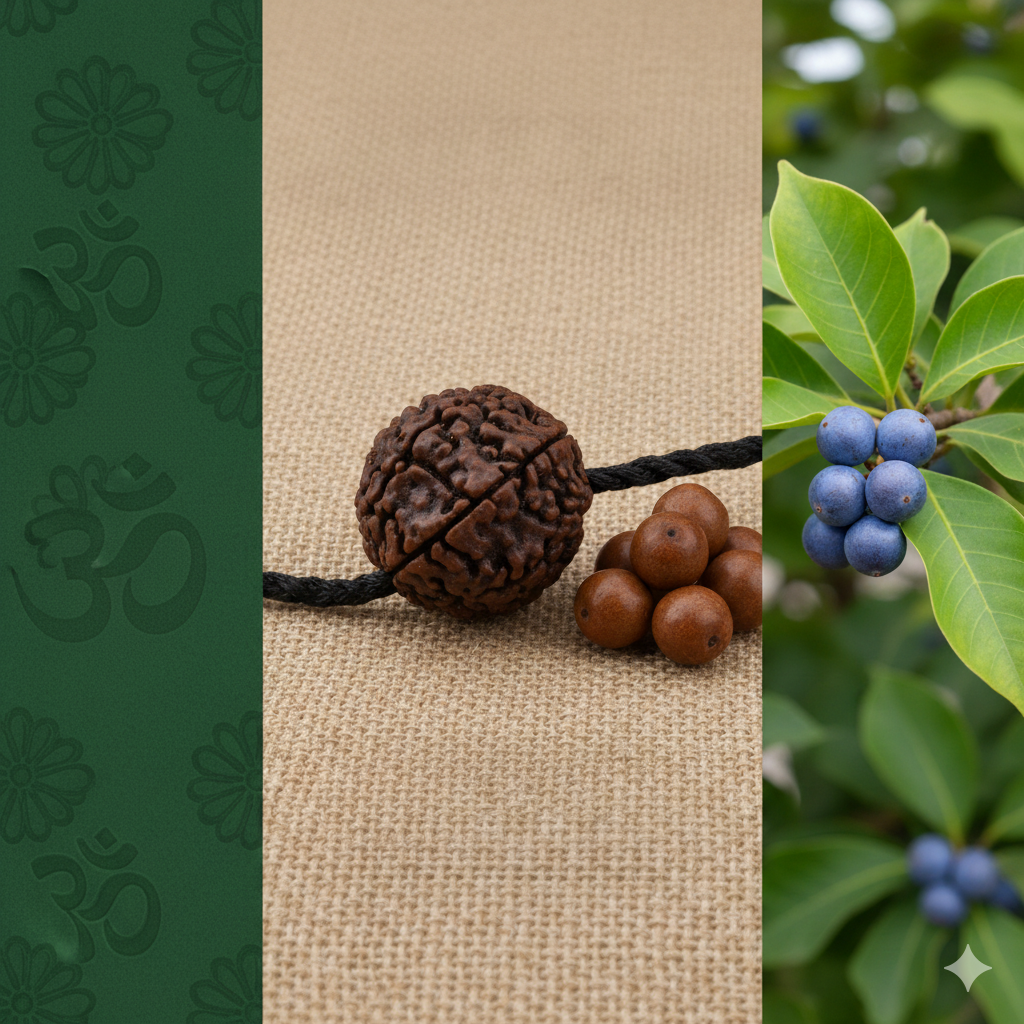
Before diving into the comparison, it helps to understand what Rudraksha actually is. Rudraksha is the seed of the fruit produced by the *Elaeocarpus ganitrus* tree. The word itself comes from Sanskrit — “Rudra” (a name for Lord Shiva) and “Aksha” (meaning eye or tear).
These trees grow naturally in specific geographic zones, primarily the Himalayan belt of Nepal and the tropical islands of Indonesia (especially Java, Sumatra, and Bali). The number of natural divisions or “faces” on each seed is called a **mukhi**, and beads range from 1 mukhi to 21 mukhi, each associated with different spiritual and astrological properties.
Both Nepali and Indonesian Rudraksha come from the same botanical species. The differences between them arise from climate, altitude, soil conditions, and growing environment — not from being fundamentally different plants.
Indonesian Rudraksha vs Nepali: The Core Differences
This is the heart of the comparison. Let us break down every factor that matters when choosing between these two origins.
Size and Weight
The most immediately obvious difference is physical.
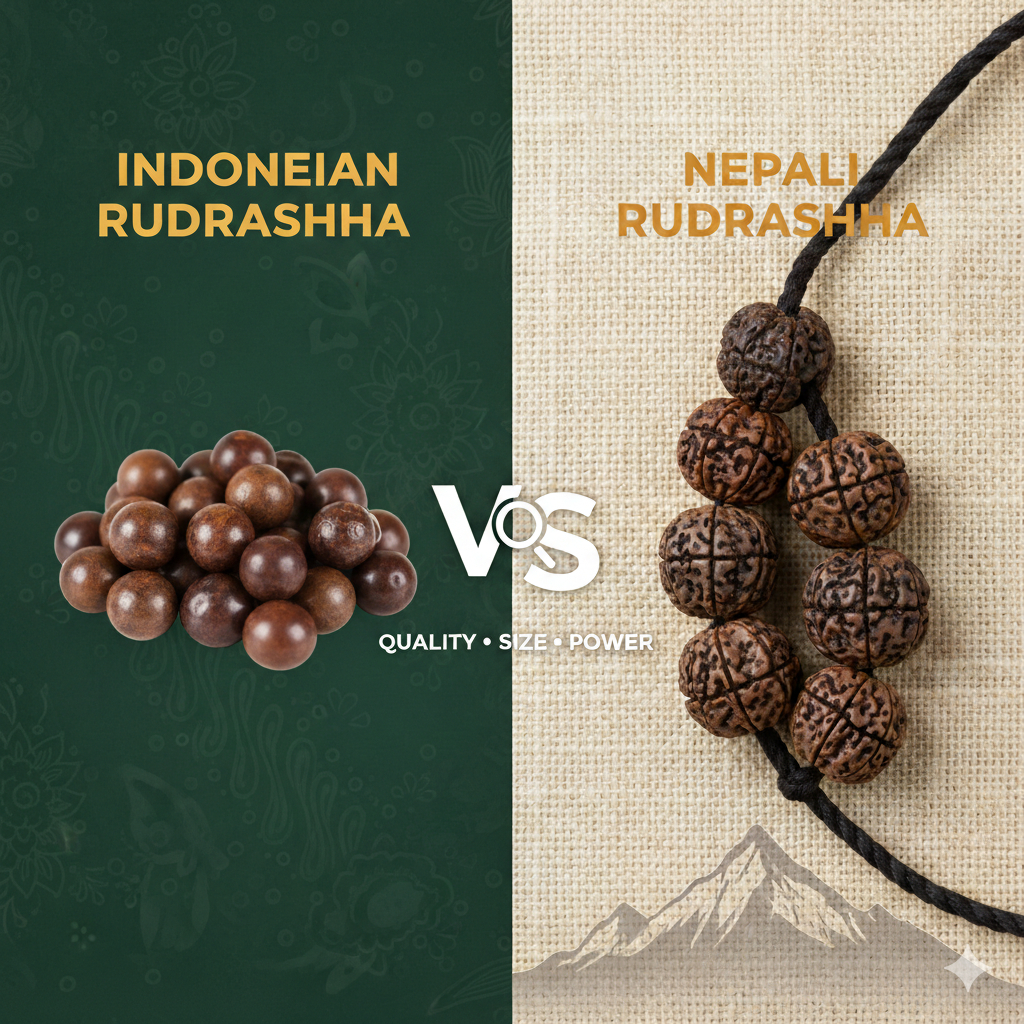
Nepali Rudraksha beads are significantly larger and heavier. A typical Nepali bead ranges from 15 mm to 30 mm or even larger for collector-grade specimens. In terms of weight, a high-quality Nepali bead of A+ grade often weighs 4 to 6 grams or more.
Indonesian Rudraksha beads are noticeably smaller. Most fall between 5 mm and 15 mm. The average weight of an Indonesian bead is roughly 0.5 to 2 grams, with rare specimens reaching about 3 grams at most.
This size difference is a direct result of growing conditions. The cool, high-altitude Himalayan climate of Nepal produces larger, denser seeds. The warm, tropical lowlands of Indonesia yield smaller, lighter beads.
Surface Texture and Mukhi Lines
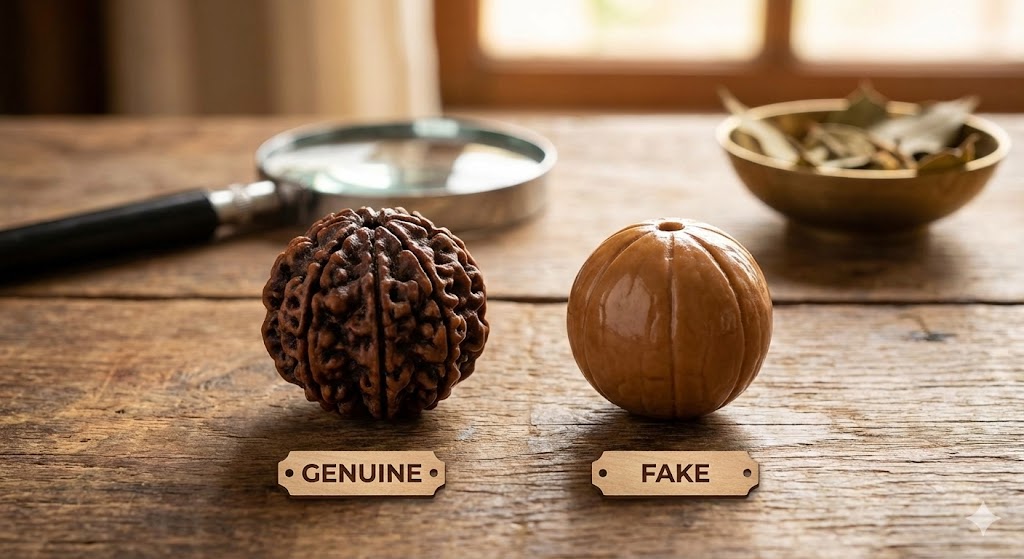
Nepali beads have a rough, deeply textured surface. The mukhi lines are bold, well-defined, and deeply carved into the surface of the seed. You can typically count the mukhis with the naked eye, even without any magnification.
Indonesian beads have a smoother surface. The mukhi lines appear as fine, shallow grooves — often represented by thin white lines running from the top hole to the bottom. Counting mukhis on an Indonesian bead frequently requires a magnifying glass or even a microscope, which can make authenticity verification more challenging for the average buyer.
Colour and Appearance
Fresh Nepali Rudraksha beads tend to be darker brown, sometimes almost chocolate-coloured. They look robust and earthy from day one.
Indonesian beads start out lighter — a pale or sandy brown. Over time, with regular wear and oiling, both varieties darken and eventually turn nearly black, which is actually a sign of genuine Rudraksha.
Some specific Indonesian varieties, like the 1 Mukhi and 2 Mukhi, can actually be darker than their Nepali counterparts due to unique micro-climatic influences during growth.
Comparison Table: Indonesian Rudraksha vs Nepali at a Glance
| Feature | Nepali Rudraksha | Indonesian Rudraksha |
| Origin | Himalayan region of Nepal | Java, Sumatra, Bali (Indonesia) |
| Size | 15–30+ mm | 5–15 mm |
| Weight | 4–6+ grams | 0.5–2 grams |
| Mukhi Lines | Deep, bold, clearly visible | Fine, shallow, often need magnification |
| Surface | Rough, textured | Smoother |
| Colour | Dark brown | Light brown (darkens over time) |
| Energy Intensity | Stronger, faster-acting | Gentler, more gradual |
| Time to Feel Effects | Reportedly 15–35 days | Reportedly 45–90 days |
| Price | Higher (due to rarity) | More affordable |
| Availability | Limited supply, rarer | Abundant (70%+ of global supply) |
| Best For | Serious practitioners, deep meditation | Beginners, daily wear, budget-conscious buyers |
| Durability | Thicker shell, very durable | Durable but requires gentler handling |
| Natural Hole | Yes | Yes |
Spiritual Effectiveness: Which Rudraksha Is More Powerful?
This is the question most seekers really want answered. And it requires nuance.
Energy Intensity and Speed of Effect
Many practitioners and traditional texts suggest that Nepali Rudraksha carries a stronger energetic vibration. The larger size means the internal seed compartments are more fully developed and spaced, which is believed to enhance the flow of pranic energy around the wearer.
Anecdotal reports and practitioner feedback indicate that the effects of a Nepali bead — such as increased calmness, mental clarity, or a sense of spiritual connection — may begin to manifest within two to four weeks of consistent wear.
Indonesian Rudraksha, by contrast, is widely described as having a gentler, more gradual energy signature. Many sources suggest that the effects take 45 to 90 days to become noticeable. This slower onset is not necessarily a weakness — for beginners or people sensitive to energy shifts, the subtler approach of an Indonesian bead may actually be preferable.
What Do Traditional Scriptures Say?
References in texts like the Shiva Purana and Vishnu Purana speak about the sacredness of Rudraksha without making rigid distinctions based on geographic origin. Both Nepali and Indonesian beads are considered spiritually valid.
That said, a common traditional perspective holds that beads originating closer to Mount Kailash — Lord Shiva’s legendary abode — carry additional potency. Since Nepal sits in the Himalayan belt near Kailash, Nepali Rudraksha is often given higher regard in orthodox practice.
The key takeaway is that both origins are scripturally legitimate. The difference lies in intensity and speed, not in validity.
Practitioner Feedback
Sellers and spiritual counsellors who have tracked customer experiences over years report that buyers who start with Indonesian Rudraksha are significantly more likely to upgrade to Nepali beads within the first year, compared to the other way around. This pattern suggests that many seekers eventually crave the stronger energy that Nepali beads are known for.
However, many long-term practitioners also happily use Indonesian Rudraksha for daily chanting malas, where comfort, weight, and affordability matter more than raw intensity.
Price Comparison: Why the Cost Difference?
Price is often the deciding factor, so it deserves a dedicated section.
Why Nepali Rudraksha Costs More
Several factors combine to make Nepali beads more expensive:
Lower supply. Nepal produces far fewer beads than Indonesia. The growing regions are limited, the harvest is seasonal, and the forests are more regulated.
Higher demand. Orthodox practitioners, collectors, and astrologers tend to prefer Nepali beads, which drives up demand.
Rarity of high-mukhi beads. Rare varieties like 1 Mukhi (Sawar form), 14 Mukhi, or Gauri Shankar are extremely scarce in Nepali origin and can command prices in the tens of thousands of rupees or even lakhs.
Quality grading.Nepali beads with A+ or collector-grade ratings — those with perfectly defined mukhis, no damage, and large size — fetch premium prices.
Indonesian Rudraksha: The Budget-Friendly Alternative
Indonesia produces over 70 percent of the world’s Rudraksha supply. Large-scale cultivation in tropical plantations keeps costs low. A 5 Mukhi Indonesian Rudraksha, for example, may cost a fraction of what a similar Nepali bead commands.
This affordability makes Indonesian Rudraksha ideal for:
– Beginners exploring Rudraksha for the first time
– People who want full malas (108 beads) without a large investment
– Wearing as everyday jewellery or bracelets
– Gifting to family and friends
Authenticity and Certification
Fake Rudraksha is a real problem in the market, and origin affects how easy it is to verify a bead.
Identifying Genuine Nepali Rudraksha
Because of their larger size and deep mukhi lines, Nepali beads are generally easier to authenticate through visual inspection. The mukhis can be counted without tools, and the weight and texture provide additional confirmation cues.
Many reputable Nepali sellers offer government-backed or lab-issued certificates of authenticity that detail the mukhi count, weight, origin, and whether the bead is natural or treated.
Identifying Genuine Indonesian Rudraksha
The small size and shallow mukhi lines of Indonesian beads make visual verification harder. This is why expert guidance or certification becomes particularly important when purchasing Indonesian Rudraksha, especially for higher-mukhi beads (9 Mukhi and above) where counterfeits are more common.
Common authenticity tests that apply to both origins include:
Water test: A genuine Rudraksha sinks in water; most fakes float.
Copper coin test: Placing the bead between two copper coins — a genuine bead will rotate slightly due to its electromagnetic properties (though this test is not universally reliable).
Visual inspection: Checking for natural irregularities. Machine-made fakes tend to be unnaturally symmetrical.
X-ray or CT scan: The gold standard for verification, especially for rare and expensive beads. Internal seed compartments should match the external mukhi count.
Wearability and Daily Use
Choosing Rudraksha is not just about spiritual potency — you also need to wear it comfortably every day.
Nepali Rudraksha for Daily Wear
Nepali beads are larger and heavier, which makes them excellent for single-bead pendants, short malas (27 or 54 beads), or wrist malas. However, a full 108-bead mala of large Nepali Rudraksha can feel quite heavy around the neck, especially during physical activity.
Their thicker shell makes them highly durable. With basic care — occasional oiling and keeping away from harsh chemicals — a Nepali bead can last a lifetime.
Indonesian Rudraksha for Daily Wear
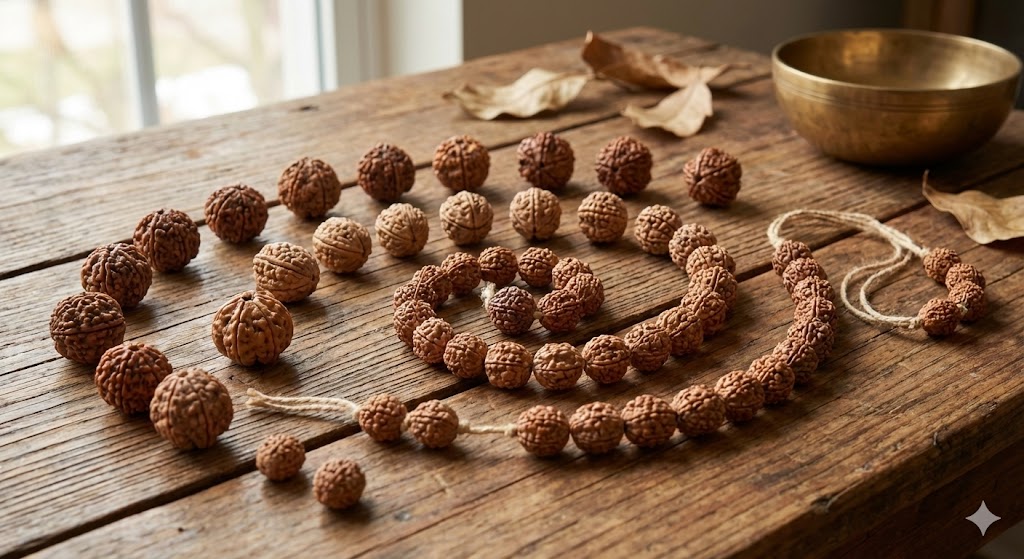
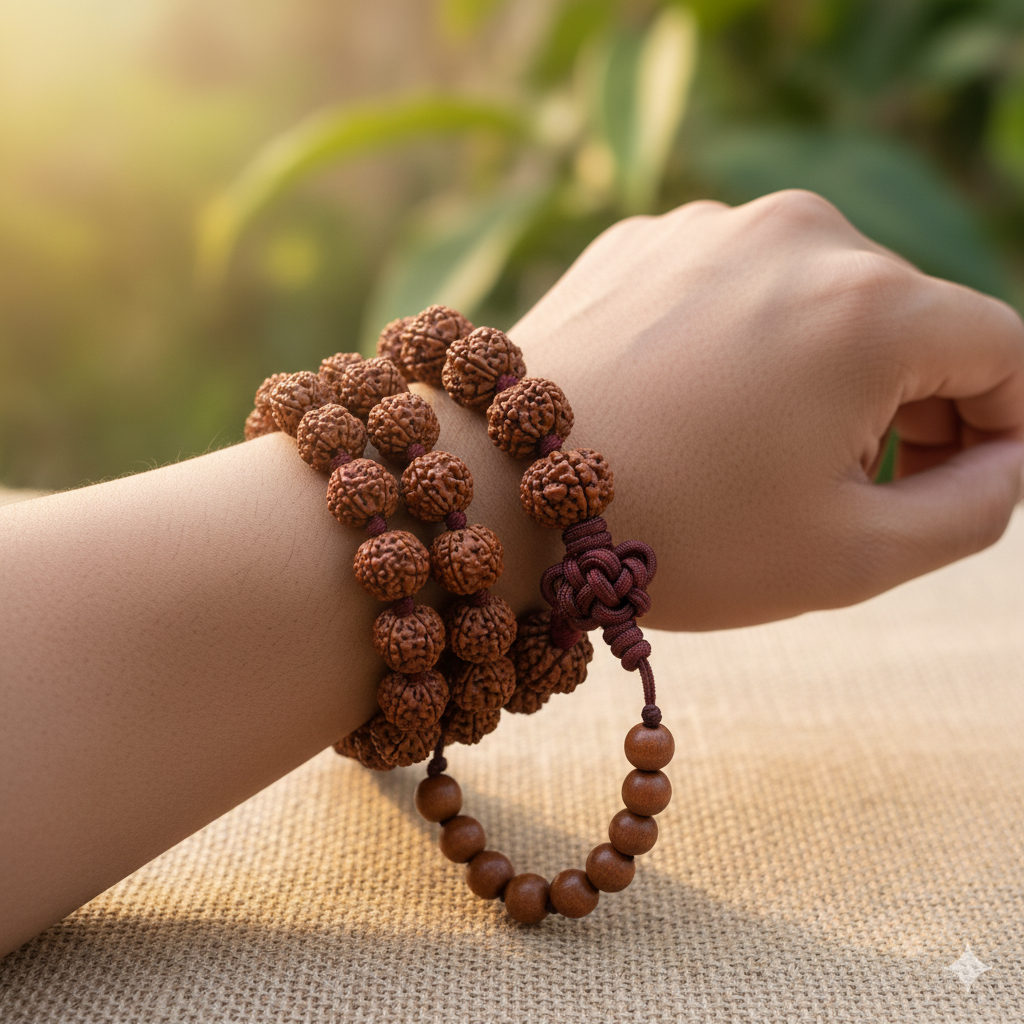
The smaller, lighter profile of Indonesian beads makes them the natural choice for full 108-bead malas used in daily chanting (japa). Most Rudraksha malas you see in temples and ashrams are, in fact, made from Indonesian beads precisely because of their comfort during extended use.
Indonesian beads are still durable, but their thinner shell means they benefit from slightly more careful handling, especially in bracelets that are exposed to knocks and friction throughout the day.
The Best-of-Both-Worlds Approach
Many experienced practitioners use a combination:
A Nepali Rudraksha pendant (often a specific high-mukhi bead chosen for a particular purpose) worn close to the heart for its stronger energy.
– An Indonesian Rudraksha mala for daily chanting and meditation, where lightness and comfort are priorities.
This combination lets you benefit from the intensity of Nepali beads and the practicality of Indonesian ones without compromise.
Availability and Market Supply
Understanding supply dynamics helps explain price differences and also helps you assess what you are being sold.
Nepal: Limited and Seasonal
Nepal’s Rudraksha-producing regions are concentrated in specific districts. Harvesting is seasonal and weather-dependent. The overall yield is modest compared to global demand, and rare mukhi varieties are genuinely scarce.
This limited supply, combined with growing international interest, has led to steady price increases for Nepali Rudraksha over the past decade.
Indonesia: Abundant and Plantation-Grown
Indonesia benefits from large-scale plantation cultivation across multiple islands. The tropical climate supports consistent, year-round production. As a result, Indonesia supplies an estimated 70 percent or more of the world’s Rudraksha beads.
This abundance keeps Indonesian Rudraksha affordable and widely accessible, making it the backbone of the commercial Rudraksha market.
Which Rudraksha Should You Choose? A Decision Framework
Rather than declaring one origin “better” than the other, here is a practical framework to help you decide based on your actual needs.
Choose Nepali Rudraksha If:
- You are an experienced practitioner seeking stronger and faster spiritual effects.
- You want a single high-quality bead for a specific purpose (e.g., a particular mukhi for an astrological remedy).
- You value bold, visible mukhi lines and prefer easy visual authenticity.
- You are investing in a rare or collector-grade bead for long-term use.
- Budget is not a primary constraint.
Choose Indonesian Rudraksha If:
- You are new to Rudraksha and want to explore without a large financial commitment.
- You need a full mala for daily chanting or meditation.
- You prefer lighter, more comfortable beads for all-day wear.
- You want to gift Rudraksha to multiple people affordably.
- You enjoy a gentler, more gradual energy experience.
Choose Both If:
- You want the strongest possible combination — a Nepali pendant for intensity and an Indonesian mala for daily practice.
- You are building a personal collection of different mukhi beads across origins.
Common Myths and Misconceptions
Myth 1: Indonesian Rudraksha Is Fake or Ineffective
This is flatly incorrect. Indonesian Rudraksha comes from the same species of tree as Nepali Rudraksha. Ancient texts like the Shiva Purana recognise Rudraksha without disqualifying any geographic origin. Indonesian beads are genuine, spiritually valid, and effective — they simply work at a different pace and intensity.
Myth 2: Bigger Rudraksha Is Always Better
Size matters within the same origin — a larger Nepali bead may be more potent than a tiny one because the internal compartments have more room to develop. However, comparing a large Nepali bead directly to a small Indonesian bead is not an apples-to-apples comparison. Each origin has its own natural size range, and effectiveness should be judged within that context.
Myth 3: Nepali Rudraksha Is the Only “Real” Rudraksha
This misconception often comes from sellers who only stock Nepali beads. Both origins are real, natural, and sacred. The choice between them should be based on your needs, not on commercial bias.
Myth 4: Price Equals Spiritual Power
A more expensive bead is not automatically more powerful for you. The right Rudraksha depends on your specific situation — your mukhi requirement, your comfort, your practice level, and your intention. A well-chosen, genuine 5 Mukhi Indonesian bead worn with devotion will serve a beginner far better than an expensive Nepali collector piece sitting in a drawer.
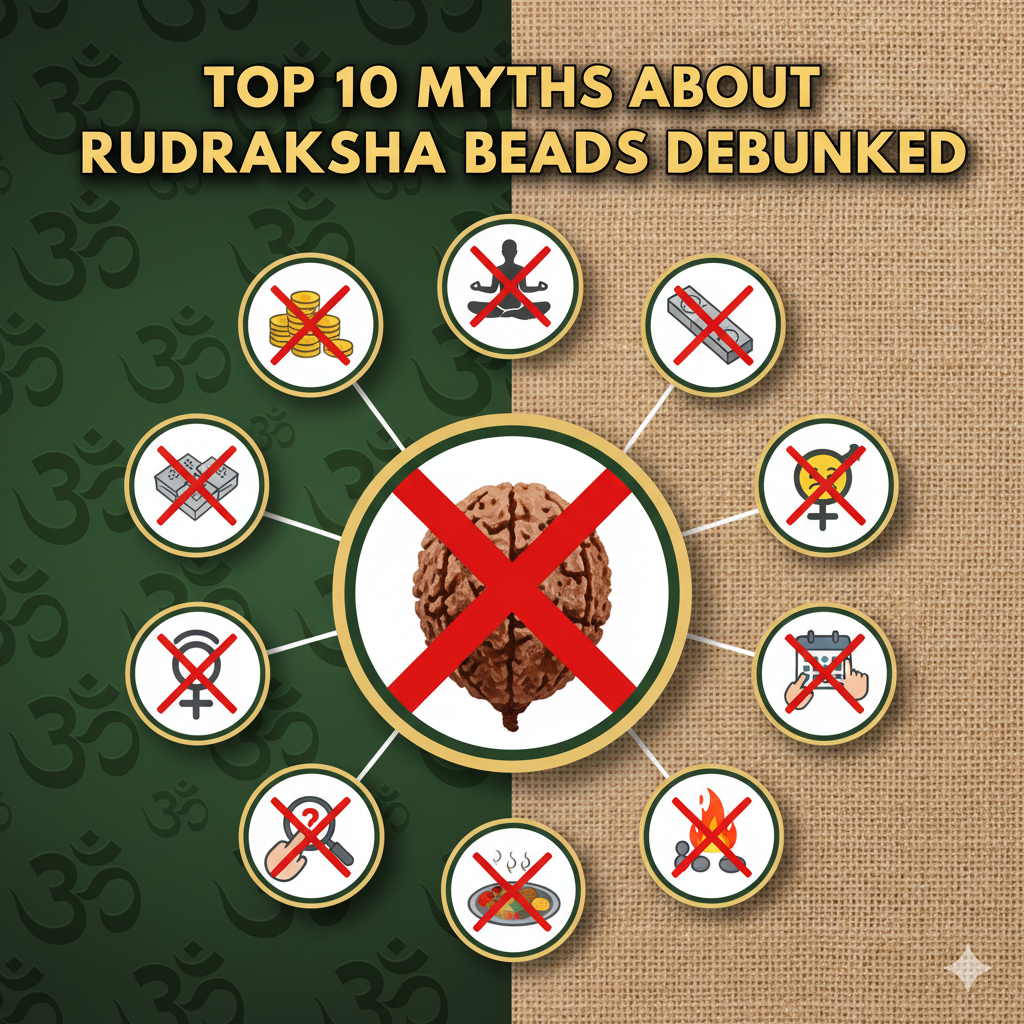
Also Read This – Top 10 Myths About Rudraksha Beads Debunked
How to Care for Your Rudraksha (Both Origins)
Regardless of whether you choose Nepali or Indonesian Rudraksha, proper care ensures your bead lasts for years and maintains its energy.
Oil regularly. Apply a thin layer of olive oil, mustard oil, or sandalwood oil once every two to four weeks to prevent the bead from drying and cracking.
Avoid chemicals. Remove your Rudraksha before swimming in chlorinated water, using harsh soaps, or applying perfumes directly on it.
Clean gently. Wipe with a soft, dry cloth. If deeper cleaning is needed, use a soft-bristle brush and plain water, then dry thoroughly.
Store properly. When not wearing it, keep your Rudraksha in a clean pouch or on your altar. Avoid tossing it on random surfaces.
Wear consistently. Rudraksha is believed to grow more attuned to the wearer’s energy over time. Regular, consistent wear is encouraged.
Rudraksha for Specific Purposes: Origin Recommendations
| Purpose | Recommended Origin | Reason |
| Deep meditation | Nepali | Stronger vibration aids focus |
| Daily japa mala (108 beads) | Indonesian | Lightweight, comfortable |
| Astrological remedy (specific mukhi) | Nepali | Higher potency for targeted effect |
| Beginner exploration | Indonesian | Affordable, gentle entry point |
| Gift for family members | Indonesian | Budget-friendly for multiple beads |
| Collector or investment piece | Nepali | Rarity and appreciation potential |
| Children’s use | Indonesian | Smaller, lighter, less expensive |
How the Global Market Is Evolving
The Rudraksha market has changed significantly in recent years. Online shopping has made both Nepali and Indonesian beads accessible to buyers worldwide. At the same time, the rise of counterfeits has made certification and trusted sourcing more important than ever.
Nepal has tightened regulations around Rudraksha harvesting and export, which is likely to keep Nepali bead prices on an upward trajectory. Indonesia’s plantation model continues to grow, ensuring stable supply and affordable pricing for the mass market.
For buyers, this means that a combination strategy — high-quality Nepali beads for key purposes, affordable Indonesian beads for everyday use — is becoming the most practical and popular approach.
Conclusion
The indonesian rudraksha vs nepali debate does not have a single winner. Both origins produce genuine, sacred beads from the same tree species. Nepali Rudraksha offers larger size, bolder mukhis, stronger energy, and faster effects — but at a higher price and with limited availability. Indonesian Rudraksha provides affordability, comfort, gentle energy, and abundant supply — making it ideal for beginners and daily-wear malas.
Your best choice depends on your spiritual goals, your budget, and how you plan to use the bead. Many experienced seekers use both and find that the combination offers the best of both worlds.
Whatever you choose, the most important factors are authenticity, intention, and consistency in your practice. A genuine Rudraksha worn with devotion will always serve you well.
What has your experience been with Nepali or Indonesian Rudraksha? Share your thoughts in the comments below, and feel free to share this guide with fellow seekers who are navigating the same decision.
Also Read – How to Choose the Right Mukhi Rudraksha for Your Zodiac Sign
FAQs: Indonesian Rudraksha vs Nepali
Can I wear Indonesian and Nepali Rudraksha beads together on the same mala?
Yes, you can combine beads of different origins on the same mala or even wear them as separate pieces simultaneously. There is no scriptural restriction against mixing origins. Many practitioners wear a Nepali pendant alongside an Indonesian japa mala for a balanced experience of strong and gentle energy.
How can a beginner tell if a Rudraksha bead is Nepali or Indonesian just by looking at it?
The easiest visual cue is size and surface texture. Nepali beads are noticeably larger (usually over 15 mm), heavier, and have deep, clearly visible mukhi lines. Indonesian beads are smaller (usually under 15 mm), lighter, and have finer, shallower lines that may need magnification to count accurately.
Does the spiritual benefit of Rudraksha expire over time regardless of origin?
No. Genuine Rudraksha beads are believed to retain their spiritual properties indefinitely as long as they are cared for properly — oiled regularly, kept clean, and not physically damaged. In fact, many traditions hold that beads grow more powerful the longer they are worn.
Is it true that Indonesian Rudraksha is just a “lower grade” of Nepali Rudraksha?
No, this is a misconception. Indonesian and Nepali Rudraksha grow from the same species of tree but in different climates, which causes differences in size, texture, and energy intensity. Indonesian beads are not defective versions of Nepali ones — they are a distinct variety shaped by tropical growing conditions.
Are there any mukhi types that are only available from one origin?
Most mukhi types (1 through 21) are found in both origins, but with different shapes. For example, the 1 Mukhi from Indonesia is typically elliptical (also called the “cashew shape”), while the 1 Mukhi from Nepal comes in the rounded Sawar form, which is extremely rare and much more expensive. The availability and shape of specific mukhis can differ significantly between origins.
What is the best way to buy Rudraksha online without getting cheated?
Look for sellers who provide lab certificates or X-ray reports for each bead, especially for higher-mukhi varieties. Check customer reviews and return policies. Reputable sellers will also offer clear photographs showing the mukhi lines. Avoid deals that seem too cheap for the claimed mukhi and origin — if a “14 Mukhi Nepali” is being sold for a few hundred rupees, it is almost certainly fake.