
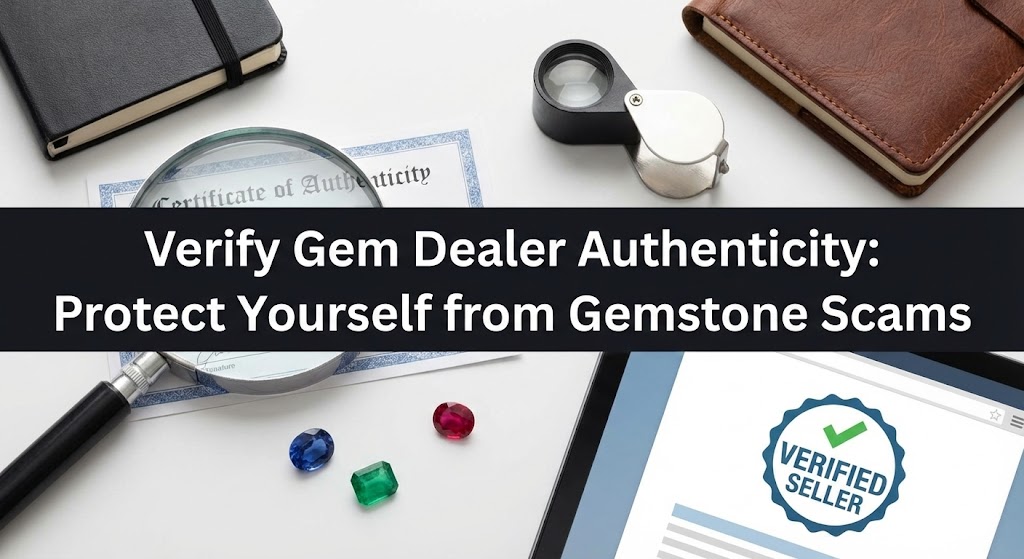
Verify Gem Dealer Authenticity: Buying a gemstone should be an exciting experience, not a gamble with your hard-earned money. Yet every year, thousands of consumers fall victim to fraudulent gem dealers selling fake stones, misrepresented gems, or overpriced low-quality pieces. The Federal Trade Commission receives thousands of jewelry-related fraud complaints annually, with victims losing significant amounts on purchases that turn out to be worthless.
Here’s the good news: verifying a gem dealer’s authenticity isn’t complicated once you know what to look for. Whether you’re shopping for a diamond engagement ring, a colored gemstone for your collection, or a special anniversary gift, this guide will equip you with the knowledge to distinguish trustworthy dealers from potential scammers.
By the end of this article, you’ll understand exactly how to check dealer credentials, verify gemstone certifications, recognize warning signs of fraud, and ask the questions that separate reputable professionals from dishonest sellers. Let’s dive into the essential steps that will protect your investment and give you confidence in every gemstone purchase.
Why Verifying a Gem Dealer Matters
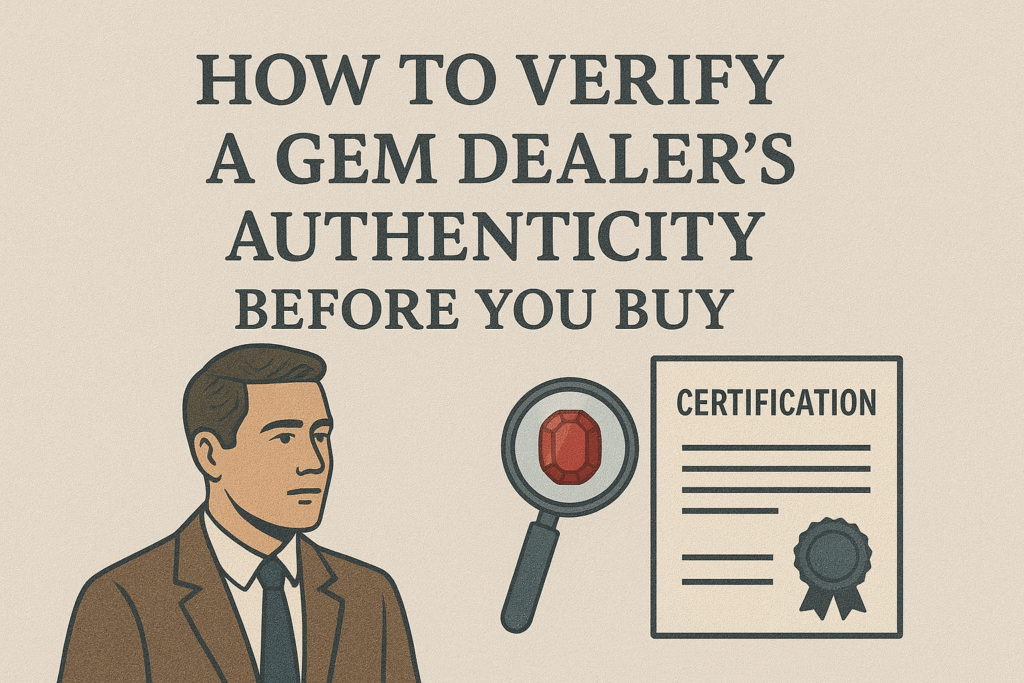
The gemstone industry operates on trust, specialized knowledge, and international supply chains that most consumers never see. This creates opportunities for unscrupulous sellers to take advantage of buyers who lack gemological expertise.
The Reality of Gemstone Fraud
Gemstone fraud takes many forms. Some dealers sell synthetic stones as natural gems. Others misrepresent heavily treated gemstones as untreated, significantly inflating their value. Still others use fake or altered certification documents to convince buyers they’re getting quality stones.
The problem extends beyond obvious counterfeits. Many scams involve legitimate gemstones that have been misgraded, misidentified, or subjected to undisclosed treatments that affect their value and durability. A beautiful ruby might actually be a glass-filled composite worth a fraction of what you paid.
What’s at Stake
Unlike many purchases, gemstones represent significant financial investments. A single mistake can cost hundreds or thousands of dollars. Beyond the financial loss, buyers who discover they’ve been deceived often feel embarrassed and violated, having trusted someone who deliberately took advantage of their inexperience.
The stakes are even higher for purchases tied to important life moments. An engagement ring with a misrepresented diamond, a graduation gift with a fake gemstone, or an anniversary present that turns out to be worthless can taint what should be cherished memories.
Understanding Gemstone Certifications and Lab Reports
Certification from a reputable gemological laboratory is your first line of defense when purchasing gemstones. These documents provide independent verification of a stone’s identity, quality, and any treatments it has undergone.
What a Gemstone Certificate Includes
A legitimate gemstone certificate from a recognized laboratory typically contains detailed information about the stone you’re purchasing. This includes the gem’s identity confirming whether it’s a natural diamond, sapphire, or other gemstone. The report also covers carat weight measured precisely using calibrated instruments, along with color grade, clarity assessment, and cut quality where applicable.
For diamonds specifically, certificates include detailed measurements, proportions, and often a plot showing the location of internal inclusions. Colored gemstone reports may include photographs and information about the stone’s origin when determinable.
Recognized Gemological Laboratories
Not all gem labs are created equal. The most respected certification organizations maintain strict standards and operate independently from commercial interests.
- GIA (Gemological Institute of America) stands as the world’s most trusted name in diamond grading and gem identification. As a nonprofit organization founded in 1931, GIA operates independently and maintains rigorous standards for objectivity. Their reports are recognized globally as the benchmark for gemstone evaluation.
- AGS (American Gem Society) is another highly respected nonprofit organization that focuses on diamond grading and has developed its own scientifically reviewed cut grade method. AGS certification is particularly valued for detailed cut quality analysis.
- IGI (International Gemological Institute) provides certification services worldwide and is well-regarded for both diamond and colored gemstone reports.
- GRS (GemResearch Swisslab) specializes in colored gemstone certification and is particularly recognized for origin determination of rubies, sapphires, and emeralds.
How to Verify a Certificate Online
Every reputable gemological laboratory provides online verification services. For GIA certificates, visit their Report Check website and enter the unique report number found on the certificate. The database will display the stone’s characteristics, allowing you to confirm the certificate is genuine and matches the stone you’re considering.
The verification process works similarly for other major laboratories. AGS, IGI, and GRS each maintain searchable databases where you can input the report number and verify authenticity. If a certificate cannot be verified through the issuing laboratory’s official website, treat it as a major red flag.
Checking Dealer Credentials and Memberships
Professional associations and industry organizations hold their members to ethical standards and provide consumers with recourse if problems arise. A dealer’s affiliations can tell you a lot about their commitment to honest business practices.
Key Professional Associations
American Gem Trade Association (AGTA) was founded in 1981 and now includes over 1,000 members. AGTA requires members to disclose all gemstone treatments and enhancements in writing and adhere to ethical standards that exceed FTC requirements. Asking whether a dealer belongs to AGTA provides valuable insight into their business practices.
American Gem Society (AGS) has been protecting jewelry buyers since 1934. AGS members must complete a peer-reviewed application process and pass annual recertification exams. The organization focuses on consumer protection, ethical business practices, and gemological education.
Jewelers Vigilance Committee (JVC) has served as the guardian of ethics and integrity in the jewelry industry since 1912. JVC members commit to complying with all jewelry industry laws and resolving customer complaints fairly and promptly.
Using the Better Business Bureau
The Better Business Bureau offers another way to research a gem dealer before purchasing. You can search for reviews, complaints, and accreditation status. BBB accreditation indicates the dealer has committed to truth in advertising, transparency, and good-faith resolution of customer disputes.
Verifying Membership Claims
When a dealer claims membership in professional organizations, verify it. Most associations maintain online directories where you can search for member businesses. For AGS members, visit their website and use the member search function. AGTA also provides a member directory on their website.
If a dealer claims credentials they don’t actually hold, that’s a clear warning sign to take your business elsewhere.
Red Flags That Signal a Fraudulent Gem Dealer
Recognizing warning signs can save you from making a costly mistake. Experienced gemologists and consumer protection organizations have identified common patterns that distinguish legitimate dealers from potential scammers.
Pricing That Seems Too Good to Be True
If a price seems dramatically lower than what other reputable dealers charge for similar stones, there’s usually a reason. Legitimate gemstones cost what they cost because of market forces, mining expenses, cutting labor, and supply chain economics. A dealer offering a “special deal” that undercuts the market significantly is likely selling something other than what they claim.
This applies especially to tourist destinations and vacation areas, where scammers commonly approach visitors with “wholesale” prices from a “friend” in the gem trade. These operations frequently sell glass, synthetics, or heavily treated stones at inflated prices.
Pressure Tactics and Urgency
Trustworthy gem dealers understand that purchasing fine gemstones requires careful consideration. They provide information, answer questions, and give you time to make an informed decision. Dealers who pressure you to buy immediately, claim an offer expires soon, or discourage you from seeking independent verification are showing classic scam behavior.
Refusal to Provide Documentation
A reputable dealer welcomes questions about certification and provenance. They can provide laboratory reports from recognized organizations or facilitate getting stones certified before purchase. Dealers who become evasive when asked about documentation, offer only their own “in-house” certificates, or claim certification isn’t necessary should raise immediate concerns.
Vague or Evasive Answers
Ask about treatments, origin, and the dealer’s supply chain. Legitimate professionals can explain where their stones come from, what treatments they’ve undergone, and how they verify authenticity. Dealers who provide vague answers, change the subject, or become defensive when questioned about their products may be hiding something.
Limited or No Return Policy
The inability to inspect gemstones thoroughly before purchase makes return policies essential. Reputable dealers stand behind their products with clear, fair return policies that give you time to have stones independently evaluated. Dealers with no return policy or highly restrictive terms may be counting on buyers not discovering problems until it’s too late.
Recently Established Online Presence
For online purchases, investigate how long the website has existed. Recently registered domains combined with emotional sales narratives, AI-generated images, or recycled product photos from other websites are common elements of fraudulent operations. Check social media profiles for genuine engagement history and look for consistent customer reviews across multiple platforms.
Essential Questions to Ask Before Buying
Asking the right questions accomplishes two things: it provides information you need to make a good decision, and it helps you gauge the dealer’s knowledge and honesty. A knowledgeable, ethical dealer will welcome your questions.
Questions About the Gemstone
Start by asking whether the stone is natural, synthetic, or simulated. This fundamental question establishes what you’re actually buying. Follow up by asking what treatments the gemstone has undergone. Heat treatment, irradiation, fracture filling, and diffusion are common processes that affect value and durability.
Request information about the stone’s origin if applicable. While origin can be difficult to verify for all gemstones, a dealer should be able to tell you what they know about their supply chain and the general provenance of their inventory.
Ask about the grading criteria used to evaluate the stone. For diamonds, this means understanding the 4Cs. For colored gemstones, discuss color quality, clarity characteristics, and cut quality. A knowledgeable dealer can explain these factors in detail.
Questions About Documentation
Ask whether a laboratory report from a recognized gemological institute accompanies the stone. If not, ask whether you can have the stone certified before purchase or whether the dealer will facilitate independent certification.
If a certificate exists, ask for the report number so you can verify it online before finalizing the purchase. Any reluctance to provide this information warrants serious concern.
Questions About the Dealer
Ask about the dealer’s professional affiliations and memberships. As discussed earlier, membership in organizations like AGTA, AGS, or JVC indicates commitment to ethical standards.
Inquire about how long the business has operated and ask for references from long-term customers. Established dealers with strong reputations have histories you can verify.
Ask about the return policy and get specifics in writing. Understand the timeframe for returns, any restocking fees, and the process for returning items. Legitimate dealers make this information clear and accessible.
Verify Gem Dealer Authenticity Checklist: A Step-by-Step Process
Use this systematic approach to verify any gem dealer before making a purchase.
Step 1: Research the Dealer
Search for the dealer’s name along with terms like “reviews,” “complaints,” or “scam.” Check the Better Business Bureau for accreditation and complaint history. Look for the dealer on professional association directories to verify claimed memberships.
Step 2: Verify Credentials
Confirm membership in claimed professional organizations using official directories. Check that any displayed certifications or accreditations are current and legitimate.
Step 3: Evaluate the Business
For physical stores, visit and observe the professionalism of the operation. For online dealers, verify domain registration history, look for genuine customer reviews across multiple platforms, and confirm contact information is valid.
Step 4: Request Documentation
Ask for laboratory reports from recognized gemological institutes. Verify report numbers online through the issuing laboratory’s database. Ensure the documentation matches the stone you’re considering.
Step 5: Ask Questions
Use the questions outlined above to assess the dealer’s knowledge, transparency, and willingness to provide information. Note any evasiveness or pressure tactics.
Step 6: Confirm Policies
Get return and exchange policies in writing before purchase. Understand warranty terms and any guarantees offered. Verify how disputes would be handled.
Step 7: Consider Independent Verification
For significant purchases, consider having the stone independently appraised before finalizing the transaction. Many jewelers can recommend reputable appraisers who have no financial interest in the sale.
Buying Online vs. In-Person: What Changes?
While the core principles of dealer verification remain the same, online and in-person purchases present different challenges and require adapted approaches.
Online Purchases
When buying gemstones online, you cannot physically inspect the stone before purchase, making documentation even more critical. Insist on detailed photographs from multiple angles, and if possible, request video showing how the stone appears in different lighting.
Verify the website’s security credentials and look for secure payment options that offer buyer protection. Read the fine print on shipping, insurance, and returns. A legitimate online dealer will have comprehensive policies that protect both parties.
Check for consistent business information across the website, social media, and third-party review platforms. Inconsistencies may indicate a fraudulent operation.
In-Person Purchases
In-person shopping allows you to examine stones directly, but bring knowledge with you. Understand basic gemological concepts so you can evaluate what you’re seeing. Don’t rely solely on what the salesperson tells you.
Ask to see the stone under different lighting conditions, as some treatments are more visible under certain light. Use a loupe to examine the stone closely if you’re comfortable doing so, or ask the dealer to show you notable characteristics under magnification.
Be especially cautious when purchasing in unfamiliar locations, particularly tourist areas or cruise ship ports. The excitement of travel can make people more susceptible to scams, and distance from home complicates any attempt to seek recourse.
What to Do If You Suspect Fraud
Even careful buyers can sometimes encounter problems. Knowing how to respond protects your interests and may help prevent others from being victimized.
Immediate Steps
If you suspect you’ve purchased a misrepresented gemstone, act quickly. Have the stone independently evaluated by a certified appraiser or gemological laboratory. Keep all documentation including receipts, certificates, and communications with the dealer.
Seeking Resolution
Contact the dealer directly with your concerns. Reputable dealers will work to resolve legitimate complaints. Document all communications in writing for your records.
If the dealer is a member of professional organizations, contact those organizations with your complaint. Groups like the JVC and AGTA have mechanisms for addressing member misconduct.
Formal Complaints
File complaints with appropriate agencies including the Better Business Bureau, the Federal Trade Commission, and your state’s consumer protection office. For online fraud, report to the Internet Crime Complaint Center.
If credit card fraud is involved, contact your card issuer to dispute the charge. Many credit cards offer purchase protection that can help recover losses from fraudulent transactions.
Building a Relationship with a Trusted Dealer
Finding a reputable gem dealer is an investment that pays dividends over time. Once you’ve verified a dealer’s authenticity and had positive experiences, maintaining that relationship provides ongoing benefits.
The Value of Trust
A trusted dealer becomes a valuable resource for all your gemstone needs. They learn your preferences, can watch for stones you’re seeking, and provide honest guidance on purchases and care. This relationship also provides easier resolution if any issues arise.
Continuing Due Diligence
Even with trusted dealers, remain engaged and informed. Ask questions about each purchase, review documentation, and stay current on industry developments. Good dealers appreciate educated customers and will continue earning your trust through transparent practices.
Conclusion
Verifying a gem dealer’s authenticity before you buy isn’t about being suspicious or difficult. It’s about being a smart consumer in an industry where specialized knowledge matters and significant money changes hands. The steps outlined in this guide take time, but they protect investments that may represent months of savings or mark important life moments.
Start with certification verification, as legitimate laboratory reports from recognized organizations provide independent confirmation of what you’re buying. Check dealer credentials through professional associations and the Better Business Bureau. Learn to recognize red flags that signal potential fraud. Ask questions that reveal both the dealer’s knowledge and their willingness to be transparent.
Most gem dealers are honest professionals who genuinely love gemstones and want satisfied customers. By following this verification process, you’ll find those trustworthy dealers while avoiding the few who might take advantage of uninformed buyers.
Your next step? Use this guide for your next gemstone purchase. Research dealers before visiting, prepare your questions, and take the time to verify everything. Your beautiful, authentic gemstone, purchased with confidence from a reputable dealer, will be worth the effort.
Frequently Asked Questions
Can I trust a gem dealer who doesn’t have GIA certification for their stones?
GIA certification isn’t the only indicator of a trustworthy dealer. While GIA reports are highly respected, stones certified by other reputable laboratories like AGS, IGI, or GRS are also legitimate. What matters is that certification comes from a recognized, independent gemological laboratory and can be verified online. Some dealers work primarily with colored gemstones that may be certified by specialized labs. Evaluate the dealer based on multiple factors including their professional affiliations, transparency, and willingness to facilitate independent verification.
How much does it cost to have a gemstone independently certified before purchase?
Certification costs vary based on the gemstone type, size, and level of detail requested. Diamond grading reports from GIA typically start around $48 for smaller stones and increase with carat weight, with a one-carat diamond certification costing approximately $110. Colored gemstone identification and origin reports have different fee structures. Many reputable dealers will facilitate certification as part of the sales process, sometimes including the cost in the purchase price. The cost of certification is minimal compared to the protection it provides against fraud.
What should I do if a dealer refuses to let me verify their gemstone certificate online?
Refusal to allow certificate verification is a major red flag that should stop any transaction. Legitimate certificates from recognized laboratories can always be verified through the issuing organization’s website. If a dealer claims the certificate is real but won’t provide the report number for online verification, walk away. This behavior strongly suggests the certificate is fake, altered, or doesn’t match the stone being sold. Never purchase a gemstone based solely on a certificate you cannot independently verify.
Are online gem dealers generally safe to buy from?
Online gem dealers can be perfectly safe when properly vetted. Many reputable jewelers operate successful online businesses with excellent customer service and fair policies. The key is applying the same verification standards you would use for in-person purchases: check professional memberships, verify certifications, read reviews across multiple platforms, confirm clear return policies, and research the business history. The main difference is you cannot physically examine stones before purchase, making documentation and return policies even more important.
How can I tell if a gemstone treatment disclosure is complete and honest?
Complete treatment disclosure should specify exactly what has been done to the stone, not just acknowledge it has been “enhanced.” Ask specifically about heat treatment, irradiation, fracture filling, diffusion, and any other processes. Compare what the dealer tells you with what appears on any laboratory certification. Reputable labs identify and disclose treatments as part of their evaluation. If the dealer’s claims don’t match the lab report, or if they become vague when pressed for specifics, that’s cause for concern. A knowledgeable, honest dealer will explain treatments clearly and help you understand how they affect value and care requirements.
What recourse do I have if I purchase a gemstone that turns out to be fake or misrepresented?
Your options depend on how and where you purchased. Start by contacting the dealer directly with documentation of the misrepresentation from an independent appraiser or laboratory. If the dealer belongs to professional organizations, file complaints with those groups. Report the fraud to the Better Business Bureau, Federal Trade Commission, and your state’s consumer protection office. For credit card purchases, dispute the charge with your card issuer, as many cards offer purchase protection. Keep all documentation including the original receipt, certificates, communications with the dealer, and the independent evaluation that revealed the problem. For significant losses, consult with an attorney about potential civil remedies.