
Have you ever wondered if the Rudraksha bead you purchased is real or fake? You are not alone. With the growing popularity of Rudraksha beads worldwide, the market has unfortunately become flooded with counterfeit products.
Understanding how to test Rudraksha at home has become essential for anyone who values authenticity in their spiritual practice. Fake Rudraksha beads not only waste your money but also fail to deliver the spiritual and health benefits associated with genuine beads.
In this comprehensive guide, you will learn seven proven methods to test Rudraksha authenticity right in your home. These simple techniques require no special equipment and can help you distinguish real Rudraksha from clever imitations. Whether you are a first-time buyer or want to verify beads you already own, this guide provides everything you need to know.
By the end of this article, you will feel confident in identifying genuine Rudraksha beads and protecting yourself from fraudulent sellers.
What Is Rudraksha? Understanding the Sacred Bead
Before learning how to test Rudraksha at home, it is important to understand what makes these beads so special.
The Origin of Rudraksha
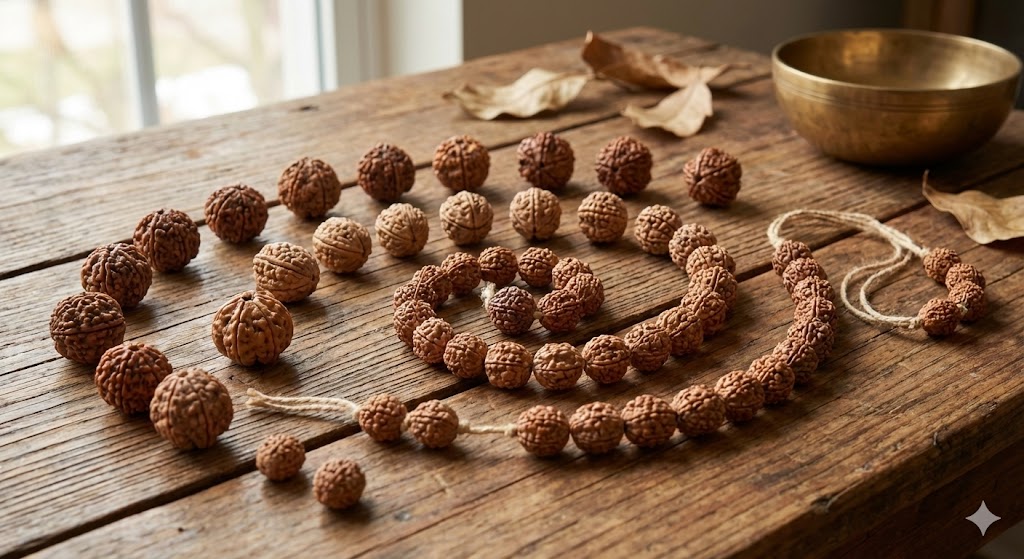
Rudraksha beads come from the seeds of the Elaeocarpus ganitrus tree, commonly found in the Himalayan regions of Nepal, Indonesia, and parts of India. The name “Rudraksha” derives from Sanskrit, combining “Rudra” (another name for Lord Shiva) and “Aksha” (meaning eyes or tears).
According to Hindu mythology, these sacred beads formed from the tears of Lord Shiva during deep meditation. This divine origin makes Rudraksha highly revered in spiritual practices across South Asia and beyond.
Types of Rudraksha Based on Mukhis
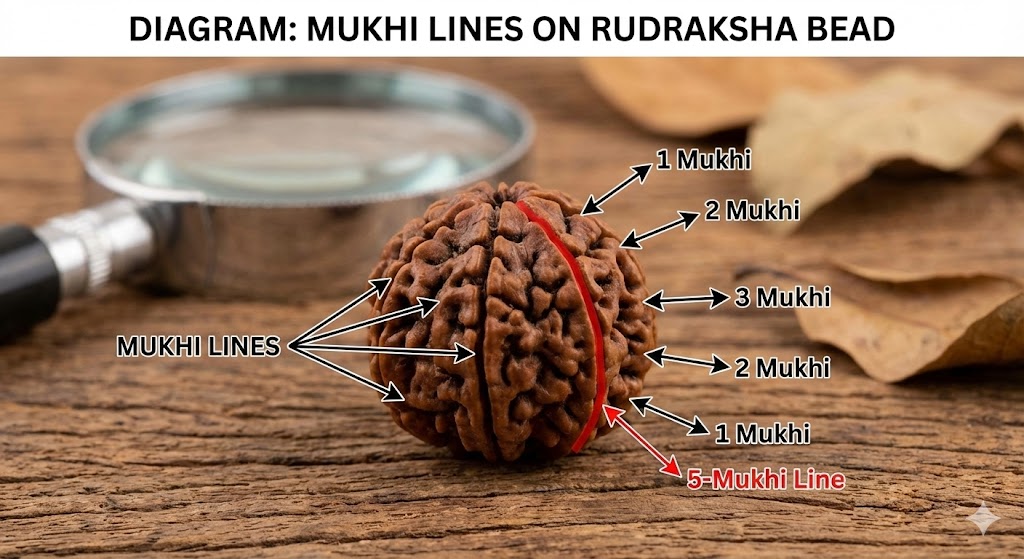
The word “mukhi” refers to the vertical lines or faces running from the top to the bottom of a Rudraksha bead. Each mukhi represents a different deity and carries unique spiritual significance.
| Mukhi Type | Associated Deity | Primary Benefit |
|---|---|---|
| 1 Mukhi | Lord Shiva | Spiritual enlightenment |
| 2 Mukhi | Ardhanarishvara | Harmonious relationships |
| 3 Mukhi | Agni (Fire God) | Confidence and energy |
| 4 Mukhi | Lord Brahma | Knowledge and creativity |
| 5 Mukhi | Lord Kalagni | General well-being |
| 6 Mukhi | Lord Kartikeya | Willpower and focus |
| 7 Mukhi | Goddess Lakshmi | Prosperity and wealth |
| 8 Mukhi | Lord Ganesha | Obstacle removal |
| 9 Mukhi | Goddess Durga | Power and protection |
| 10 Mukhi | Lord Vishnu | Peace and protection |
| 11 Mukhi | Lord Hanuman | Courage and adventure |
| 12 Mukhi | Lord Surya | Leadership qualities |
Why Rudraksha Authenticity Matters
Wearing a genuine Rudraksha is believed to offer numerous benefits, including stress reduction, improved concentration, and spiritual growth. However, fake beads cannot provide these benefits. Some counterfeit beads are made from:
- Plastic or resin
- Carved wood
- Other seeds modified to look like Rudraksha
- Artificially created composite materials
This is why learning how to test Rudraksha at home is crucial for anyone serious about their spiritual journey.
Why the Market Is Flooded with Fake Rudraksha
Understanding the counterfeit problem helps you appreciate why testing is necessary.
The Growing Demand Problem
The global interest in yoga, meditation, and Eastern spirituality has created unprecedented demand for Rudraksha beads. This demand has outpaced the natural supply, especially for rare varieties like the 1 Mukhi Rudraksha.
Genuine Rudraksha trees take years to mature, and each tree produces limited seeds annually. This scarcity has driven prices up significantly, making counterfeiting a profitable business for unscrupulous sellers.
Common Types of Fake Rudraksha
Counterfeiters have developed sophisticated methods to create fake beads. Here are the most common types you might encounter:
Plastic Imitations These are mass-produced replicas made from molded plastic or resin. They often look too perfect and uniform, which is actually a sign of inauthenticity since natural beads always have slight variations.
Carved Wood Fakes Some fakers carve ordinary wood to create mukhi lines and then treat the surface to mimic Rudraksha texture. These can be harder to detect visually.
Modified Seeds Certain other seeds, like those from the Badraksh tree, are modified and sold as genuine Rudraksha. They may pass some basic tests but fail others.
Composite Beads These are created by combining fragments of real Rudraksha with other materials. They may contain some genuine elements but are still considered fake.
Price as an Indicator
While price alone should not determine authenticity, unusually low prices are often a red flag. A genuine 1 Mukhi Rudraksha from Nepal can cost thousands of dollars, while a fake might be sold for just a few hundred.
| Rudraksha Type | Authentic Price Range | Suspicious Price |
|---|---|---|
| 1 Mukhi (Round) | $1,000 – $5,000+ | Under $500 |
| 5 Mukhi | $5 – $50 | Under $2 |
| Gauri Shankar | $100 – $500 | Under $50 |
| 14 Mukhi | $300 – $1,500 | Under $100 |
How to Test Rudraksha at Home: 7 Proven Methods
Now let us explore the seven most reliable methods to test Rudraksha authenticity at home. Each method examines different properties of genuine Rudraksha beads.
Method 1: The Water Test for Rudraksha
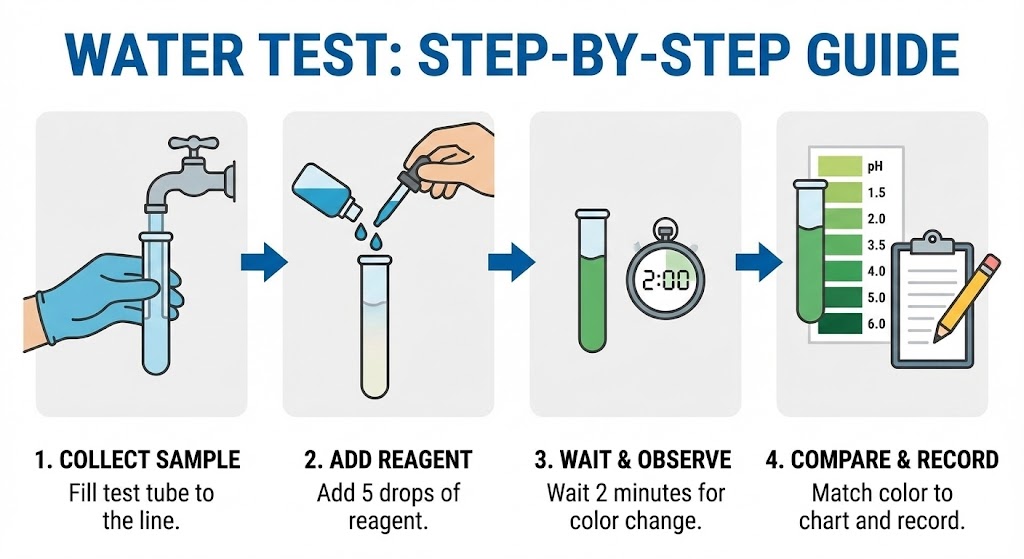
The water test is the most popular and easiest way to begin testing your Rudraksha bead. This simple method relies on the natural density of genuine Rudraksha seeds.
How to Perform the Water Test:
- Take a clean glass or bowl
- Fill it with room temperature water
- Gently place your Rudraksha bead in the water
- Observe whether it sinks or floats
Interpreting the Results:
A genuine Rudraksha bead will sink to the bottom of the container. This happens because authentic Rudraksha seeds are denser than water due to their natural cellular structure.
Fake beads made from lightweight materials like plastic or hollow wood will float on the surface or remain suspended in the middle of the water.
Important Considerations:
While the water test is a good starting point, it is not foolproof. Some expertly crafted fakes may contain weighted materials to make them sink. Additionally, very dry or old genuine Rudraksha beads might initially float due to trapped air in their pores. In such cases, leave the bead submerged for 1-2 hours and check again.
This is why you should always combine the water test with other verification methods mentioned in this guide.
Method 2: The Copper Coin Test
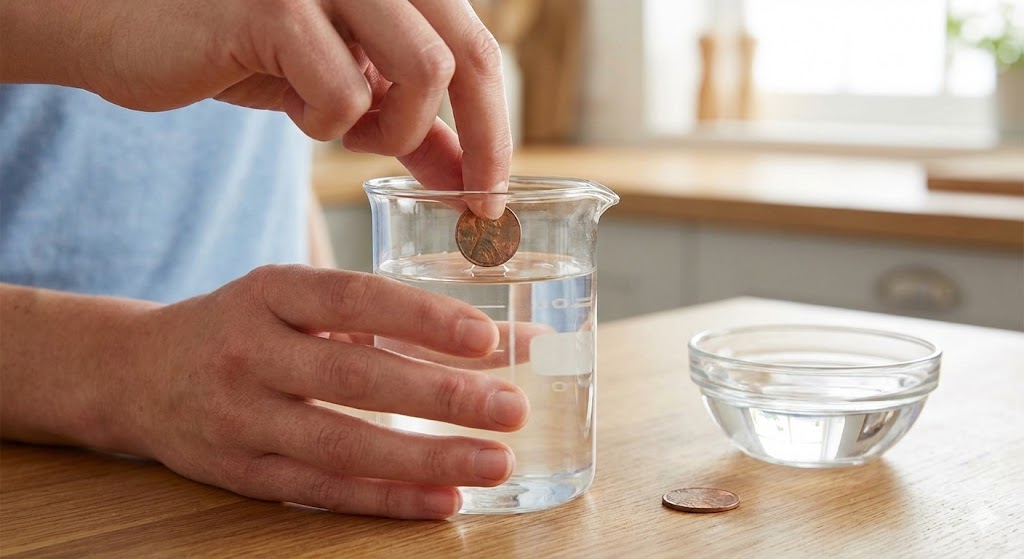
The copper coin test is another traditional method used to verify Rudraksha authenticity. This test is based on the electromagnetic properties of genuine Rudraksha beads.
Materials Needed:
- Two copper coins (pure copper works best)
- Your Rudraksha bead
- A flat, stable surface
Step-by-Step Process:
- Place your Rudraksha bead on a flat surface
- Hold one copper coin in each hand
- Position the coins on opposite sides of the Rudraksha bead
- Gently press the coins against the bead
- Observe any rotation or movement
What to Look For:
When placed between two copper coins, a genuine Rudraksha bead will slowly rotate or spin on its axis. This rotation occurs because authentic Rudraksha has natural electromagnetic properties that interact with copper.
A fake Rudraksha bead will remain stationary and show no movement when subjected to this test.
Pro Tips for Better Results:
- Use coins that are as pure copper as possible
- Perform the test on a smooth, level surface
- Apply gentle, even pressure from both sides
- Be patient as the rotation may be subtle
- Repeat the test several times to confirm results
Scientific Explanation:
Genuine Rudraksha seeds contain trace amounts of iron and other minerals absorbed from the soil during growth. These minerals create a weak magnetic field that interacts with copper’s conductive properties, resulting in the observable rotation.
Method 3: The Visual Inspection Test
A thorough visual inspection can reveal many signs of authenticity or fakery. This method requires careful observation of the bead’s physical characteristics.
What to Examine:
Natural Surface Texture
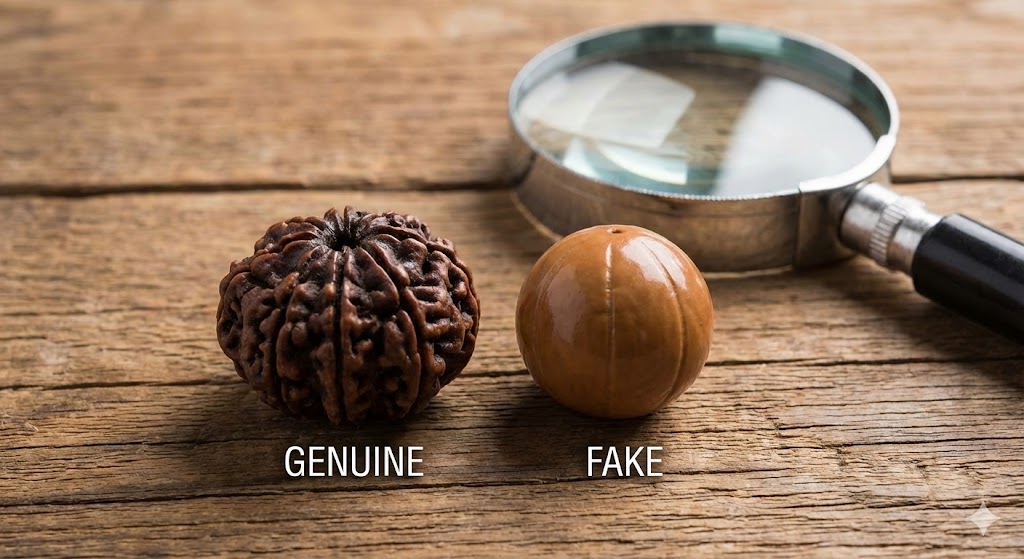
Genuine Rudraksha beads have a naturally rough, uneven surface. The texture should feel slightly coarse to the touch, similar to the surface of a walnut. Look for tiny natural pores and slight irregularities that indicate organic growth.
Fake beads often have surfaces that are either too smooth (molded plastic) or artificially textured with uniform patterns (carved wood).
Mukhi Line Characteristics
The mukhi lines on authentic Rudraksha run from the top (where the bead was attached to the stem) to the bottom in a continuous pattern. These lines should:
- Be clearly defined but not perfectly symmetrical
- Show natural variations in depth
- Connect at both ends (top and bottom)
- Have slight wobbles rather than perfectly straight edges
Counterfeit beads often display mukhi lines that are too uniform, do not connect properly, or appear artificially carved with sharp edges.
Natural Hole
Most genuine Rudraksha beads have a natural hole running through their center. This hole:
- Has irregular, organic edges
- May vary slightly in diameter throughout
- Shows the internal seed structure
Fake beads often have drill holes that are perfectly round and uniform, indicating mechanical creation.
Color Assessment
Authentic Rudraksha beads range in color from light tan to deep brown, depending on their age and origin:
- Fresh beads: Lighter brown with possible green tints
- Aged beads: Deeper brown with natural patina
- Indonesian origin: Generally lighter
- Nepal origin: Usually darker, more robust
Be wary of beads that are:
- Jet black (likely artificially dyed)
- Uniform in color with no variation
- Unnaturally shiny or glossy
Method 4: The Milk Test for Rudraksha
The milk test is a traditional method mentioned in ancient texts for verifying Rudraksha authenticity. While somewhat less reliable than other methods, it can provide additional confirmation.
How to Conduct the Milk Test:
- Fill a small bowl with fresh cow’s milk
- Place your Rudraksha bead in the milk
- Leave it submerged for 24 hours
- Remove the bead and examine both the bead and the milk
Expected Results for Genuine Rudraksha:
When a genuine Rudraksha is placed in milk overnight:
- The milk remains fresh and does not spoil quickly
- The milk may develop a slight color change (becoming slightly yellowish)
- The bead maintains its structural integrity
- The surface texture remains unchanged
Signs of a Fake Rudraksha:
- Milk spoils faster than normal
- Bead loses color or releases dye into the milk
- Surface coating comes off
- Bead swells, warps, or changes shape
Important Notes:
This test should be performed in a cool environment to prevent normal milk spoilage from confusing the results. Room temperature around 20-25°C (68-77°F) is ideal.
Some people believe that genuine Rudraksha has natural antimicrobial properties that help preserve the milk. However, this claim lacks scientific verification, so use this test as a supplement to other methods rather than a primary verification technique.
[IMAGE: Bowl of milk with Rudraksha bead for testing | Alt text: Demonstration of Rudraksha milk test showing bead submerged in fresh cow’s milk]
Method 5: The X-Ray or Cut Test (Advanced)
For those who need absolute certainty about their Rudraksha’s authenticity, the X-ray or cut test provides definitive results. However, this method may damage the bead and should only be used when other tests are inconclusive.
The X-Ray Method:
If you have access to X-ray facilities (some jewelry stores or medical facilities may help):
- Have the Rudraksha X-rayed
- Examine the internal structure
Genuine Rudraksha beads show:
- Clear internal compartments matching the number of mukhis
- Natural seed structure with organic patterns
- No foreign materials or artificial cores
Fake beads reveal:
- Solid mass without compartments
- Artificial internal structures
- Metal or other foreign materials used for weight
The Cut Test:
This test destroys the bead but provides 100% certainty:
- Carefully cut the Rudraksha bead in half using a sharp blade
- Examine the internal structure
What Genuine Rudraksha Shows:
- Multiple compartments (each corresponding to one mukhi)
- Small seeds within each compartment
- Natural fiber structure
- No artificial filling or modifications
What Fake Beads Reveal:
- Solid interior without compartments
- Synthetic materials
- Uniform density without organic structure
- Signs of carving or artificial construction
When to Use This Test:
- When purchasing expensive rare beads (1, 14, or 21 Mukhi)
- When other tests give conflicting results
- For educational purposes to understand Rudraksha structure
- When the bead is one of several and can be sacrificed for verification
[IMAGE: Cross-section diagram of genuine Rudraksha showing internal compartments | Alt text: Anatomical illustration of cut Rudraksha bead displaying internal seed compartments and natural structure]
Method 6: The Heat Test
The heat test examines how a Rudraksha bead responds to elevated temperatures. This method helps identify plastic fakes and artificially treated beads.
Safety First:
Before performing this test, ensure you have proper ventilation and handle heat sources carefully. Never directly expose the bead to open flames.
Procedure:
- Hold the Rudraksha bead with metal tweezers or pliers
- Hold it near (not in) a heat source for 10-15 seconds
- Observe any changes in the bead
- Note any smell produced
Results for Genuine Rudraksha:
- Bead remains structurally unchanged
- May release a natural woody smell
- Surface does not melt, bubble, or distort
- Color remains consistent
Signs of Fake Rudraksha:
- Plastic beads: Will begin to soften, melt, or emit a chemical plastic smell
- Resin beads: May become sticky or change texture
- Artificially dyed beads: May release dye or change color unevenly
- Coated beads: Coating may bubble or peel
Temperature Guidelines:
- Use moderate heat (like holding near a lamp or using a hair dryer)
- Avoid direct flame contact
- Test duration should not exceed 30 seconds
- Allow the bead to cool completely before handling
Important Caution:
This test can potentially damage genuine Rudraksha if overheated. Use the minimum heat necessary and for the shortest duration possible. If you notice any concerning changes, stop immediately.
Method 7: The Magnification Test
Using a magnifying glass or jeweler’s loupe provides detailed insights into a Rudraksha bead’s authenticity. This non-destructive test reveals microscopic details invisible to the naked eye.
Equipment Needed:
- Magnifying glass (10x magnification minimum)
- Good lighting (natural daylight works best)
- Your Rudraksha bead
- Optional: Digital microscope or smartphone macro lens
What to Examine Under Magnification:
Surface Pores:
Genuine Rudraksha beads have tiny natural pores scattered across their surface. These pores:
- Vary in size and depth
- Appear randomly distributed
- Have irregular shapes
- Show organic cellular structure
Fake beads typically lack these natural pores or have artificially created uniform patterns.
Mukhi Line Detail:
Under magnification, authentic mukhi lines reveal:
- Tiny natural fibers along the grooves
- Varying depth throughout the line
- Organic irregularities and slight curves
- Natural wear patterns consistent with seed formation
Counterfeit lines often show:
- Sharp, clean edges from carving tools
- Uniform depth throughout
- Perfectly straight patterns
- Tool marks or machining evidence
Top and Bottom Holes:
The natural opening at the top and bottom of genuine Rudraksha displays:
- Irregular, organic edges
- Fiber patterns from the stem connection
- Natural variations in diameter
- Signs of organic growth patterns
Fake beads often have:
- Drilled holes with perfectly round edges
- Uniform diameter throughout
- Absence of natural fiber patterns
- Tool marks from drilling
Internal Surface:
If your bead has a threading hole, examine it under magnification:
- Genuine beads show fibrous internal structure
- Fake beads reveal smooth plastic or wood surfaces
- Modified beads may show signs of glue or filler

Quick Reference: Rudraksha Authenticity Test Comparison
Use this table to compare all testing methods at a glance:
| Test Method | Difficulty | Equipment Needed | Reliability | Destructive |
|---|---|---|---|---|
| Water Test | Easy | Glass of water | Medium | No |
| Copper Coin Test | Easy | Two copper coins | Medium-High | No |
| Visual Inspection | Easy | None (magnifier helpful) | Medium | No |
| Milk Test | Moderate | Bowl of milk | Low-Medium | No |
| X-Ray/Cut Test | Advanced | X-ray machine or blade | Very High | Potentially |
| Heat Test | Moderate | Heat source, tweezers | Medium-High | Potentially |
| Magnification Test | Easy | Magnifying glass | High | No |
Recommendation: For best results, use at least 3-4 different methods to verify your Rudraksha’s authenticity.
How to Test Rudraksha in 5 Quick Steps
How do you test if a Rudraksha is real?
To test if a Rudraksha is real, follow these five simple steps:
- Water Test: Place the bead in water. Genuine Rudraksha sinks; fake ones usually float.
- Visual Check: Look for natural surface texture with tiny pores and irregular mukhi lines.
- Copper Test: Place the bead between two copper coins. Real Rudraksha slowly rotates.
- Magnification: Use a magnifying glass to see natural fiber patterns and organic irregularities.
- Heat Test: Hold near gentle heat. Real Rudraksha releases a woody smell; plastic melts or emits chemical odor.
Always combine multiple tests for accurate results.
Common Myths About Rudraksha Testing
Several misconceptions exist about testing Rudraksha authenticity. Let us separate fact from fiction.
Myth 1: Genuine Rudraksha Always Floats in Water
The Truth: This is completely backwards. Genuine Rudraksha beads sink in water due to their natural density. Only very dry or air-filled beads may temporarily float before eventually sinking once air pockets are released.
Myth 2: The More Expensive, the More Authentic
The Truth: While genuine rare Rudraksha varieties are expensive, high price does not guarantee authenticity. Many counterfeiters exploit this misconception by pricing fake beads high to appear genuine.
Myth 3: Only Lab Tests Can Verify Authenticity
The Truth: While laboratory testing provides definitive results, the home testing methods described in this guide can identify most fakes with reasonable accuracy when used in combination.
Myth 4: All Indonesian Rudraksha Are Fake
The Truth: Indonesia is actually one of the largest legitimate sources of Rudraksha beads. Indonesian Rudraksha are genuine but typically have different characteristics than Nepali beads, including lighter color and smoother texture.
Myth 5: Rudraksha Should Not Be Worn During Certain Activities
The Truth: While there are traditional guidelines about Rudraksha care, many claims about activities that damage or “deactivate” Rudraksha are exaggerated. Genuine Rudraksha is remarkably durable.
Myth 6: The Boiling Water Test Is Reliable
The Truth: Some sources recommend boiling Rudraksha to test authenticity. This test can damage genuine beads and may not reliably detect all fakes. The room-temperature water test described earlier is safer and equally effective.
Regional Differences: Nepal vs Indonesian Rudraksha
Understanding regional variations helps in authentic Rudraksha identification.
Nepal Rudraksha Characteristics
Rudraksha beads from the Himalayan regions of Nepal are often considered the most potent and valuable. They typically feature:
Physical Properties:
- Larger size (averaging 15-25mm diameter)
- Deeper, more pronounced mukhi lines
- Rougher surface texture
- Darker brown coloration
- Denser, heavier feel
- Thicker walls
Market Factors:
- Higher price point
- Limited availability
- Greater demand among collectors
- Stricter harvesting regulations
Indonesian Rudraksha Characteristics
Indonesia produces the largest quantity of Rudraksha beads globally. They have distinct features:
Physical Properties:
- Smaller size (averaging 8-15mm diameter)
- Shallower mukhi lines
- Smoother surface texture
- Lighter tan to medium brown color
- Slightly lighter weight
- Thinner walls
Market Factors:
- More affordable pricing
- Abundant availability
- Popular for everyday wear
- Widely used in malas and jewelry
Comparison Table
| Feature | Nepal Rudraksha | Indonesian Rudraksha |
|---|---|---|
| Average Size | 15-25mm | 8-15mm |
| Color | Dark brown | Light to medium brown |
| Texture | Very rough | Moderately smooth |
| Mukhi Depth | Deep | Shallow to moderate |
| Price Range | Higher | More affordable |
| Availability | Limited | Abundant |
| Best For | Serious practitioners, collectors | Everyday wear, malas |
Important Note: Both Nepal and Indonesian Rudraksha are genuine and spiritually effective. The difference lies primarily in physical characteristics and price, not authenticity or spiritual power.
Where to Buy Authentic Rudraksha: Trusted Sources
Knowing where to purchase can prevent authenticity issues from the start.
Recommended Purchase Options
Direct Temple Sources:
Many established temples sell authenticated Rudraksha beads. Benefits include:
- Religious authenticity verification
- Fair pricing without excessive markup
- Connection to traditional sources
- Proper energization rituals included
Certified Dealers:
Look for dealers who offer:
- Certificate of authenticity
- Return policy
- Clear origin information
- Multiple verification methods
- Good reputation and reviews
Online Marketplaces (With Caution):
If buying online:
- Research seller reviews thoroughly
- Request multiple photos before purchase
- Ask about return policy
- Request video of water test
- Avoid deals that seem too good to be true
Red Flags When Buying Rudraksha
Avoid sellers who:
- Cannot provide origin information
- Refuse to allow testing before final purchase
- Price rare varieties (1, 14, 21 Mukhi) unrealistically low
- Pressure you to buy immediately
- Have no physical address or contact information
- Do not offer any authentication or return policy
Caring for Your Authentic Rudraksha
Once you have verified your Rudraksha’s authenticity, proper care ensures its longevity.
Daily Care Guidelines
Wearing Your Rudraksha:
- Wear directly against your skin when possible
- Remove before bathing with harsh soaps
- Avoid chemical exposure (perfumes, lotions)
- Handle with clean hands
Cleaning Your Rudraksha:
- Gently brush with soft bristle brush weekly
- Wipe with clean, dry cloth
- Occasional oil treatment (coconut or sandalwood oil)
- Allow to dry completely before storing
Storage Recommendations
When not wearing your Rudraksha:
- Store in clean, dry place
- Use silk or cotton pouch
- Keep away from direct sunlight
- Avoid plastic containers (can cause sweating)
- Store separately from other jewelry
Long-Term Maintenance
Monthly Care:
- Deep clean with lukewarm water
- Apply thin coat of natural oil
- Inspect for damage or wear
- Re-string mala if needed
Annual Care:
- Professional cleaning if heavily worn
- Verify bead integrity
- Replace damaged beads in malas
- Re-energize through appropriate rituals if desired
Expert Tips for Rudraksha Verification
Additional insights from experienced practitioners and dealers.
Tip 1: Trust Your Intuition
Many experienced practitioners report a distinct “feeling” from genuine Rudraksha beads. While not scientifically measurable, this energetic sensitivity develops over time and can provide additional guidance.
Tip 2: Build Relationships with Trusted Sellers
Developing a relationship with a reputable dealer provides ongoing access to authenticated beads. Trusted sellers often guarantee their products and may offer replacement if authenticity concerns arise.
Tip 3: Compare with Known Authentic Samples
If possible, compare your bead with a verified authentic Rudraksha. Side-by-side comparison makes identifying differences much easier than examining a single bead in isolation.
Tip 4: Document Your Collection
Keep records of:
- Purchase date and source
- Price paid
- Test results performed
- Photos for reference
- Any certificates received
This documentation helps verify authenticity over time and assists in identifying any later replacements or damage.
Tip 5: Learn to Identify Common Fakes
Familiarize yourself with the most common types of counterfeit Rudraksha in your market. Different regions often have different predominant fake types, and knowing what to look for accelerates identification.
Tip 6: When in Doubt, Get Professional Verification
For expensive rare Rudraksha beads, consider professional verification before purchase. The cost of verification is minimal compared to the potential loss from purchasing an expensive fake.
Understanding Rudraksha Certification
What do certificates of authenticity actually mean?
Types of Certificates
Laboratory Certificates:
Some organizations offer scientific testing including:
- X-ray examination
- Microscopic analysis
- Specific gravity measurement
- Chemical composition analysis
These certificates provide the highest level of assurance but add to the cost.
Dealer Certificates:
Many reputable dealers provide their own authentication certificates. These typically include:
- Physical description of the bead
- Origin information
- Date of authentication
- Dealer’s guarantee
- Return policy details
Temple Certificates:
Certain temples provide authentication for beads purchased through them. These often include:
- Energization verification
- Traditional authentication methods
- Blessing documentation
Evaluating Certificate Validity
Not all certificates are equally valuable. Consider:
- Reputation of the certifying organization
- Testing methods described
- Specificity of the certificate
- Verifiable contact information
- Whether the certificate is for your specific bead
Red Flags in Certificates
Be wary of certificates that:
- Contain generic descriptions
- Lack specific identification details
- Come from unknown organizations
- Cannot be verified independently
- Seem mass-produced rather than individualized
Special Considerations for Rare Rudraksha
Rare varieties require extra verification attention.
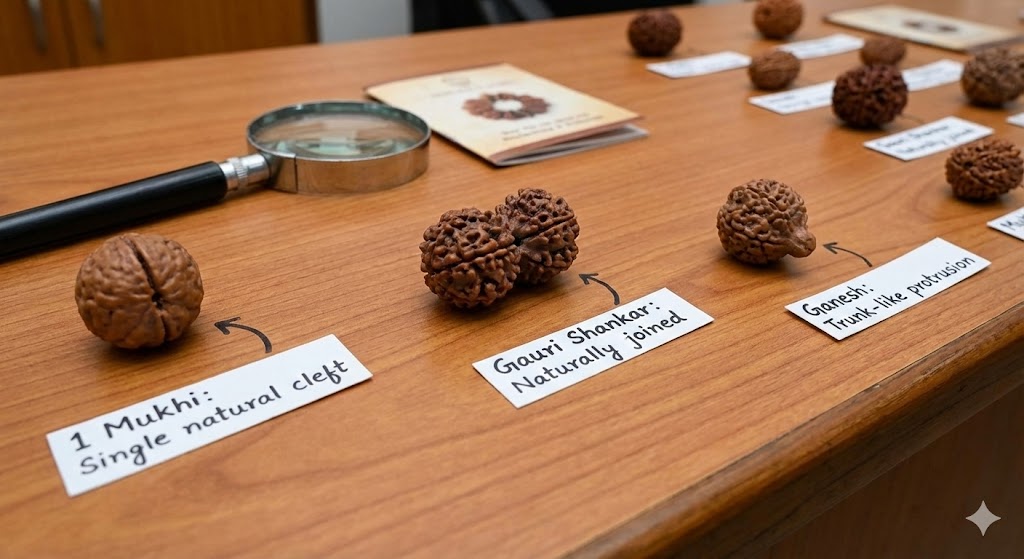
1 Mukhi Rudraksha (Ek Mukhi)
The most rare and valuable Rudraksha type. Key considerations:
- Naturally round 1 Mukhi is extremely rare
- Most available 1 Mukhi are “cashew” shaped (still genuine but different formation)
- Prices for round 1 Mukhi start in thousands of dollars
- Requires advanced testing methods
- Multiple verifications recommended before purchase
High Mukhi Rudraksha (14+ Mukhis)
Beads with 14 or more faces require careful verification:
- Examine each mukhi line carefully
- Verify mukhi count from multiple angles
- Check that all lines run continuously top to bottom
- Be especially cautious of artificially added lines
- Compare with authenticated reference images
Gauri Shankar Rudraksha
These naturally joined double beads are often faked:
- Examine the joint area carefully
- Look for natural fusion versus glued connection
- Check if both beads show authentic characteristics
- Magnification test is especially important
- Be cautious of perfectly symmetrical joints
Trijuti Rudraksha
Naturally occurring three-joined beads:
- Extremely rare (rarer than Gauri Shankar)
- Very high counterfeit rate
- Requires professional verification
- Laboratory testing strongly recommended
- Exercise extreme caution when purchasing
Conclusion: Your Complete Guide to Authentic Rudraksha
Learning how to test Rudraksha at home empowers you to make informed decisions about these sacred beads. Throughout this comprehensive guide, we have covered seven proven testing methods, from the simple water test to advanced magnification techniques.
Key Takeaways:
- Always use multiple testing methods together for accurate results
- The water test and visual inspection are your first line of defense
- Copper coin and magnification tests provide additional verification
- Regional differences between Nepal and Indonesian beads are normal
- Proper care maintains your Rudraksha’s integrity over time
- When purchasing rare varieties, professional verification is worthwhile
Remember that genuine Rudraksha beads are natural products with inherent variations. Perfect uniformity is actually a sign of counterfeiting, while slight irregularities indicate authentic organic growth.
Whether you are new to Rudraksha or expanding an existing collection, these testing methods will help you identify genuine beads and avoid costly mistakes.
Have you tried these testing methods on your Rudraksha beads? Share your experience in the comments below, and let us know which test method you found most helpful!
Frequently Asked Questions
Can a fake Rudraksha pass all the home tests described in this guide?
While sophisticated fakes can sometimes pass one or two tests, it is extremely rare for a counterfeit to pass all seven tests described in this guide. This is why we strongly recommend using multiple testing methods together. High-quality fakes that pass most visual tests often fail the copper coin test or magnification examination. For expensive rare Rudraksha varieties, professional laboratory testing provides the highest certainty.
How long should I leave the Rudraksha in water for the water test to be accurate?
For the initial test, observe the bead immediately upon placement in water. A genuine Rudraksha should sink within seconds. However, if the bead initially floats, leave it submerged for 1-2 hours before concluding it is fake. Sometimes genuine but very dry beads contain trapped air that takes time to escape. After extended soaking, authentic Rudraksha will always sink.
Does the size of a Rudraksha affect its authenticity or spiritual power?
No, size does not determine authenticity or spiritual efficacy. Both large Nepal Rudraksha and smaller Indonesian varieties are equally genuine. The belief that larger beads are more powerful is a misconception. What matters is authenticity, the number of mukhis, and proper energization rituals if following traditional practices. Choose size based on personal comfort and intended use.
Why do some genuine Rudraksha beads have different colored patches or marks?
Natural color variations are completely normal in genuine Rudraksha beads. These variations occur due to differences in sun exposure during growth, soil mineral content, and the natural aging process. Some authentic beads display lighter patches, darker areas, or slight greenish tints. Uniform, artificial-looking coloring is actually more suspicious than natural variation.
Can I wear Rudraksha while swimming or bathing?
While genuine Rudraksha can withstand brief water exposure (as demonstrated by the water test), prolonged submersion is not recommended. Chlorinated pool water and harsh soaps can damage the bead’s surface over time. Remove your Rudraksha before swimming or when using chemical-based bathing products. Brief exposure during normal handwashing is generally fine.
Is there a scientific basis for Rudraksha’s electromagnetic properties mentioned in the copper coin test?
Yes, scientific studies have identified trace amounts of carbon, hydrogen, nitrogen, and oxygen in Rudraksha beads, along with small quantities of minerals absorbed from soil during growth. These elements contribute to weak electromagnetic properties. While the spiritual benefits claimed remain matters of faith, the physical electromagnetic interaction with copper has been observed and documented by researchers studying these unique seeds.