
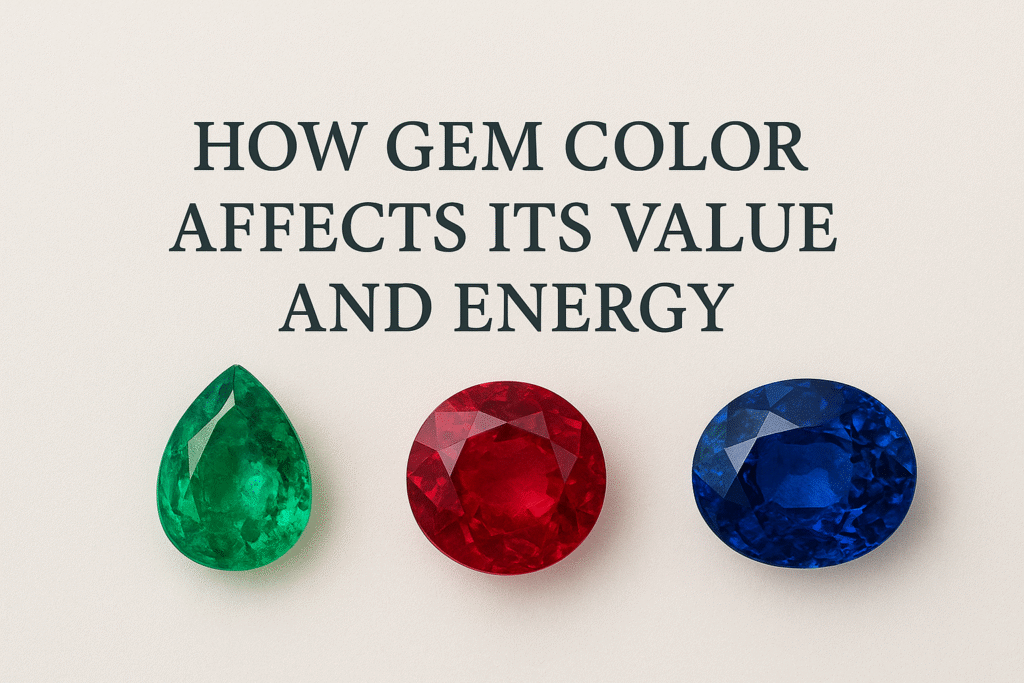
Have you ever wondered why a deep red ruby costs thousands more than a pinkish one? Or why collectors pay premium prices for vivid blue sapphires over pale specimens? The answer lies in one of the most critical factors determining a gemstone’s worth: its color.
Color is the single most important characteristic influencing both the monetary value and the perceived energetic properties of precious and semi-precious stones. Whether you’re a collector, jewelry enthusiast, or someone interested in the metaphysical aspects of crystals, understanding how gem color affects value is essential knowledge.
In this comprehensive guide, you’ll discover the science behind gemstone colors, learn which hues command the highest prices, and explore how different cultures associate specific colors with various energetic properties. By the end, you’ll have the expertise to make informed decisions when purchasing gemstones and a deeper appreciation for these natural treasures.
The Science Behind Gemstone Color
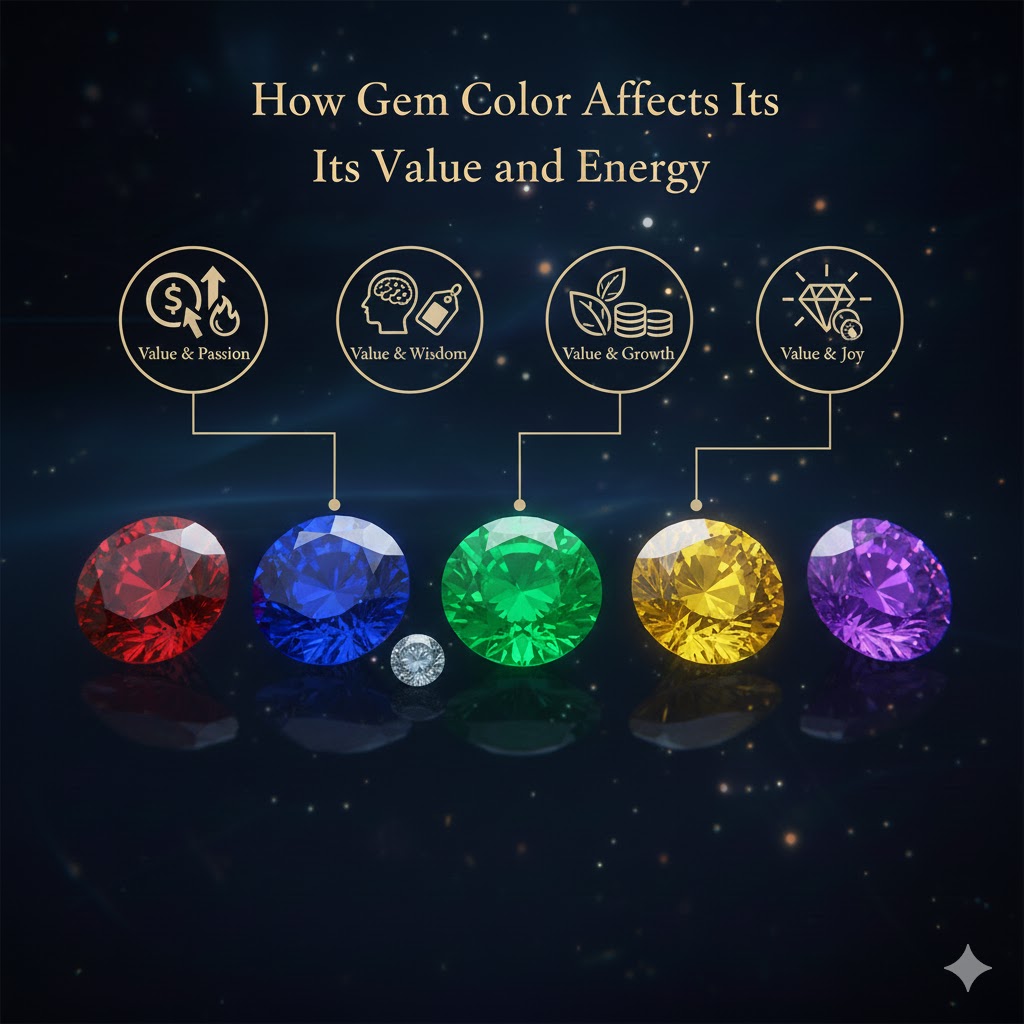
Before diving into value and energy considerations, it’s important to understand what actually creates color in gemstones. The phenomenon involves complex interactions between light and the mineral’s chemical composition.
What Causes Color in Gemstones?
Gemstone color results from how minerals absorb and reflect different wavelengths of light. When white light enters a gem, certain wavelengths are absorbed while others pass through or reflect back to your eyes. The wavelengths that reach your eyes determine the color you perceive.
Several factors contribute to this phenomenon:
- Trace Elements: Tiny amounts of elements like chromium, iron, titanium, and copper create specific colors. Chromium gives rubies their red color and emeralds their green hue.
- Crystal Structure: The arrangement of atoms within the crystal lattice affects how light interacts with the stone.
- Inclusions: Natural inclusions can scatter light in ways that enhance or diminish color intensity.
- Light Source: Different lighting conditions can make the same gem appear different colors, which is why professional gem grading uses standardized lighting.
The Three Components of Color: Hue, Saturation, and Tone
Gemologists evaluate color using three distinct components, and understanding these helps explain why two gems of the same type can have vastly different values.
Hue refers to the basic color category—red, blue, green, yellow, and so forth. However, most gemstones display modified hues, such as purplish-red or yellowish-green. The purity of the primary hue significantly impacts value.
Saturation describes the intensity or vividness of the color. Highly saturated gems display rich, pure colors, while poorly saturated stones appear grayish or brownish. Saturation often has the most significant impact on a gemstone’s price.
Tone indicates how light or dark the color appears. Gemstones can range from very light to very dark, with most valuable specimens falling in the medium to medium-dark range. Stones that are too light lack color presence, while those that are too dark may appear black.
How Color Determines Gemstone Market Value
Among the famous 4 Cs of gemstone evaluation (Color, Clarity, Cut, and Carat weight), color typically accounts for 50-70% of a colored gemstone’s value. This section explores how specific color characteristics translate to market prices.
Premium Colors: What Makes a Gem Expensive?
Each gemstone type has an ideal color that commands the highest prices. These premium colors are typically rare and exhibit optimal combinations of hue, saturation, and tone.
Premium Colors by Gemstone Type:
| Gemstone | Premium Color | Price Impact |
| Ruby | Pigeon Blood Red | 2-3x higher than lighter reds |
| Sapphire | Kashmir Blue / Cornflower Blue | Can exceed $20,000 per carat |
| Emerald | Vivid Green with bluish tint | 50% premium over yellowish greens |
| Tanzanite | Intense Violet-Blue | Light specimens worth 80% less |
| Tourmaline | Paraíba Blue-Green | Up to $50,000+ per carat for top colors |
How Geographic Origin Affects Color Value
The geographic source of a gemstone can dramatically influence its color and consequently its price. Certain locations are renowned for producing gems with exceptional color qualities.
Kashmir sapphires, for example, display a unique velvety blue color created by microscopic inclusions that scatter light in a distinctive way. These stones routinely sell for ten times the price of comparable sapphires from other locations. Similarly, Burmese rubies from the Mogok region are prized for their pure red color with minimal secondary hues.
Colombian emeralds are famous for their warm, slightly yellowish-green color, while Zambian emeralds tend toward cooler, bluish-green tones. Both command premium prices, but collectors often have strong preferences based on these subtle color differences.
Color Treatments and Their Impact on Value
Many gemstones undergo treatments to enhance their color, and these treatments significantly affect market value. Understanding treatment types helps buyers make informed decisions.
- Heat Treatment: The most common and widely accepted treatment. Heat can intensify color, remove unwanted tints, or improve clarity. Heat-treated stones typically sell for 20-50% less than untreated specimens.
- Diffusion Treatment: Chemicals are diffused into the stone’s surface to add or change color. These stones are valued at 70-90% less than untreated gems.
- Irradiation: Used to create or enhance colors in stones like blue topaz and colored diamonds. Disclosure is required, and values vary based on market acceptance.
- Filling and Coating: Surface treatments that may wear off over time. These require full disclosure and significantly reduce value.
Gem Color and Metaphysical Energy Properties
Beyond monetary value, many people choose gemstones based on their believed energetic properties. While these beliefs are not scientifically proven, they represent important cultural and spiritual traditions that have existed for thousands of years across many civilizations.
Color Energy Associations in Crystal Healing Traditions
Different colors are traditionally associated with specific energetic qualities. These associations appear consistently across various cultural traditions and form the basis of modern crystal healing practices.
Traditional Color-Energy Associations:
| Color | Associated Energy | Example Gemstones |
| Red | Vitality, passion, grounding | Ruby, Garnet, Red Jasper |
| Blue | Communication, calm, truth | Sapphire, Aquamarine, Lapis Lazuli |
| Green | Growth, healing, abundance | Emerald, Jade, Peridot |
| Purple | Intuition, spirituality, wisdom | Amethyst, Tanzanite, Sugilite |
| Yellow/Gold | Confidence, clarity, joy | Citrine, Yellow Sapphire, Amber |
| Pink | Love, compassion, emotional healing | Rose Quartz, Pink Tourmaline, Morganite |
| Clear/White | Clarity, amplification, purity | Clear Quartz, Diamond, Moonstone |
| Black | Protection, grounding, absorption | Black Tourmaline, Obsidian, Onyx |
How Color Intensity Relates to Energetic Properties
In many crystal healing traditions, the intensity of a gemstone’s color is believed to correlate with the strength of its energetic properties. Deeply saturated stones are often preferred for focused energetic work, while lighter specimens may be chosen for gentler applications.
For example, a deeply saturated amethyst might be selected for intensive meditation practice, while a pale lavender amethyst could be chosen for promoting peaceful sleep. These preferences, while not scientifically validated, reflect meaningful traditions that many people find personally significant.
Cultural Traditions and Gemstone Color Symbolism
Different cultures have developed rich traditions around gemstone colors, and these cultural associations often influence both the energetic uses and market values of certain stones.
In Chinese culture, jade (particularly green jade) symbolizes virtue, beauty, and protection. The stone has been treasured for thousands of years, and top-quality “Imperial Jade” with its vivid, translucent green commands extraordinary prices. In contrast, Indian traditions highly prize yellow sapphires for their association with Jupiter and prosperity.
Western birthstone traditions assign specific colored gems to each month, creating both sentimental value and market demand. These cultural frameworks demonstrate how color meaning extends far beyond aesthetics into deeply personal and spiritual territory.
Practical Guide to Evaluating Gem Color for Value
Whether you’re buying your first gemstone or adding to an existing collection, knowing how to evaluate color will help you identify quality stones and fair prices.
The Importance of Proper Lighting Conditions
Always evaluate gemstone color under multiple lighting conditions. Professional gemologists use standardized daylight-equivalent lighting (5500-6500K color temperature), but you should also view stones under incandescent light and natural daylight.
Some gems, like alexandrite and color-change garnet, display different colors under different light sources. Others, like sapphires, may show more or less attractive colors depending on the lighting. Viewing a stone in the conditions where you’ll most often wear it provides valuable practical insight.
Tips for Comparing Gemstone Colors
When comparing multiple stones, follow these professional techniques for accurate assessment:
- Place stones against a neutral white or gray background to avoid reflected color contamination.
- Compare stones of similar size, as larger stones typically display color more intensely.
- View stones table-up (looking through the top) as this is how you’ll see them when mounted in jewelry.
- Look for color zoning—uneven color distribution—by examining stones from multiple angles.
- Consider how the stone appears at arm’s length, not just under magnification.
Understanding Gemological Reports and Color Grading
Reputable gemological laboratories provide detailed color grades on their certificates. The Gemological Institute of America (GIA) uses descriptive terms combining hue, tone, and saturation (such as “vivid slightly purplish Red”), while other labs may use numerical systems or proprietary grading scales.
For valuable purchases, always request certification from recognized laboratories. The report should clearly state whether any color treatments have been applied and provide an objective assessment of the stone’s color grade.
Popular Gemstones and Their Valuable Color Variations
Sapphire: Beyond Blue
While blue sapphires dominate the market, sapphires actually occur in every color except red (which would make them rubies). Fancy sapphires in pink, yellow, orange, green, and purple can command significant prices, particularly in rare colors.
The most valuable blue sapphires display a medium to medium-dark tone with strong saturation and pure blue hue with minimal violet or green secondary colors. Padparadscha sapphires—displaying a delicate pink-orange color reminiscent of lotus blossoms—are among the rarest and most valuable sapphire varieties, often exceeding the price of fine blue specimens.
Emerald: The Value of Green
Fine emeralds balance strong saturation with medium to medium-dark tone. The most valued specimens show a vivid green with slight blue undertones rather than yellowish-green colors. Color distribution should be even throughout the stone.
Unlike many gemstones where clarity is paramount, emeralds are expected to have inclusions (called “jardin” or garden). The color quality often takes precedence over clarity in determining value, making emeralds a unique case where a heavily included but magnificently colored stone may exceed the value of a cleaner but less vibrant specimen.
Ruby: Shades of Red That Matter
The finest rubies display what dealers call “pigeon blood” color—a pure, vivid red with a hint of blue that makes the red appear to glow from within. Stones that are too light are called pink sapphires (both are varieties of corundum), while those that are too dark appear garnet-like and are less valuable.
Rubies with strong fluorescence may display even more vivid color in daylight conditions, as UV light causes them to emit additional red light. This characteristic, prized in some markets, demonstrates how color can be influenced by factors beyond simple absorption and reflection.
Color Considerations When Investing in Gemstones
For those considering gemstones as investments or long-term value stores, color selection becomes particularly important. Certain colors have historically maintained or increased in value more reliably than others.
Colors That Hold Value Over Time
The strongest value retention typically occurs with classic colors at the top of their respective quality scales. Pigeon blood rubies, Kashmir blue sapphires, and vivid green emeralds have shown consistent appreciation over decades. These stones combine rarity with enduring aesthetic appeal.
Unusual colors can also perform well when true rarity exists. Paraíba tourmalines, first discovered in 1989, have increased dramatically in value due to their unique neon blue-green color caused by copper—a coloring agent previously unknown in tourmaline. Similarly, top-quality color-change garnets and alexandrites command premiums for their optical phenomena.
Color-Related Pitfalls to Avoid
Certain situations require extra caution when evaluating gemstone color for investment:
- Trendy Colors: Fashion-driven color preferences can shift. Colors that are “hot” today may not maintain premium pricing long-term.
- Undisclosed Treatments: Always verify treatment status. Stones with undisclosed enhancements may lose value dramatically if the treatment becomes known.
- Synthetic Confusion: Laboratory-created gems now replicate natural colors almost perfectly. Always purchase from reputable sources with proper certification.
- Single Source Colors: Some colors are only available from single locations. While this can increase value, it also creates supply risk if that source becomes depleted.
Conclusion: Making Color Work for You
Understanding how gem color affects value and energy empowers you to make more informed decisions, whether you’re purchasing a meaningful gift, building a collection, or simply appreciating these natural wonders.
Remember that the “best” color ultimately depends on your personal preferences and intentions. A stone with perfect market-value color metrics may not speak to you as powerfully as one with slightly different characteristics that you find personally compelling. For those interested in energetic properties, your intuitive response to a stone’s color may be more relevant than any grading scale.
The key takeaways for evaluating gemstone color include understanding the three color components (hue, saturation, and tone), evaluating stones under multiple lighting conditions, requesting proper certification for valuable purchases, and considering both market value and personal significance when making selections.
Ready to start your gemstone journey? Begin by visiting reputable gem dealers or certified gemologists who can show you examples of various color grades side by side. There’s no substitute for seeing and comparing actual stones to train your eye for quality color assessment.
Frequently Asked Questions About Gemstone Color
Can artificial lighting permanently change how I perceive a gemstone’s color?
No, your perception of a gemstone’s color adapts to different lighting conditions, but this doesn’t create permanent changes. The stone’s actual color properties remain constant. However, prolonged exposure to strong sunlight can fade certain heat-sensitive gemstones like kunzite, amethyst, and some topazes. Store these stones away from direct sunlight to preserve their original color.
Why do gemstones from the same mine sometimes have different colors?
Even within a single mine, geological conditions vary from pocket to pocket. Trace element concentrations, temperature during crystal formation, and pressure conditions all fluctuate, creating natural color variation. This is why gemologists value provenance but still evaluate each stone individually—being from a famous locality doesn’t guarantee premium color.
Do larger gemstones always show more intense color?
Generally yes, but not always. Larger stones allow light to travel through more material, often intensifying perceived color saturation. However, some gemstones become too dark in larger sizes, reducing their appeal. Aquamarine, for example, often shows its best color in larger stones, while small rubies may appear more vivid than large, potentially over-dark specimens.
Is it better to buy gemstones online or in person when color matters?
In-person evaluation is strongly preferred when color is your primary concern. Photographs and videos cannot perfectly reproduce how a gemstone’s color appears in real life. Monitor calibration, lighting conditions during photography, and camera limitations all affect how color is represented. If buying online, choose vendors who offer detailed color grading information, multiple viewing angles, and strong return policies.
How do I know if a gemstone’s color has been permanently or temporarily treated?
Reputable gemological laboratories can identify most treatments through advanced testing including spectroscopy and microscopic examination. Heat treatment is permanent, while some coating and diffusion treatments may be surface-only. Always request a current laboratory report from a recognized institution (GIA, AGL, Gübelin, SSEF) for significant purchases. The report should clearly state any detected treatments.
Can the setting or mounting affect a gemstone’s apparent color?
Absolutely. Metal choice significantly impacts perceived color. Yellow gold can warm up a stone’s appearance (helpful for slightly yellow diamonds but potentially problematic for blue sapphires), while white metals present more neutral backdrops. Additionally, the pavilion and mounting style affect how light interacts with the stone. Closed-back settings can intensify color but may also darken the stone, while open settings allow more light through.
Disclaimer: Information about metaphysical and energetic properties of gemstones represents traditional beliefs and cultural practices. These claims are not scientifically proven and should not replace professional advice. For significant gemstone purchases, always consult certified gemologists and request appropriate laboratory documentation.