
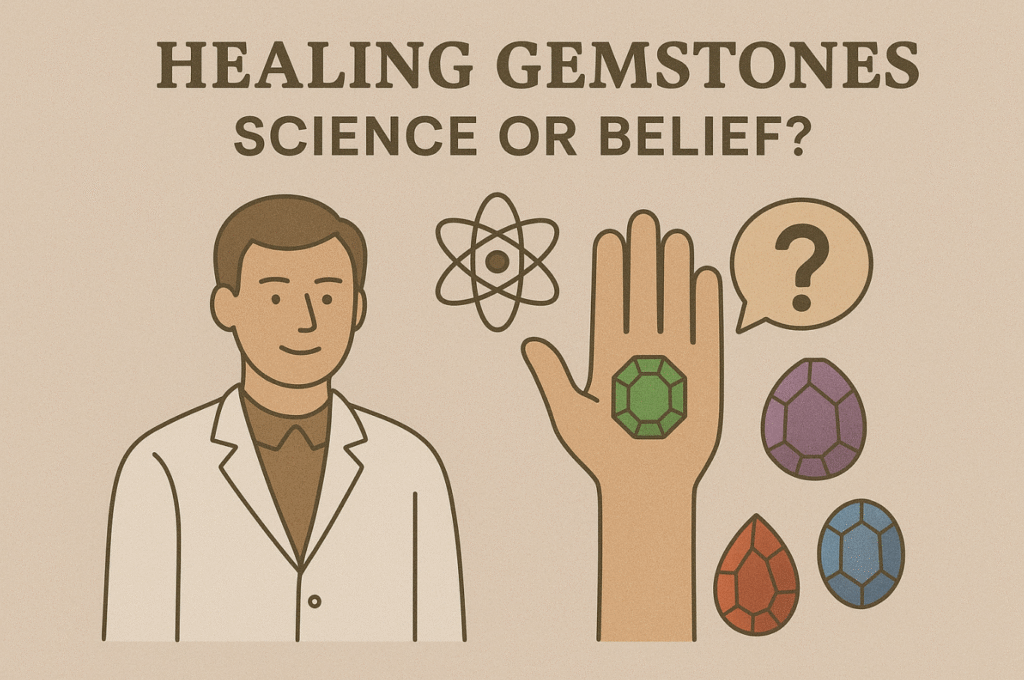
Have you ever wondered if that amethyst pendant could actually reduce your stress, or if rose quartz truly attracts love into your life? You’re not alone. The healing gemstone industry has exploded into a multi-billion dollar market, with millions of people worldwide turning to crystals for wellness support.
But here’s the burning question: Do healing gemstones actually work, or is crystal therapy simply an elaborate placebo?
In this comprehensive guide, we’ll examine what scientists, medical doctors, psychologists, and wellness practitioners actually say about healing crystals. We’ll separate fact from fiction, explore the fascinating research on the placebo effect, and help you make an informed decision about whether gemstone therapy deserves a place in your wellness routine.
What Are Healing Gemstones and How Are They Used?
Healing gemstones, also called healing crystals or therapeutic stones, are minerals and semi-precious stones believed by many to possess metaphysical properties that promote physical, emotional, and spiritual wellbeing. This practice, known as crystal healing or gemstone therapy, has roots stretching back thousands of years across various cultures.
The Ancient History of Crystal Healing
Crystal healing is far from a modern trend. Historical records suggest this practice dates back at least 6,000 years to the ancient Sumerians of Mesopotamia. Ancient Egyptians adorned themselves with lapis lazuli, carnelian, and turquoise, believing these stones could ward off illness and negative energy.
The philosophy behind modern crystal healing draws heavily from Asian traditions, particularly the Chinese concept of life energy (chi or qi) and Hindu/Buddhist concepts of chakras—energy centers within the body that practitioners believe can be balanced using specific gemstones.
Common Ways People Use Healing Crystals Today
Modern crystal enthusiasts incorporate gemstones into their wellness routines through various methods:
- Wearing crystal jewelry (necklaces, bracelets, rings) for continuous energy contact
- Meditation practices with crystals placed on or around the body
- Chakra healing sessions where stones are positioned on specific body points
- Home placement for creating positive environments and energy flow
- Crystal-infused water (though safety precautions are essential)
- Integration with yoga, Reiki, and massage therapies
The Science Behind Crystal Healing: What Research Actually Shows
Let’s address the elephant in the room: What does scientific research actually say about healing gemstones?
The Scientific Consensus on Crystal Therapy
From a strictly scientific perspective, there is currently no peer-reviewed evidence that crystal healing can cure diseases or directly influence physical health. According to researchers, diseases have never been found to result from disrupted “energy flow” in the body—the core premise behind crystal healing theory.
Professor Peter Heaney, a mineral sciences expert at Pennsylvania State University, has noted that while crystals do contain energy in accordance with physics principles, there’s no scientific mechanism by which this energy could heal human ailments.
The scientific community classifies crystal healing as a pseudoscience—a practice that lacks empirical support through the scientific method. National health authorities note that fewer than five randomized controlled trials globally have assessed crystal therapy’s health impacts as of 2024.
The Landmark 2001 Crystal Healing Study
One of the most cited studies on crystal healing was conducted by Dr. Christopher French, head of the anomalistic psychology research unit at Goldsmiths, University of London. Presented at the British Psychological Society Centenary Annual Conference in 2001, the study involved 80 volunteers.
Participants were divided into two groups. Both groups received information about sensations they might experience while holding crystals—tingling, heat, increased concentration, and enhanced energy. One group received genuine quartz crystals; the other received identical-looking plastic fakes.
The results were telling: Both groups reported experiencing the described sensations at similar rates, regardless of whether they held real crystals or counterfeits.
Dr. French’s conclusion? “There is no evidence that crystal healing works over and above a placebo effect.” The study suggested that the power of suggestion, not the crystals themselves, produced the reported sensations.
The Piezoelectric Effect: A Scientific Kernel of Truth?
Interestingly, there is one scientifically documented property of certain crystals that crystal healing proponents sometimes reference: the piezoelectric effect. Discovered in 1880 by Pierre and Jacques Curie, this phenomenon shows that applying pressure or temperature changes to certain crystals can generate a small electric charge.
This effect is real and has practical applications in technology, including watches, microphones, and medical ultrasound equipment. However, scientists emphasize that there’s no established mechanism by which these tiny electrical charges could produce therapeutic effects on the human body.
Understanding the Placebo Effect in Crystal Healing
If crystals don’t work through mystical energy, why do so many people report feeling better after using them? The answer likely lies in one of medicine’s most fascinating phenomena: the placebo effect.
What Is the Placebo Effect?
The placebo effect occurs when a person experiences real, measurable improvements in their condition simply because they believe a treatment is working—even when the treatment has no active therapeutic properties. It’s not “just in your head” in a dismissive sense; research shows that placebo effects can trigger genuine physiological changes, including the release of endorphins and changes in brain activity.
Can Placebo Effects Provide Real Benefits?
Here’s where things get interesting. Dr. Ted Kaptchuk, professor of medicine at Harvard Medical School and a leading researcher on placebo effects, has written extensively about how placebo-induced benefits can be both “genuine” and “robust.”
While Dr. Kaptchuk hasn’t specifically studied crystals, his research suggests that the mind can be a source of healing for certain conditions—particularly those that depend on self-report, such as pain, anxiety, and stress. A 2008 BMJ study found that roughly half of surveyed physicians reported using placebo treatments to help patients.
A 2022 study published in the Journal of Awareness examined 415 volunteers and found that gemstones promoted as healing tools that gave people hope for improvement had positive effects on participants. However, if the same stones were presented merely as decorative jewelry, no positive effect was reported.
What Different Experts Say About Healing Gemstones
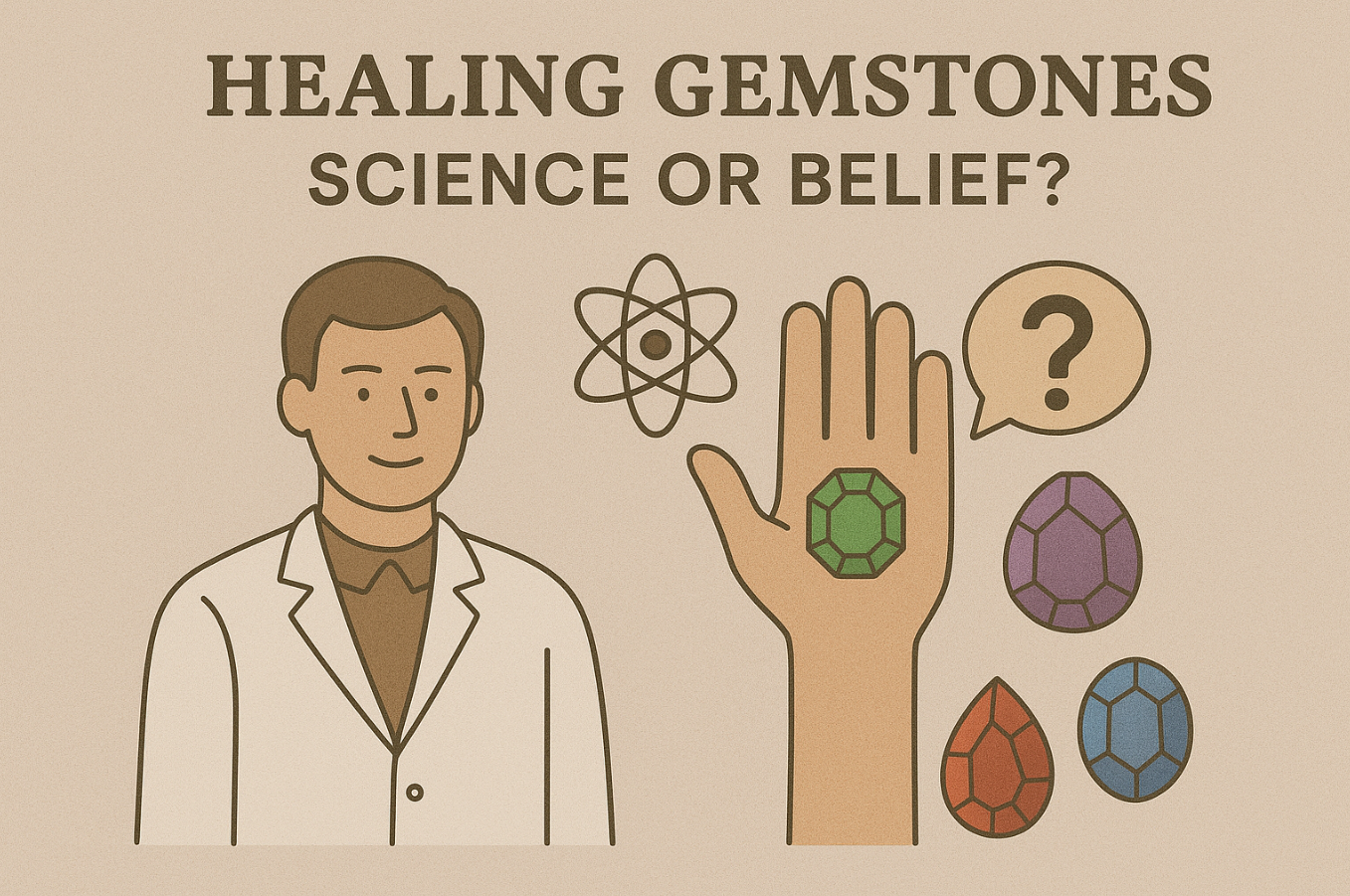
The conversation around healing crystals reveals interesting divides—and some surprising common ground—among different types of experts.
What Medical Doctors Say
Most medical doctors view crystal healing skeptically due to the lack of scientific evidence. However, some physicians take a more nuanced position. They tolerate crystal healing to a limited degree, seeing it as a therapy that can induce relaxation—which is ultimately therapeutic for stress management.
The key concern among medical professionals is ensuring that patients don’t forgo legitimate treatment for serious conditions in favor of crystal therapy. A 2024 survey found that only about 14% of healthcare providers suggest using crystals to patients.
What Psychologists and Mental Health Experts Say
Psychologists tend to view crystal healing through the lens of placebo effects and belief systems. Professor Zhuo Job Chen from the University of North Carolina has noted that it’s “hard to argue against people who believe in the psychological effects of crystals… Those are genuine experiences we have to respect.”
Research on meditation—which is often combined with crystal use—shows more promising results. A 2021 study found that mindfulness meditation significantly helped alleviate military-related PTSD, and another study of adolescents found meditation effective for lowering anxiety. If crystals enhance someone’s meditation practice, the combined benefit could be meaningful.
What Wellness and Alternative Medicine Practitioners Say
Practitioners of alternative medicine naturally take a more favorable view of crystal healing. They often point to the limitations of current scientific methods in measuring subtle energies and emphasize the importance of individual experience.
Many wellness practitioners advocate for crystal therapy as a complementary practice—used alongside, not instead of, conventional medical treatment. They emphasize that the therapeutic environment, the empathy shown by practitioners, and the ritual of crystal use all contribute to positive outcomes.
Expert Perspectives at a Glance
| Expert Type | Position on Crystal Healing | Key Concern/Focus |
| Scientists | Skeptical; classify as pseudoscience | Lack of empirical evidence and plausible mechanism |
| Medical Doctors | Generally skeptical; some tolerate as relaxation aid | Patients shouldn’t replace proven treatments |
| Psychologists | Acknowledge subjective benefits via placebo | Personal experience and belief systems matter |
| Wellness Practitioners | Supportive; view as complementary therapy | Holistic approach; combine with other modalities |
Popular Healing Gemstones and Their Claimed Properties
While scientific evidence doesn’t support the healing claims made about these stones, understanding what people believe about different crystals helps explain their enduring popularity. Here are some of the most sought-after healing gemstones:
Amethyst: The Calming Stone
This purple quartz variety is one of the most popular healing crystals. Traditionally associated with the crown chakra, amethyst is believed by practitioners to promote calm, reduce stress, enhance intuition, and support better sleep. The ancient Greeks even believed it could prevent intoxication—hence its name, derived from “amethystos,” meaning “not drunk.”
Rose Quartz: The Stone of Love
Known for its soft pink hue, rose quartz is often called the “heart stone.” Crystal practitioners associate it with the heart chakra and believe it promotes unconditional love, self-love, compassion, and emotional healing. Ancient Egyptians believed rose quartz could prevent aging.
Clear Quartz: The Master Healer
Often referred to as the “master healer,” clear quartz is believed to amplify energy and intentions. Practitioners claim it can enhance the properties of other crystals and help with mental clarity. It’s the same mineral that produces the scientifically documented piezoelectric effect.
Citrine: The Success Stone
This yellow-orange crystal is associated with abundance, prosperity, and positive energy. Called the “merchant’s stone” or “success stone,” citrine is popular among those seeking to manifest financial success or boost creativity and motivation.
Popular Healing Crystals Comparison
| Crystal | Color | Claimed Properties | Associated Chakra |
| Amethyst | Purple | Calm, intuition, sleep | Crown/Third Eye |
| Rose Quartz | Pink | Love, compassion, healing | Heart |
| Clear Quartz | Clear/White | Amplification, clarity | All chakras |
| Citrine | Yellow/Orange | Abundance, creativity | Solar Plexus |
| Tiger’s Eye | Golden Brown | Confidence, protection | Solar Plexus |
The Booming Healing Crystal Market: Industry Trends
Regardless of the scientific debate, one thing is undeniable: the healing crystal industry is experiencing explosive growth.
Market Size and Growth Projections
The numbers tell a compelling story about consumer interest in healing gemstones:
- The U.S. healing crystal market was valued at approximately $1.2 billion in 2020
- Projections show growth to $1.8 billion by 2024, representing an 8% compound annual growth rate
- The broader body, mind, and energy healing market (including crystals) could reach $394 billion by 2030
- The Asia-Pacific region accounts for approximately 35% of global crystal therapy consumption
- About 68% of crystal purchases now happen online
Who’s Buying Healing Crystals?
Millennial and Gen Z demographics are major contributors to the demand for healing crystals. Social media platforms like Instagram and TikTok have played a significant role, with hashtags like #CrystalHealing generating millions of posts annually.
Interest has also grown following the COVID-19 pandemic, as many people sought alternative wellness practices during times of uncertainty and stress.
Potential Benefits and Limitations of Crystal Therapy
Potential Benefits (Even Without Mystical Properties)
Even skeptics can acknowledge that crystal practices might offer certain benefits:
- Mindfulness and meditation support: Crystals can serve as focal points for meditation, helping practitioners achieve relaxation
- Placebo-driven stress relief: If belief in crystals reduces stress, the stress reduction itself is genuine and beneficial
- Ritual and intention-setting: The practice of choosing, cleansing, and using crystals can provide structure for self-care routines
- Aesthetic pleasure: Beautiful crystals can lift mood simply through visual enjoyment
- Community connection: Crystal enthusiasts often find supportive communities around their shared interest
Important Limitations and Safety Considerations
Anyone considering crystal therapy should be aware of these important points:
- No replacement for medical care: Crystals should never replace professional treatment for serious physical or mental health conditions
- Toxicity concerns: Some crystals contain heavy metals or radioactive elements; avoid placing them in water or prolonged skin contact without research
- Ethical sourcing issues: Crystal mining can involve environmental damage and labor concerns; seek ethically sourced products
- Financial exploitation: Be wary of extravagant claims and high prices; many sellers exploit beliefs for profit
- Regulatory limitations: In the U.S., the FDA doesn’t allow crystals to be marketed as medical devices or treatments
A Balanced Approach to Crystal Healing
Whether you’re a believer, a skeptic, or somewhere in between, here’s how to approach crystal therapy thoughtfully:
Tips for Mindful Crystal Use
- Set realistic expectations: View crystals as potential tools for mindfulness and intention-setting, not miracle cures
- Complement, don’t replace: Use crystal practices alongside, never instead of, appropriate medical care
- Focus on the practice: The meditation, reflection, and self-care rituals around crystals may be more valuable than the stones themselves
- Choose what resonates: Select crystals based on what feels meaningful to you personally
- Research before purchasing: Learn about ethical sourcing and avoid overpaying for common stones
- Stay curious but critical: Enjoy the experience while maintaining healthy skepticism about extraordinary claims
Conclusion: Science, Belief, and the Power of the Mind
So, are healing gemstones science or belief? The honest answer is that they’re primarily a belief-based practice. Current scientific evidence doesn’t support the claims that crystals possess mystical healing energies that can cure diseases or directly impact physical health.
However, the story doesn’t end there. The placebo effect is real, measurable, and can produce genuine benefits for certain conditions—particularly those involving pain, stress, and emotional wellbeing. If using crystals helps you relax, provides a focus for meditation, or simply brings you joy, those outcomes have value.
The key is maintaining perspective. Appreciate healing gemstones for what they might offer—beauty, ritual, mindfulness support, and community—while keeping your feet firmly planted in evidence-based approaches for serious health concerns.
Perhaps the most fascinating aspect of the crystal healing phenomenon is what it reveals about the remarkable power of the human mind. Whether through placebo effects, meditation benefits, or simply the comfort of ritual, our beliefs and intentions can shape our experience of wellbeing in profound ways.
Ready to explore mindful wellness practices? Consider incorporating meditation, journaling, or other evidence-based stress management techniques into your routine—with or without crystals by your side.
Frequently Asked Questions About Healing Gemstones
Are healing crystals safe to wear every day?
Most common crystals like amethyst, rose quartz, and clear quartz are safe for daily wear as jewelry. However, some crystals contain potentially harmful substances. Realgar contains arsenic, and ekanite contains radioactive elements. Always research specific crystals before extended skin contact, and never put crystals in drinking water without verifying they’re water-safe and non-toxic.
How do I know if a crystal is genuine or fake?
Genuine crystals typically feel cool to the touch and have natural variations in color and inclusions. Glass fakes often appear too perfect and warm up quickly in your hand. Real quartz varieties won’t scratch easily, while glass will. For valuable crystals, consider purchasing from reputable dealers who provide certification or sourcing information. When in doubt, a professional gemologist can authenticate stones.
Why do some people feel sensations when holding crystals if they don’t really work?
The sensations people report—tingling, warmth, or energy—are likely due to the power of suggestion and expectation. Dr. Christopher French’s research demonstrated that people who were told what to expect reported these sensations equally whether holding real crystals or plastic fakes. This doesn’t mean the experiences aren’t real to the person having them; our expectations powerfully shape our perceptions.
Can children use healing crystals safely?
While handling most polished crystals is safe for supervised children, there are important precautions. Avoid small crystals that pose choking hazards, and never let children put crystals in their mouths. Be especially cautious with crystals containing toxic elements. Never use crystals as a substitute for proper medical care for children. Additionally, be mindful of marketing expensive crystals to vulnerable young people with exaggerated health claims.
Do crystals need to be “cleansed” or “charged” to work?
From a scientific perspective, crystals don’t accumulate or store “energy” that needs cleansing. However, many practitioners find the rituals of cleansing (using moonlight, sunlight, sage, or salt) and “charging” crystals to be meaningful parts of their practice. These rituals can serve as mindfulness exercises and intention-setting opportunities, which may be where the real benefit lies—in the practice itself rather than any change to the crystal.
Should I tell my doctor if I’m using crystal healing?
Yes, it’s wise to mention any alternative therapies, including crystal healing, to your healthcare provider. This helps ensure coordinated care and allows your doctor to address any concerns. A good physician won’t dismiss you for exploring complementary practices but will want to ensure you’re not delaying necessary treatment for serious conditions. Open communication leads to better overall care.
Disclaimer: This article is for informational purposes only and does not constitute medical advice. Always consult qualified healthcare professionals for health concerns. The information presented represents a balanced overview of current research and should not be interpreted as endorsement of crystal healing as a medical treatment.