
Have you ever wondered what makes a simple piece of colored mineral worth thousands, sometimes millions of dollars? Or why certain stones have been treasured by civilizations for thousands of years?
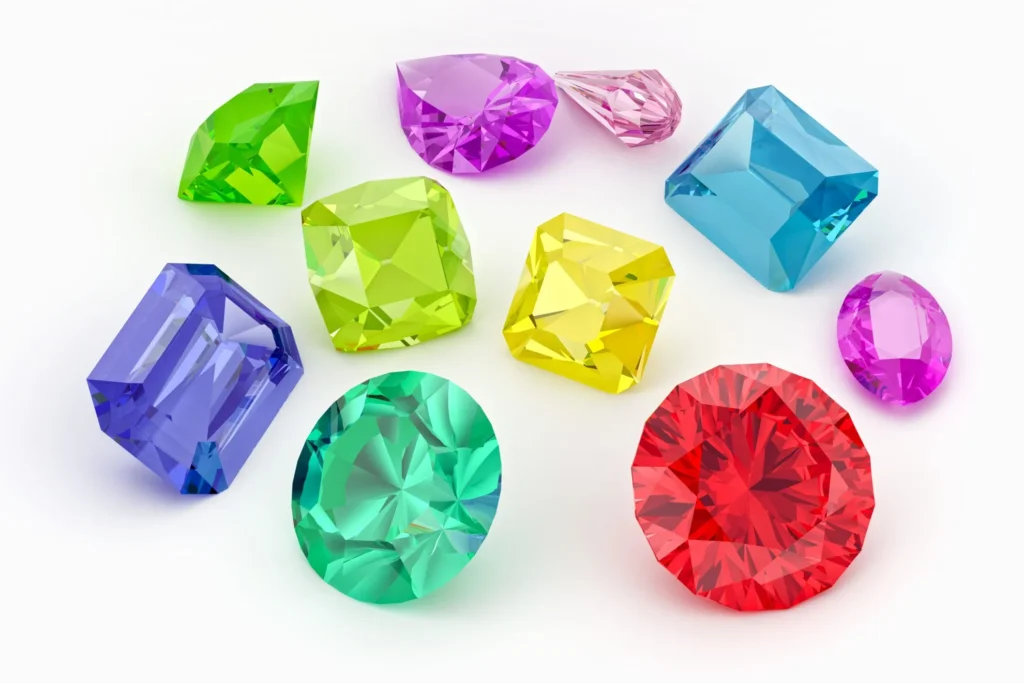
Gemstones represent one of nature’s most remarkable achievements. These crystalline minerals, formed deep within the Earth over millions of years, combine rarity, beauty, and durability in ways that continue to fascinate collectors, jewellers, and everyday admirers worldwide.
Whether you’re considering your first gemstone purchase, building a collection, or simply curious about these natural wonders, this comprehensive guide will help you understand everything from basic identification to advanced quality assessment.
In this article, you’ll discover:
- The fundamental characteristics that define gemstones
- How to identify and evaluate quality
- Practical buying strategies to avoid common mistakes
- Care and maintenance techniques
- The science behind gemstone formation
- Cultural and historical significance across civilizations
Let’s begin your exploration into this enchanting world.
What Are Gemstones? Understanding the Fundamentals
Definition and Basic Characteristics
A gemstone is a piece of mineral crystal that, when cut and polished, becomes suitable for jewelry or ornamental purposes. However, not every beautiful mineral qualifies as a gemstone.
Three Essential Qualities Define Gemstones:
- Beauty – Attractive color, luster, or optical phenomena
- Durability – Ability to withstand wear and maintain appearance
- Rarity – Limited natural occurrence that creates value
Some organic materials like amber, pearl, and coral are also classified as gemstones despite not being minerals.
The Difference Between Precious and Semi-Precious Stones
Traditionally, the gemstone world divided stones into two categories:
Precious Stones (The “Big Four”):
- Diamonds
- Rubies
- Sapphires
- Emeralds
Semi-Precious Stones:
- All other gemstones (amethyst, topaz, garnet, etc.)
However, this classification has become outdated. Many so-called “semi-precious” stones like alexandrite, paraiba tourmaline, or fine jade can exceed the value of modest-quality precious stones.
Modern gemologists prefer classifying stones by their actual market value, rarity, and quality rather than historical categories.
Types of Gemstones: A Comprehensive Classification
Natural vs. Synthetic vs. Treated Gemstones
Understanding these categories is crucial for making informed purchases:
| Type | Description | Value | Examples |
|---|---|---|---|
| Natural | Formed in nature, minimal human intervention | Highest | Unheated Kashmir sapphires |
| Treated/Enhanced | Natural stones improved through standard processes | Moderate to High | Heat-treated rubies |
| Synthetic | Lab-created with identical properties to natural | Lower | Lab-grown diamonds |
| Simulants | Materials that mimic gemstones | Lowest | Cubic zirconia for diamonds |
Important Note: Treated stones are still natural and represent the majority of the gemstone market. Treatment isn’t deceptive if properly disclosed.
Gemstones by Color Family
Red Gemstones
- Ruby – The king of colored stones, prized for “pigeon blood” red
- Red Spinel – Often confused with ruby historically
- Garnet – Affordable alternative in various red shades
- Red Tourmaline – Vibrant pinkish-red variety
Blue Gemstones
- Sapphire – Classic blue, ranging from light to deep royal blue
- Aquamarine – Pale to medium blue, named after seawater
- Tanzanite – Violet-blue stone found only in Tanzania
- Blue Topaz – Affordable, typically irradiated for color
Green Gemstones
- Emerald – Vivid green beryl, highly valued
- Jade – Cultural significance in Asian markets
- Peridot – Olive green, one of few single-color gems
- Tsavorite Garnet – Bright green, rare and valuable
Other Important Colors
- Yellow: Citrine, yellow sapphire, yellow diamond
- Purple: Amethyst, purple sapphire, kunzite
- Pink: Morganite, pink sapphire, pink tourmaline
- White/Clear: Diamond, white sapphire, clear quartz
Gemstones by Chemical Composition
Corundum Family:
- Ruby (red corundum with chromium)
- Sapphire (all other corundum colors)
Beryl Family:
- Emerald (green beryl)
- Aquamarine (blue beryl)
- Morganite (pink beryl)
- Heliodor (golden beryl)
Quartz Family:
- Amethyst (purple quartz)
- Citrine (yellow quartz)
- Rose quartz (pink quartz)
- Smoky quartz (brown quartz)
Garnet Family:
- Pyrope, almandine, spessartine, grossular, andradite, uvarovite
The Four C’s: How to Evaluate Gemstone Quality
Similar to diamond grading, colored gemstones are evaluated using specific criteria. Understanding these factors helps you assess value and make better purchasing decisions.
Color – The Most Important Factor
For colored gemstones, color accounts for 50-70% of the value. Three components determine color quality:
1. Hue – The basic color (red, blue, green, etc.)
- Primary hue should dominate
- Secondary hues acceptable but shouldn’t overpower
- Example: Blue sapphire may have slight violet, but blue should dominate
2. Tone – How light or dark the color appears
- Scale ranges from colorless (0) to black (10)
- Most valuable stones fall between 4-7
- Too light appears washed out
- Too dark appears black or murky
3. Saturation – Color intensity and purity
- Highest saturation = vivid, pure color
- Lower saturation = grayish or brownish modifiers
- Vivid, highly saturated colors command premium prices
Ideal Color Characteristics by Gemstone:
| Gemstone | Ideal Color |
|---|---|
| Ruby | Pure red with slight blue undertone (“pigeon blood”) |
| Blue Sapphire | Pure blue, medium to medium-dark tone |
| Emerald | Vivid green with slight blue undertone |
| Amethyst | Deep purple with red flashes |
| Aquamarine | Medium blue without green |
Clarity – Understanding Inclusions
Clarity refers to the presence (or absence) of inclusions and blemishes.
Types of Clarity Features:
- Inclusions: Internal characteristics (crystals, fractures, clouds)
- Blemishes: Surface characteristics (scratches, pits, chips)
Clarity Expectations Vary by Gemstone Type:
Type I (Eye-Clean Expected):
- Aquamarine, blue topaz, citrine, zircon
- These should have no visible inclusions to the naked eye
Type II (Minor Inclusions Accepted):
- Ruby, sapphire, garnet, peridot, tourmaline
- Slight inclusions acceptable and common
Type III (Inclusions Expected):
- Emerald, red tourmaline, watermelon tourmaline
- Almost always included; heavily included stones still valuable if color is exceptional
Key Point: A “clean” emerald with vivid color is rarer than a flawless diamond. Clarity standards are stone-specific, not universal.
Cut – Maximizing Beauty
The cut determines how well a stone displays its color and how much it sparkles. Unlike diamond cutting, which follows standardized proportions, colored gemstone cutting prioritizes color display.
Cut Quality Factors:
- Proportions: Depth and width ratios affect color and brilliance
- Symmetry: Even facet alignment and shape
- Polish: Surface smoothness affecting luster
- Face-up appearance: How the stone looks when viewed from above
Common Cut Styles:
- Brilliant Cut: Maximizes sparkle (diamonds, colorless stones)
- Step Cut: Emphasizes color (emerald cut, baguette)
- Mixed Cut: Combines both styles
- Cabochon: Smooth, dome-shaped (opals, jade, star stones)
Signs of Poor Cutting:
- Visible windowing (seeing through the stone)
- Excessive weight retention at the bottom
- Asymmetrical or misaligned facets
- Poor polish showing scratches
Carat Weight – Size and Value
Carat is simply a unit of weight (1 carat = 200 milligrams or 0.2 grams). However, size perception varies by gemstone density.
Important Considerations:
- Price per carat increases exponentially with size for rare stones
- A 2-carat ruby isn’t twice the price of 1-carat; it’s 3-4 times more
- Density affects size appearance: Sapphire appears smaller than diamond at same carat weight
- Cut affects perceived size: Well-cut stones look larger than poorly cut ones
Size Categories:
| Category | Carat Weight | Best For |
|---|---|---|
| Melee | Under 0.20ct | Accent stones |
| Small | 0.20-0.50ct | Delicate jewelry |
| Medium | 0.50-2.00ct | Everyday wear |
| Large | 2.00-5.00ct | Statement pieces |
| Very Large | Over 5.00ct | Collectors, investment |
Major Gemstone Varieties: Detailed Profiles
Diamond – The Hardest Natural Material
Key Characteristics:
- Hardness: 10 on Mohs scale (hardest)
- Chemical composition: Pure carbon
- Main sources: Russia, Botswana, Canada, Australia
Value Factors:
- Color (colorless most valuable for white diamonds)
- Clarity (internally flawless to included)
- Cut quality (affecting brilliance and fire)
- Carat weight
Special Varieties:
- Colorless diamonds: D-F color grades
- Fancy colored diamonds: Yellow, pink, blue (very rare and expensive)
- Industrial diamonds: Lower quality for cutting tools
Market Insights:
- Lab-grown diamonds now represent 10-15% of the market
- Ethical sourcing increasingly important to buyers
- Prices controlled through careful market management
Ruby – The King of Colored Stones
Key Characteristics:
- Hardness: 9 on Mohs scale
- Chemical composition: Corundum with chromium
- Main sources: Myanmar, Mozambique, Thailand, Madagascar
Value Factors:
- Color (pure red with slight blue undertone most valuable)
- Origin (Burmese “pigeon blood” commands premium)
- Treatment status (unheated worth significantly more)
Common Treatments:
- Heat treatment (95% of rubies)
- Fracture filling with glass (controversial)
- Lead glass filling (should be heavily discounted)
Price Range:
- Commercial quality: $50-500 per carat
- Fine quality heated: $1,000-5,000 per carat
- Unheated premium quality: $5,000-50,000+ per carat
Sapphire – The Gem of Wisdom
Key Characteristics:
- Hardness: 9 on Mohs scale
- Chemical composition: Corundum (all colors except red)
- Main sources: Sri Lanka, Madagascar, Australia, Montana (USA)
Color Varieties:
- Blue (most popular)
- Pink, yellow, orange, green, purple
- Padparadscha (rare pink-orange)
- Color-change (shifts between colors)
- Star sapphire (displays asterism)
Value Factors:
- Color quality and intensity
- Origin (Kashmir, Myanmar premium)
- Treatment status
- Phenomena (star effect increases value)
Notable Origins:
- Kashmir: Legendary cornflower blue with “velvet” appearance
- Burma: Vivid royal blue
- Sri Lanka: Wide color range, often lighter tones
- Montana: Unique teal and peachy colors
Emerald – The Gem of Spring
Key Characteristics:
- Hardness: 7.5-8 on Mohs scale
- Chemical composition: Beryl with chromium/vanadium
- Main sources: Colombia, Zambia, Brazil, Afghanistan
Unique Aspects:
- Almost always included (called “jardin”)
- Typically oiled or resin-filled
- More fragile than ruby or sapphire
- Color most important factor
Quality Grading:
- AAA: Vivid green, minor inclusions, excellent transparency
- AA: Medium to dark green, moderate inclusions
- A: Light to medium green, visible inclusions
Treatment Standards:
- Minor oil: Accepted, minimal value impact
- Moderate oil: Common, moderate value reduction
- Heavy resin filling: Significant value reduction
- Untreated: Extremely rare and expensive
Care Requirements:
- Avoid ultrasonic cleaners
- Protect from sharp blows
- Clean with mild soap and water only
- Re-oil periodically if needed
Other Important Gemstones
Tanzanite
- Found only in Tanzania
- Blue-violet color
- Heat-treated to enhance color
- Softer (6.5-7), requires protective settings
Aquamarine
- Light to medium blue beryl
- Eye-clean expected
- Durable and affordable
- Often heated to improve color
Amethyst
- Purple quartz variety
- Once rare, now affordable
- Can fade in sunlight
- Brazilian material typically deeper color
Opal
- Play-of-color phenomenon
- Types: Black, white, boulder, fire
- Delicate (5.5-6.5 hardness)
- Contains water, can crack if dried
Tourmaline
- Widest color range of any gem
- Paraiba (electric blue-green) extremely valuable
- Watermelon variety shows multiple colors
- Generally durable (7-7.5)
Gemstone Treatments and Enhancements
Understanding treatments is essential for accurate valuation and care. The majority of gemstones in the market have been enhanced in some way.
Common Treatment Types
Heat Treatment
Process: Controlled heating to improve color and clarity
Applied to: Ruby, sapphire, tanzanite, aquamarine, citrine, zircon
Permanence: Permanent and stable
Value Impact: Moderate (unheated stones worth 2-10x more)
Disclosure: Should always be disclosed but often isn’t
Oiling and Resin Filling
Process: Filling surface-reaching fractures with oil or resin
Applied to: Emerald (almost universal), ruby
Permanence: Semi-permanent (oil can dry out)
Value Impact: Depends on extent (minor to significant)
Care Considerations: Avoid harsh chemicals and heat
Irradiation
Process: Exposure to radiation to alter color
Applied to: Blue topaz, some diamonds, some pearls, kunzite
Permanence: Generally permanent
Value Impact: Standard practice, expected
Safety: Completely safe after treatment period
Diffusion
Process: Heating with chemicals to add color to surface
Applied to: Sapphire, topaz
Permanence: Can be removed if stone is repolished
Value Impact: Significant reduction (60-90% less)
Controversy: Considered deceptive if not disclosed
Treatment Disclosure Requirements
Professional Standards:
- All treatments should be disclosed at point of sale
- Certificates should document known treatments
- Undisclosed treatments are considered misrepresentation
Reality Check:
- Many sellers don’t disclose standard treatments
- “Natural” doesn’t mean untreated
- Always ask specifically about treatments
- Get documentation for expensive purchases
How to Buy Gemstones: Smart Shopping Strategies
Setting Your Budget
Price Ranges by Category:
Entry Level ($50-500):
- Small semi-precious stones
- Commercial quality
- Accent stones
- Learning purchases
Mid-Range ($500-5,000):
- Quality sapphires, rubies (treated)
- Excellent emeralds
- Large semi-precious stones
- Everyday wear jewelry
High-End ($5,000-50,000):
- Fine quality precious stones
- Larger carat weights
- Better treatments or untreated
- Investment consideration
Collector Grade ($50,000+):
- Exceptional quality
- Rare origins
- Untreated preferred
- Certified by top labs
Where to Buy
Physical Jewelry Stores
Pros:
- Examine stones in person
- Immediate possession
- Local reputation accountability
Cons:
- Higher prices (overhead costs)
- Limited selection
- Sales pressure
Online Retailers
Pros:
- Wider selection
- Better prices
- Detailed photos/videos
- Customer reviews
Cons:
- Can’t examine physically before purchase
- Return shipping costs
- Potential for misrepresentation
Recommended Online Platforms:
- Established gemstone dealers with certifications
- Auction houses (for unique pieces)
- Direct from cutters/miners (requires expertise)
Gem and Mineral Shows
Pros:
- Many dealers in one location
- Competitive pricing
- Meet sellers personally
- Wide variety
Cons:
- Overwhelming for beginners
- Cash often required
- No return policy typically
- Variable seller reliability
Red Flags to Watch For
Warning Signs:
- Prices significantly below market value
- Reluctance to answer questions about treatments
- High-pressure sales tactics
- No return policy
- Certificates from unknown labs
- Vague or contradictory information
- “Too good to be true” origin claims
Questions to Ask Sellers
Essential Questions:
- Has this stone been treated? (Specify type: heated, oiled, irradiated, etc.)
- What is the country of origin?
- Is this natural, synthetic, or lab-created?
- Can you provide certification from a recognized lab?
- What is your return policy?
- Can I have this independently appraised?
- What care requirements does this stone have?
- Is this price per stone or per carat?
Certification and Appraisals
Reputable Gemological Laboratories:
| Laboratory | Reputation | Best For |
|---|---|---|
| GIA | Excellent, most recognized | Diamonds, colored stones |
| IGI | Good, internationally recognized | Diamonds, jewelry |
| AGL | Excellent for colored stones | Ruby, sapphire, emerald |
| Gübelin | Excellent, prestigious | High-value colored stones |
| SSEF | Excellent, Swiss-based | Colored stones, pearls |
What Certificates Include:
- Stone identification
- Measurements and weight
- Color and clarity grade
- Treatment disclosure
- Sometimes origin determination
Appraisal vs. Certification:
- Certificate: Identifies what the stone is
- Appraisal: Estimates replacement value for insurance
Caring for Your Gemstones
Cleaning Methods by Stone Type
Hard, Durable Stones (Diamond, Ruby, Sapphire, Garnet)
Safe Cleaning Methods:
- Warm soapy water with soft brush
- Ultrasonic cleaner (if no fractures)
- Steam cleaning (professional)
- Commercial jewelry cleaners
Frequency: Monthly for frequently worn pieces
Moderate Hardness (Emerald, Aquamarine, Tourmaline)
Safe Cleaning Methods:
- Lukewarm water with mild soap
- Soft cloth only
- No ultrasonic cleaners
- Professional cleaning recommended
Frequency: Every 2-3 months, gentle handling
Delicate Stones (Opal, Pearl, Turquoise, Amber)
Safe Cleaning Methods:
- Slightly damp soft cloth
- Room temperature water only
- No chemicals or soap
- No ultrasonic or steam cleaning
Frequency: Gentle wipe after wearing
Storage Guidelines
Best Practices:
- Separate storage: Prevent harder stones from scratching softer ones
- Fabric-lined boxes: Protect from impacts
- Individual pouches: Ideal for valuable pieces
- Climate control: Avoid extreme temperature and humidity changes
- Away from sunlight: Some stones fade (amethyst, kunzite)
Storage by Hardness:
- Store diamonds separately (they scratch everything)
- Group similar hardness stones together
- Keep organic gems (pearl, coral) in slightly humid environment
When to Seek Professional Services
Annual Inspection:
- Check prongs and settings
- Look for loose stones
- Examine for chips or fractures
- Professional cleaning
Re-oiling Emeralds:
- Every 2-5 years depending on wear
- Only by professional gemologist
- Uses appropriate oils
Re-cutting or Re-polishing:
- Remove chips or surface damage
- Refresh dull surfaces
- Only when necessary (reduces weight)
The Science Behind Gemstones
How Gemstones Form in Nature
Formation Processes:
Igneous Formation
- Crystallization from molten rock (magma/lava)
- Examples: Diamond (high pressure), peridot, tanzanite
- Deep earth conditions required
- Volcanic eruptions bring to surface
Metamorphic Formation
- Transformation under heat and pressure
- Examples: Ruby, sapphire, emerald, jade
- Existing rocks recrystallize
- Mountain-building processes
Sedimentary Formation
- Precipitation from water solutions
- Examples: Opal, turquoise, malachite
- Surface or near-surface formation
- Weathering and erosion processes
Crystal Systems and Their Impact
Seven Crystal Systems:
- Cubic: Diamond, garnet, spinel
- Hexagonal: Emerald, aquamarine, ruby, sapphire
- Tetragonal: Zircon, rutile
- Orthorhombic: Topaz, peridot, tanzanite
- Monoclinic: Moonstone, jade, kunzite
- Triclinic: Labradorite, turquoise
- Trigonal: Quartz, tourmaline, calcite
Why It Matters:
- Affects optical properties
- Determines cleavage directions
- Influences durability
- Creates unique optical effects
The Mohs Hardness Scale
Understanding hardness helps predict durability:
| Hardness | Minerals | Jewelry Suitability |
|---|---|---|
| 10 | Diamond | Excellent for any jewelry |
| 9 | Ruby, Sapphire | Excellent for any jewelry |
| 8-8.5 | Emerald, Topaz, Spinel | Good for most jewelry |
| 7-7.5 | Quartz, Garnet, Tourmaline | Good with protective settings |
| 6-6.5 | Moonstone, Opal, Tanzanite | Earrings, pendants, occasional wear |
| 5-5.5 | Turquoise, Apatite | Careful wear, protective settings |
| Below 5 | Pearl, Amber, Coral | Very careful handling required |
Key Points:
- Each level can scratch levels below it
- Difference between 9 and 10 is larger than 1-9
- Hardness doesn’t mean toughness (resistance to breaking)
Color Science in Gemstones
What Creates Color:
- Trace Elements: Chromium creates red in ruby, green in emerald
- Color Centers: Radiation damage in crystal structure
- Light Absorption: Specific wavelengths absorbed or transmitted
- Structural Defects: Missing atoms or impurities
Allochromatic vs. Idiochromatic:
- Allochromatic: Color from impurities (corundum varieties)
- Idiochromatic: Color from essential elements (peridot always green)
Cultural and Historical Significance
Gemstones in Ancient Civilizations
Ancient Egypt
- Lapis lazuli for royal jewelry
- Emeralds from Cleopatra’s mines
- Turquoise in death masks
- Believed stones had protective powers
Roman Empire
- Emeralds particularly prized
- Sapphires believed to protect from envy
- Diamonds worn as talismans
- Elaborate gem-encrusted jewelry
Vedic India
- Gemstones linked to planets and astrology
- Nine sacred stones (Navaratna)
- Ruby for the Sun, pearl for the Moon
- Prescribed for health and fortune
Ancient China
- Jade paramount importance
- Symbol of purity and nobility
- Nephrite and jadeite varieties
- Used in burial customs
Birthstones by Month
Modern birthstone list (established 1912):
| Month | Primary Stone | Alternative |
|---|---|---|
| January | Garnet | Rose Quartz |
| February | Amethyst | Onyx |
| March | Aquamarine | Bloodstone |
| April | Diamond | Clear Quartz |
| May | Emerald | Chrysoprase |
| June | Pearl | Moonstone, Alexandrite |
| July | Ruby | Carnelian |
| August | Peridot | Spinel, Sardonyx |
| September | Sapphire | Lapis Lazuli |
| October | Opal | Tourmaline |
| November | Topaz | Citrine |
| December | Tanzanite | Turquoise, Zircon |
Cultural Variations:
- Different traditions have different birthstone lists
- Astrological birthstones differ from calendar month stones
- Modern list is primarily marketing-driven
Metaphysical Properties and Crystal Healing
Popular Beliefs (Not Scientifically Proven):
- Amethyst: Calming, spiritual awareness
- Rose Quartz: Love, emotional healing
- Citrine: Abundance, manifestation
- Clear Quartz: Amplification, clarity
- Turquoise: Protection, communication
Important Disclaimer: These beliefs are cultural and spiritual traditions. There is no scientific evidence supporting metaphysical healing properties of gemstones. Always seek qualified medical advice for health concerns.
Investment and Collecting
Are Gemstones Good Investments?
Factors Supporting Investment:
- Tangible asset
- Historical value retention
- Rarity of finest quality stones
- Growing global wealth creating demand
Challenges:
- Illiquid market (hard to sell quickly)
- High dealer markups (50-300%)
- Authentication and treatment issues
- Storage and insurance costs
- Market volatility for some varieties
Investment-Grade Criteria:
- Exceptional quality
- Rare origin or characteristics
- Certified by top laboratories
- Untreated or minimally treated
- Larger sizes (premium for size)
Building a Gemstone Collection
Approaches to Collecting:
By Type
- Focus on single gemstone variety
- Learn everything about that stone
- Build quality over quantity
By Color
- Collect best examples of each color
- Compare different stones of same color
- Aesthetic display possibilities
By Origin
- Stones from specific famous locations
- Kashmir sapphires, Burmese rubies, etc.
- Geographic interest
By Phenomenon
- Cat’s eye, star stones, color-change
- Unique optical effects
- Scientific interest
Smart Collecting Strategies:
- Start with education: Learn before spending significantly
- Buy the best you can afford: Quality over quantity
- Document everything: Photos, certificates, receipts
- Network with others: Join collector groups
- Attend gem shows: Best place to see variety
- Focus your collection: Avoid random accumulation
Notable Gemstones and Record Prices
Famous Individual Gemstones:
- Hope Diamond: 45.52ct blue diamond (Smithsonian Institution)
- Star of India: 563ct star sapphire (American Museum of Natural History)
- Mogul Mughal Emerald: 217.80ct carved emerald
- Pink Star Diamond: 59.6ct, sold for $71.2 million (2017)
Record Auction Prices (Per Carat):
- Blue Diamond: Over $4 million per carat
- Ruby: Over $1.2 million per carat (Burmese “pigeon blood”)
- Emerald: Over $300,000 per carat (Colombian)
- Sapphire: Over $240,000 per carat (Kashmir)
Modern Trends in the Gemstone Industry
Lab-Grown Gemstones
Current Market Status:
- Lab-grown diamonds now 15-20% of diamond market
- Growing acceptance among younger buyers
- Price advantage: 60-80% less than natural
- Environmental appeal
Technology Methods:
- HPHT (High Pressure High Temperature): For diamonds
- CVD (Chemical Vapor Deposition): For diamonds
- Hydrothermal: For emerald, ruby, sapphire
- Flux Growth: For high-quality synthetic crystals
Identification:
- Requires specialized equipment
- Different inclusions than natural
- Growth patterns visible under magnification
- Certification important
Ethical Sourcing Initiatives
Key Concerns:
- Environmental impact of mining
- Fair labor practices
- Conflict funding prevention
- Community benefit
Certification Programs:
- Kimberley Process: Conflict diamond prevention
- Fairmined: Artisanal mining standards
- Responsible Jewellery Council: Industry standards
- Source tracking: Blockchain and technology solutions
What Buyers Can Do:
- Ask about stone origin
- Support certified ethical dealers
- Consider lab-grown alternatives
- Research company practices
Colored Gemstone Renaissance
Market Trends:
- Growing preference for colored stones over diamonds
- Unique engagement ring demand
- Celebrity influence (royal jewelry)
- Social media driving awareness
Rising Stars:
- Paraiba tourmaline: Electric blue, commanding premium
- Spinel: Recognition increasing, still undervalued
- Tsavorite garnet: Emerald alternative
- Color-change garnet: Affordable alexandrite alternative
Practical Tips for Beginners
Starting Your Gemstone Education
Free Resources:
- GIA online courses and articles
- YouTube channels by gemologists
- Gemstone dealer websites
- Museum collections (virtual tours)
- Books from your local library
Hands-On Learning:
- Visit jewelry stores and ask questions
- Attend gem and mineral shows
- Join local rock and gem clubs
- Handle different stones to learn
- Compare certified stones with documentation
Your First Gemstone Purchase
Recommendations for Beginners:
Best Starter Stones:
- Amethyst: Affordable, attractive, available
- Citrine: Warm color, durable, budget-friendly
- Garnet: Variety of colors, good value
- Peridot: Unique color, easy to find
- Blue topaz: Beautiful, inexpensive, durable
Budget Recommendations:
- First purchase: $50-200
- Learn on affordable stones
- Mistakes cost less
- Build knowledge before spending more
What to Avoid Initially:
- Expensive precious stones without expertise
- Stones requiring special care (emerald, opal)
- Antique or estate jewelry (authentication complex)
- Deals that seem too good to be true
- Uncertified high-value purchases
Common Beginner Mistakes
Mistake #1: Focusing Only on Size
- Larger doesn’t mean better
- Quality matters more than size
- Small, fine-quality stones often look better
Mistake #2: Trusting Verbal Claims
- Get treatment disclosure in writing
- Don’t rely on seller’s word alone
- Verify with independent certification
Mistake #3: Buying Based on “Investment Potential”
- Most gemstones aren’t good investments
- Buy what you love first
- Don’t expect to profit on resale
Mistake #4: Ignoring Care Requirements
- Different stones need different care
- Research before buying delicate stones
- Factor maintenance into decision
Mistake #5: Skipping Independent Appraisal
- Seller’s appraisal isn’t independent
- For expensive purchases, get outside opinion
- Worth the cost for peace of mind
Conclusion: Your Personal Gemstone Experience
The world of gemstones offers endless fascination whether you’re drawn to the science, the beauty, the history, or the simple pleasure of owning something rare and lovely. From the fiery brilliance of diamonds to the mysterious play-of-color in opals, from the vivid green of emeralds to the celestial blue of sapphires, each gemstone tells a story millions of years in the making.
Key Takeaways:
- Education is your best investment before buying gemstones
- Quality matters more than size for long-term satisfaction
- Understanding treatments helps you pay fair prices
- Different gemstones
require different care approaches
- Buy what brings you joy, not just what seems valuable
- Build relationships with trustworthy dealers
- Certification provides important protection for expensive purchases
Whether you’re buying your first piece of gemstone jewelry, starting a collection, or simply appreciating these natural wonders, remember that the enchanting world of gemstones welcomes curious minds and patient learners.
Ready to Start Your Gemstone Experience?
Begin with education, start small, ask questions, and let your personal taste guide you. The perfect gemstone for you is the one that makes you smile every time you see it.
Visit local jewellers, attend gem shows, join online communities, and most importantly, enjoy the process of discovery. The enchanting world of gemstones has been captivating humanity for thousands of years, and now it’s your turn to explore its wonders.
Frequently Asked Questions (FAQs)
How can I tell if a gemstone is real without professional equipment?
While definitive identification requires gemological equipment, several tests can provide clues. Real gemstones typically feel cool to the touch and stay cool longer than glass or plastic. They’re usually heavier than synthetic imitations. Under 10x magnification, natural stones show characteristic inclusions or growth patterns, while glass contains bubbles. Temperature changes affect real stones differently (they conduct heat slowly). However, for expensive purchases, always get certification from recognized labs like GIA or IGI. Many synthetic stones are chemically identical to natural ones and can only be distinguished through advanced testing.
Why do similar-looking gemstones have vastly different prices?
Price variations reflect numerous factors invisible to untrained eyes. Treatment status significantly affects value – an unheated ruby may cost 5-10 times more than a heated one of similar appearance. Origin matters at the high end (Burmese rubies vs. African rubies). Quality differences in color saturation, clarity grade, and cut precision create huge price gaps. A stone with vivid, pure color costs exponentially more than one with gray or brown modifiers. The seller’s markup varies greatly (retail jeweler vs. direct-from-cutter). Certification from prestigious labs can add to the price but provides important verification. Size increases value exponentially, not linearly.
What’s the difference between lab-grown and natural gemstones, and which should I buy?
Lab-grown gemstones are chemically, physically, and optically identical to natural stones but created in laboratories in weeks rather than forming naturally over millions of years. They cost 60-80% less than equivalent natural stones, have minimal environmental impact, and offer guaranteed ethical sourcing. Natural gemstones are geologically formed, each unique, with historical and rarity value that many collectors prefer. For everyday jewelry where appearance and durability matter most, lab-grown offers excellent value. For investment, collecting, or sentimental pieces, many people prefer natural stones. The choice depends on your priorities: budget, ethics, traditional value, or personal preference. Both are “real” gemstones – the distinction is origin, not authenticity.
How often should I have my gemstone jewelry professionally inspected and cleaned?
Frequency depends on wear patterns and stone type. For daily-wear rings (especially engagement rings), annual professional inspection is recommended to check prongs, settings, and stone security. Delicate stones like emerald, opal, or tanzanite benefit from inspection every 6 months if worn regularly. Professional cleaning can be done during these inspections. Between professional services, clean hard stones (diamond, ruby, sapphire) monthly at home with warm soapy water. Moderate-hardness stones need gentler cleaning every 2-3 months. Very soft stones (pearl, amber, turquoise) should only be wiped with a damp cloth after wearing. Emeralds may need re-oiling every 2-5 years. Always remove jewelry before activities that could damage stones.
Are treated gemstones less valuable, and should I avoid them?
Treated gemstones are natural stones that have been enhanced through accepted industry practices and represent the majority of the market. They are NOT less desirable when properly disclosed and fairly priced. Heat treatment (used on 95%+ of rubies and sapphires) is permanent, stable, and doesn’t affect durability – it simply brings out color that would otherwise be hidden. Emerald oiling is nearly universal and accepted. The key is appropriate pricing: treated stones should cost less than untreated equivalents. Problems arise only when treatments aren’t disclosed or when treated stones are sold at untreated prices. For most buyers, treated stones offer excellent value – beautiful, durable gemstones at accessible prices. Untreated stones are for collectors and investors willing to pay significant premiums for rarity.