
Are you confused about which type of Rudraksha to buy? You are not alone. With Rudraksha beads coming from different geographical regions, each with distinct characteristics, sizes, and price points, making the right choice can feel overwhelming for both beginners and experienced practitioners.
The truth is, the origin of a Rudraksha bead significantly impacts its size, appearance, energy intensity, and market value. A Nepali Rudraksha differs considerably from an Indonesian or South Indian variety, even when they share the same number of Mukhis (faces). Understanding these differences is crucial for making an informed purchase that aligns with your spiritual goals and budget.
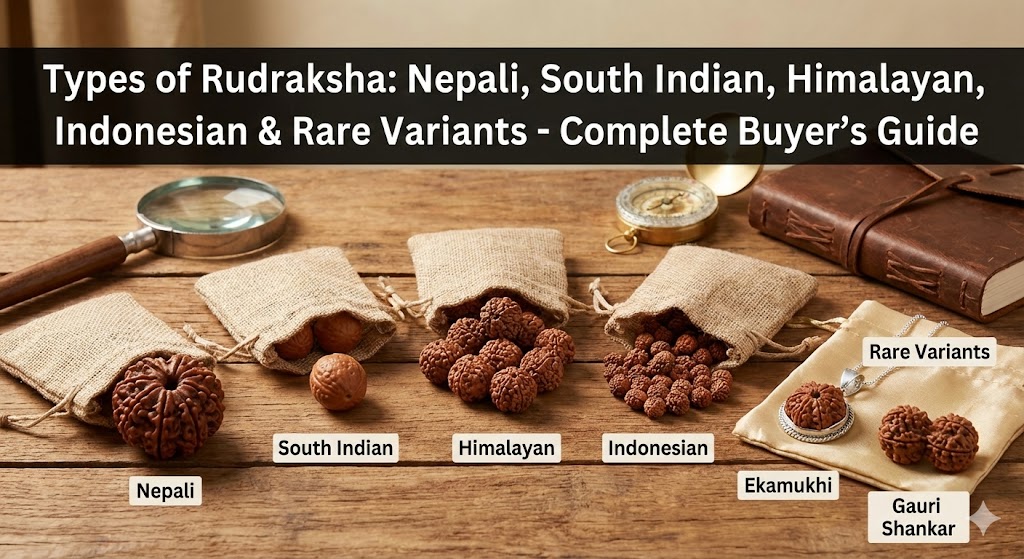
In this comprehensive guide, you will discover everything about the different types of Rudraksha based on their geographical origin. We will explore Nepali Rudraksha, Indonesian Rudraksha, South Indian Rudraksha, Himalayan Rudraksha, and rare collector variants. By the end of this article, you will know exactly which type suits your needs, how to identify authentic beads, and where to purchase them safely.
What Determines the Type of Rudraksha by Origin?
Rudraksha trees (Elaeocarpus ganitrus) grow in specific geographical regions with particular climatic conditions. The altitude, soil composition, humidity levels, and temperature of each region directly influence the physical characteristics of the beads produced. These environmental factors create distinct varieties that experts can identify based on appearance alone.
Key Factors That Differentiate Rudraksha Origins
- Altitude: Beads from higher altitudes (Nepal, Himalayan regions) tend to be larger with deeper Mukhi lines
- Climate: Cooler climates produce denser beads with more pronounced features
- Soil Composition: Mineral-rich Himalayan soil creates beads with distinctive coloration
- Tree Age: Older trees in traditional growing regions often produce higher quality beads
- Harvesting Methods: Traditional hand-harvesting preserves bead integrity better than mechanical methods
Nepali Rudraksha: The Premium Choice
Nepali Rudraksha beads are universally regarded as the highest quality and most sought-after variety in the world. Grown in the pristine foothills of the Himalayas in Nepal, these beads command premium prices and are preferred by serious spiritual practitioners, astrologers, and collectors worldwide.
Where Nepali Rudraksha Grows
The primary Rudraksha-growing regions in Nepal include the districts of Dang, Salyan, Rolpa, Pyuthan, and parts of the Terai region. These areas sit at altitudes between 1,000 to 3,000 meters above sea level, providing ideal conditions for the Elaeocarpus ganitrus tree to thrive. The combination of cool temperatures, adequate rainfall, and mineral-rich Himalayan soil creates the perfect environment for producing large, well-defined Rudraksha beads.
Characteristics of Nepali Rudraksha
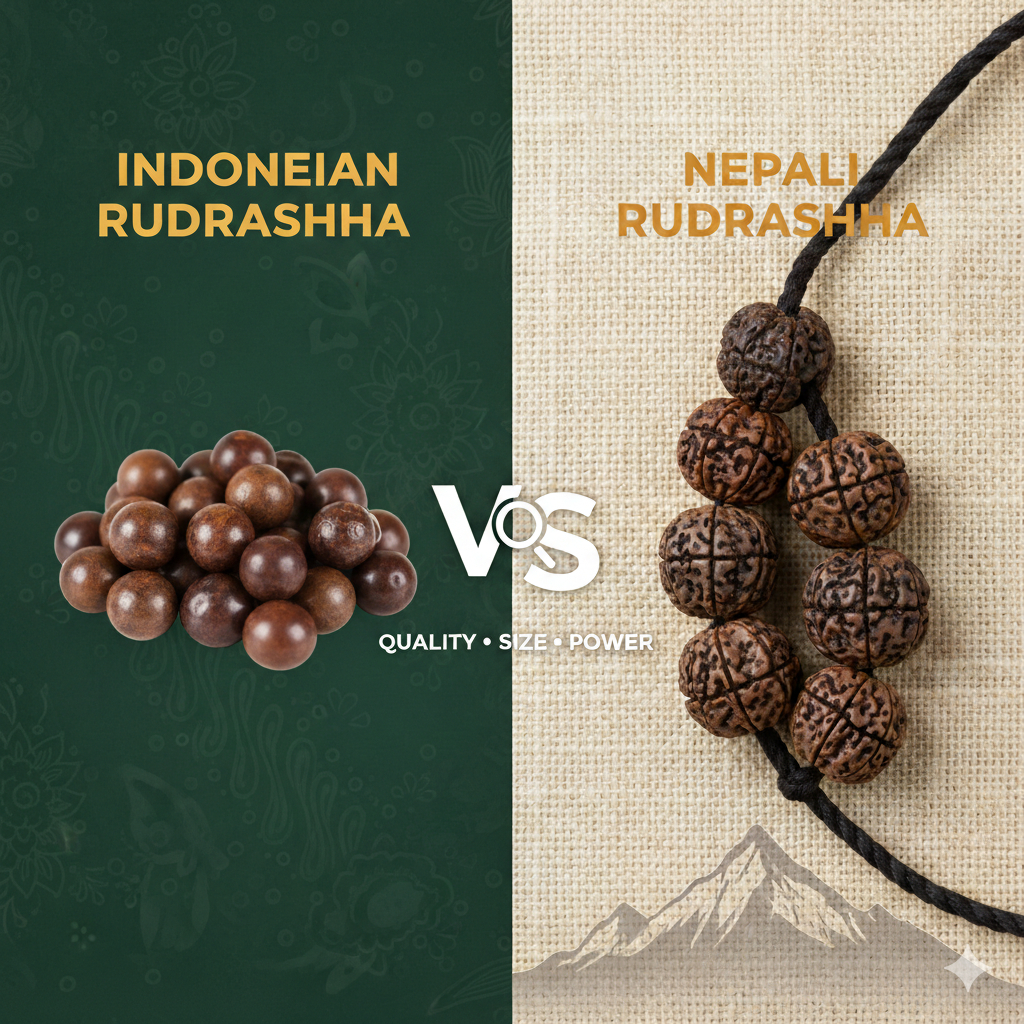
- Size: Typically ranges from 15mm to 35mm in diameter, significantly larger than other origins
- Mukhi Definition: Deep, well-defined lines running from top to bottom with clear separation
- Surface Texture: Rough, thorny surface with pronounced protrusions
- Color: Rich brown to reddish-brown, sometimes with grayish tones
- Weight: Heavier and denser compared to Indonesian varieties
- Natural Hole: Often has a natural hole, though many are drilled for stringing
Why Nepali Rudraksha Commands Premium Prices
Several factors contribute to the high value of Nepali Rudraksha. First, the limited growing region and difficult terrain make harvesting challenging. Second, the larger size and superior quality naturally command higher prices. Third, traditional beliefs hold that beads from the Himalayan region carry stronger spiritual energy due to their proximity to sacred mountains. Finally, the lower yield of high Mukhi varieties (particularly 1-3 Mukhi and 14+ Mukhi) from Nepal makes these beads extremely rare and valuable.
Best Uses for Nepali Rudraksha
Nepali Rudraksha is ideal for serious meditation practitioners, those seeking powerful astrological remedies, collectors building premium collections, and individuals who prioritize maximum spiritual potency. The larger size also makes Nepali beads excellent for single-bead pendants and statement malas (prayer bead necklaces).
Indonesian Rudraksha: Affordable Quality
Indonesian Rudraksha, also known as Java Rudraksha, represents the most widely available and affordable variety in the global market. Despite their lower price point, these beads offer genuine spiritual benefits and serve as an excellent option for beginners or those requiring large quantities for malas.
Growing Regions in Indonesia
Rudraksha trees flourish across several Indonesian islands, with the primary growing regions located in Java, Sumatra, Bali, Sulawesi, and Papua. The tropical climate with high humidity and volcanic soil creates optimal growing conditions. Indonesian plantations have scaled production significantly over the past few decades, making these beads readily available in international markets.
Characteristics of Indonesian Rudraksha
- Size: Generally smaller, ranging from 5mm to 18mm in diameter
- Mukhi Definition: Shallower lines compared to Nepali variety, but still clearly visible
- Surface Texture: Smoother surface with less pronounced thorns
- Color: Light brown to medium brown, sometimes with yellowish tones
- Weight: Lighter and less dense than Nepali beads
- Availability: Highly available across all Mukhi varieties, including rare higher Mukhis
Advantages of Indonesian Rudraksha
Indonesian Rudraksha offers several distinct advantages. The affordable pricing makes it accessible to everyone, regardless of budget. The smaller size is preferred by many for comfortable everyday wear and for creating traditional 108-bead malas. High Mukhi varieties (14-21 Mukhi) are more readily available from Indonesian sources, making rare beads more accessible. Additionally, the consistent supply ensures year-round availability.
Spiritual Efficacy of Indonesian Rudraksha
A common question among buyers is whether Indonesian Rudraksha is as spiritually effective as Nepali varieties. According to traditional scriptures and experienced practitioners, the spiritual benefits of Rudraksha depend primarily on authenticity and the number of Mukhis, not geographical origin. While Nepali beads may carry stronger electromagnetic properties due to their density, genuine Indonesian Rudraksha provides the same spiritual protection and benefits when properly energized and worn with devotion.
South Indian Rudraksha: The Regional Treasure
South Indian Rudraksha represents a lesser-known but equally authentic variety that grows in the Western Ghats and certain hilly regions of Southern India. These beads hold special significance for devotees in Tamil Nadu, Karnataka, Kerala, and Andhra Pradesh, where local traditions incorporate them into religious practices.
Growing Regions in South India
Rudraksha trees in South India are found primarily in the Western Ghats mountain range, including areas in the Nilgiri Hills, Kodagu (Coorg) district of Karnataka, parts of the Sahyadri ranges, and certain regions of Kerala. These trees grow at elevations between 500 to 2,000 meters, benefiting from the region’s tropical monsoon climate and biodiversity-rich ecosystem.
Characteristics of South Indian Rudraksha
- Size: Medium range, typically 10mm to 22mm in diameter
- Mukhi Definition: Moderate depth, falling between Nepali and Indonesian varieties
- Surface Texture: Moderately rough with visible thorns
- Color: Dark brown to blackish-brown, sometimes with reddish hues
- Availability: Limited production, primarily consumed locally
- Special Feature: Often associated with specific temple traditions and local rituals
Cultural Significance in South India
South Indian Rudraksha holds particular importance in the Shaiva traditions of Tamil Nadu and Karnataka. Many ancient temples in these regions prescribe locally-sourced Rudraksha for specific rituals and offerings. The beads from areas near sacred Shiva temples are considered especially potent by local devotees. This regional significance makes South Indian Rudraksha valuable for those following specific South Indian spiritual lineages.
Himalayan Rudraksha: Sacred Seeds from the Roof of the World
Himalayan Rudraksha refers to beads sourced from the broader Himalayan belt, including parts of India (Uttarakhand, Himachal Pradesh, Sikkim), Bhutan, and Tibet. While often grouped with Nepali Rudraksha due to similar characteristics, Himalayan beads from Indian regions have their own distinct qualities and spiritual associations.
Growing Regions Across the Himalayas
In India, Rudraksha trees grow in the Garhwal and Kumaon divisions of Uttarakhand, parts of Himachal Pradesh near Kangra and Mandi, the lower hills of Sikkim, and certain areas of Arunachal Pradesh. These regions share similar altitude ranges (1,500-3,000 meters) and climatic conditions with Nepal, producing beads of comparable quality.
Characteristics of Himalayan Rudraksha
- Size: Large, comparable to Nepali variety (15mm to 30mm)
- Mukhi Definition: Deep and well-defined, similar to Nepali beads
- Surface Texture: Rough and thorny with prominent features
- Color: Medium to dark brown with occasional grayish tones
- Spiritual Association: Connected to sacred pilgrimage sites like Kedarnath, Badrinath
- Availability: Limited and seasonal, often sold through local temple trusts
Sacred Associations of Himalayan Rudraksha
Rudraksha beads from Indian Himalayan regions carry special significance due to their proximity to sacred Shiva pilgrimage sites. Beads sourced from areas near Kedarnath, one of the twelve Jyotirlingas, or from the forests around Haridwar and Rishikesh, are considered particularly auspicious. Many ashrams and spiritual centers in these regions offer locally-sourced Rudraksha to devotees, maintaining the sacred connection between the beads and the holy land.
Rare Rudraksha Variants: Collector’s Guide
Beyond the standard varieties categorized by geographical origin, several rare Rudraksha variants exist that are prized by collectors and advanced spiritual practitioners. These rare beads command exceptional prices and require careful authentication before purchase.
Gauri Shankar Rudraksha
Gauri Shankar Rudraksha is a naturally joined pair of two Rudraksha beads, representing the divine union of Lord Shiva (Shankar) and Goddess Parvati (Gauri). This rare formation occurs when two fruits grow together on the tree, creating a fused bead. Authentic Gauri Shankar beads are highly valued for improving relationships, marital harmony, and balancing masculine and feminine energies. The two joined beads can have varying Mukhi counts, with the most valued combinations being those where both beads are clearly defined.
Garbh Gauri Rudraksha
This extremely rare variant features a smaller Rudraksha bead naturally embedded within a larger one, symbolizing a mother carrying a child. The Garbh Gauri is associated with fertility, motherhood, and protection of children. Authentic specimens are exceptionally rare and should be verified through X-ray examination, as many fakes exist in the market.
Trijuti Rudraksha
Trijuti Rudraksha consists of three naturally joined beads, representing the divine trinity of Brahma, Vishnu, and Mahesh (Shiva). Even rarer than Gauri Shankar, this variant is believed to bless the wearer with the combined grace of all three cosmic forces. Authentic Trijuti beads are museum-worthy pieces and command extremely high prices.
Savar Rudraksha
Savar Rudraksha features an unusual growth pattern where one bead appears to wrap around or encircle another. This rare formation is associated with protection and is believed to shield the wearer from all forms of negative energy. Like other rare variants, careful authentication is essential.
One-Mukhi Round (Nepal Origin)
The round One-Mukhi Rudraksha from Nepal is considered the rarest and most valuable of all Rudraksha beads. Unlike the half-moon shaped One-Mukhi from Sri Lanka (which is more commonly available), the perfectly round Nepali One-Mukhi is extraordinarily rare, with only a handful appearing in the market each year. Authentic specimens can cost thousands of dollars and require rigorous certification.
Higher Mukhi Variants (15-21 Mukhi)
- 15 Mukhi: Ruled by Lord Pashupatinath, extremely rare from Nepal
- 16 Mukhi: Associated with victory and protection, very limited availability
- 17 Mukhi: Connected to unexpected fortune, collector’s item
- 18 Mukhi: Ruled by Bhumi Devi (Earth Goddess), extremely rare
- 19 Mukhi: Associated with all material comforts, museum-grade rarity
- 20 Mukhi: Ruled by Brahma, exceptionally rare
- 21 Mukhi: Highest known Mukhi, associated with Lord Kubera, extremely valuable
Rudraksha Comparison Table: Origin-Based Analysis
The following comprehensive table compares all major Rudraksha types by origin, helping you make an informed purchasing decision:
| Feature | Nepali | Indonesian | South Indian | Himalayan (India) |
| Size Range | 15-35mm | 5-18mm | 10-22mm | 15-30mm |
| Mukhi Depth | Very Deep | Shallow | Moderate | Deep |
| Surface | Very Rough | Smooth | Moderately Rough | Rough |
| Color | Dark Brown | Light Brown | Blackish Brown | Medium Brown |
| Price Level | Premium | Budget-Friendly | Moderate | Premium |
| Availability | Moderate | High | Limited | Limited |
| Best For | Collectors, Serious Practitioners | Beginners, Malas | Regional Devotees | Pilgrims, Advanced Practitioners |
| Altitude Grown | 1000-3000m | Sea Level-1000m | 500-2000m | 1500-3000m |
How to Choose the Right Rudraksha by Origin
Selecting the right Rudraksha depends on your specific requirements, budget, and intended use. Here is a practical guide to help you make the best choice.
Choose Nepali Rudraksha If
- You want the highest quality beads with maximum potency
- Budget is not a primary constraint
- You prefer larger beads for single-pendant wear
- You are a serious collector building a premium collection
- You need Rudraksha for powerful astrological remedies
Choose Indonesian Rudraksha If
- You are a beginner starting your Rudraksha journey
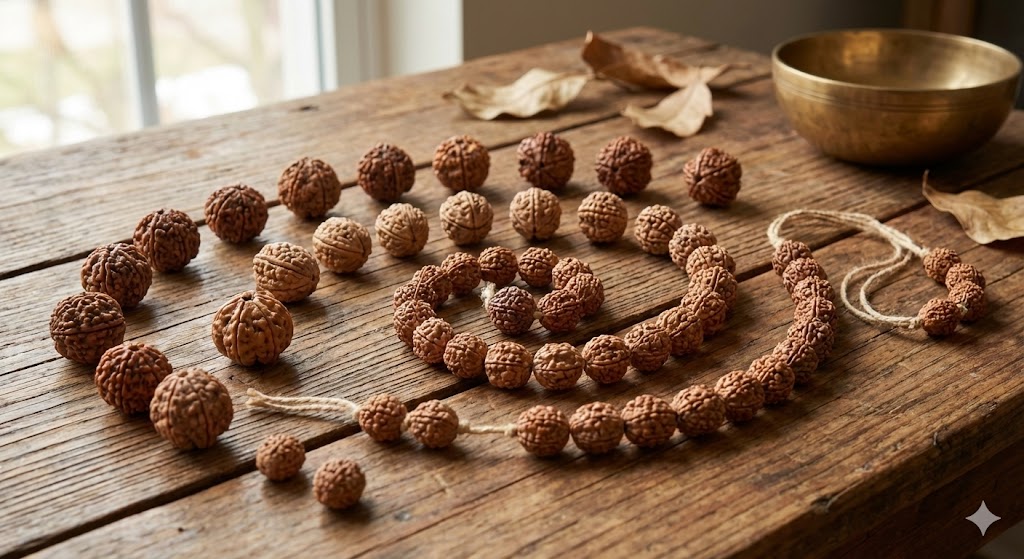
- You need multiple beads for a 108-bead mala
- Budget is a consideration
- You prefer smaller, lighter beads for comfort
- You want high Mukhi varieties (14-21) at accessible prices
Choose South Indian or Himalayan Rudraksha If
- You follow specific regional spiritual traditions
- You value beads from sacred pilgrimage locations
- You want quality similar to Nepali at potentially lower prices
- You have access to authentic local sources
Authenticating Rudraksha by Origin: Expert Tips
Identifying the authentic origin of Rudraksha requires experience and careful observation. Here are expert-level tips for verifying different varieties.
Visual Authentication Methods
- Size Verification: Compare with known size ranges; abnormally large Indonesian or small Nepali beads warrant suspicion
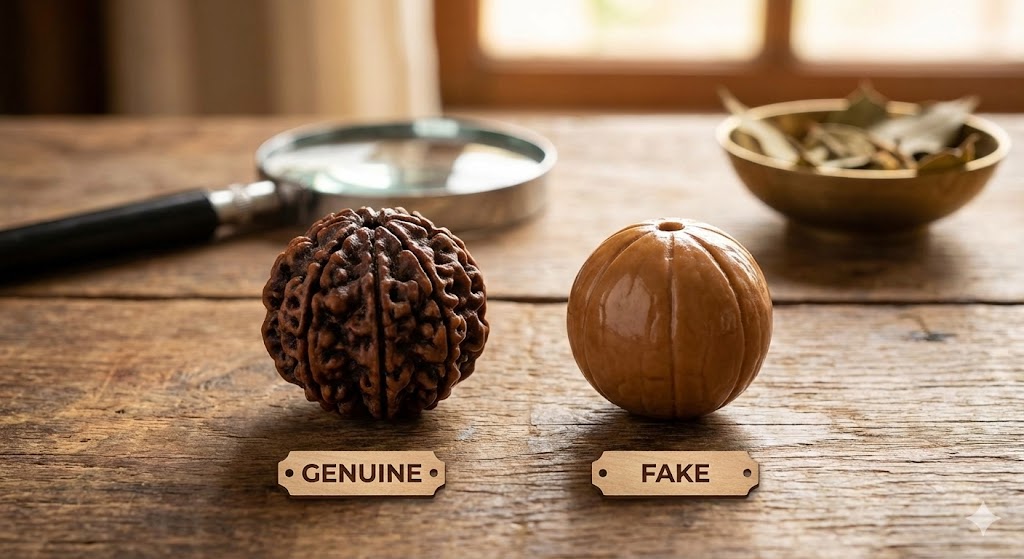
- Mukhi Line Analysis: Examine line depth and clarity; Nepali beads have distinctively deeper grooves
- Surface Texture Check: Feel the roughness; artificially enhanced Indonesian beads may feel unnaturally rough
- Color Assessment: Natural color varies by origin; uniform or artificial-looking colors indicate treatment
- Weight Test: Nepali beads are noticeably heavier than Indonesian of similar size
Laboratory Certification
For expensive purchases, particularly rare variants and high Mukhi beads, laboratory certification is essential. Reputable labs can verify authenticity, exact Mukhi count, and provide origin assessment through X-ray imaging and density analysis. Always request certification from recognized testing facilities when purchasing premium Rudraksha.
Caring for Different Types of Rudraksha
Proper maintenance ensures your Rudraksha beads remain effective and last for generations. Different origins may require slightly different care approaches.
Universal Care Guidelines
- Oil your Rudraksha monthly with mustard, olive, or sandalwood oil
- Keep beads away from harsh chemicals, perfumes, and detergents
- Store in a clean, dry place when not wearing
- Remove before bathing with soap or swimming in chlorinated water
- Handle with clean hands, especially during rituals
Origin-Specific Care Tips
Nepali Rudraksha: Due to deeper grooves, use a soft brush during oiling to reach crevices. The rougher surface may catch on delicate fabrics, so consider how you wear them.
Indonesian Rudraksha: The smoother surface requires slightly less maintenance. However, lighter weight means they may need more frequent restringing if worn daily.
Rare Variants: Handle with extra care. Store separately in padded containers. For extremely rare pieces, consider display cases rather than regular wear.
Where to Buy Authentic Rudraksha by Origin
Finding reliable sources for authentic Rudraksha requires research and caution. Here are recommended purchasing channels for each origin type.
Trusted Sources by Origin
- Nepali Rudraksha: Temple trusts in Pashupatinath, established Kathmandu dealers, certified exporters
- Indonesian Rudraksha: Direct from Java plantations, certified Indonesian exporters, established online stores
- South Indian Rudraksha: Temple shops in Rameswaram, local dealers in Karnataka and Tamil Nadu
- Himalayan Rudraksha: Ashram shops in Haridwar and Rishikesh, government-recognized cooperatives
- Rare Variants: Established dealers with verifiable credentials, auction houses, certified collectors
Red Flags When Purchasing
- Prices significantly below market rates
- Sellers unwilling to provide certification
- Claims of unlimited stock of rare varieties
- Pressure tactics or urgency-based selling
- No return or exchange policy
Conclusion: Making Your Informed Choice
Understanding the different types of Rudraksha by geographical origin empowers you to make purchasing decisions aligned with your spiritual goals, preferences, and budget. Whether you choose the premium Nepali variety, the affordable Indonesian option, the regionally significant South Indian beads, the sacred Himalayan seeds, or venture into rare collector variants, each authentic Rudraksha carries genuine spiritual value.
Remember that authenticity matters more than origin. A genuine Indonesian Rudraksha offers more benefit than a fake Nepali one. Prioritize purchasing from reputable sources, request certification for expensive beads, and care for your Rudraksha properly to maintain its effectiveness for years to come.
For beginners, starting with authentic Five Mukhi Indonesian Rudraksha offers an accessible entry point. As your practice deepens, you can explore premium Nepali varieties or rare collector pieces. Whatever your choice, approach your Rudraksha with respect and devotion, and it will serve as a faithful companion on your spiritual journey.
Found this guide helpful? Share it with fellow spiritual seekers and help them make informed Rudraksha choices. Have questions about specific varieties? Leave a comment below!
Frequently Asked Questions About Rudraksha Types
Can I mix Rudraksha beads from different origins in one mala?
Yes, you can absolutely combine Rudraksha beads from different origins in a single mala. The spiritual properties are determined by the Mukhi count, not the geographical source. Many practitioners create malas using Indonesian beads with a Nepali guru bead (the larger bead at the center). However, for aesthetic consistency, some people prefer to keep all beads from the same origin.
Why do Nepali Rudraksha beads cost so much more than Indonesian ones?
Several factors contribute to the price difference. Nepali Rudraksha grows in limited mountainous regions with challenging harvesting conditions. The larger size means each tree produces fewer usable beads. Higher Mukhi varieties are exceptionally rare in Nepal. Additionally, traditional beliefs about superior spiritual potency from Himalayan regions drive demand. Indonesian plantations benefit from easier terrain, larger scale production, and tropical climate that supports higher yields.
Are there any Rudraksha varieties that grow outside Asia?
While the Elaeocarpus ganitrus species that produces traditional Rudraksha is native to Asia, related species exist in other tropical regions including Hawaii, Australia, and Fiji. However, these are not considered authentic Rudraksha in traditional practices. Some experimental cultivation has been attempted in other countries, but commercially and spiritually recognized Rudraksha comes exclusively from Nepal, Indonesia, India, and Sri Lanka.
How can I tell if a Nepali Rudraksha has been artificially enhanced to look better?
Some sellers artificially deepen Mukhi lines, polish surfaces, or dye beads to improve appearance and command higher prices. Signs of manipulation include unnaturally uniform color, excessively smooth surfaces where rough texture should exist, and Mukhi lines that look carved rather than natural. Authentic Nepali beads show natural variations and minor imperfections. When in doubt, seek laboratory testing or purchase only from reputable, certified sources.
Does the age of a Rudraksha bead affect its spiritual power?
Traditional beliefs suggest that older Rudraksha beads that have been worn and energized through years of practice may carry accumulated spiritual energy. However, freshly harvested and properly energized Rudraksha is equally effective for spiritual purposes. What matters most is the bead’s authenticity, proper energization through appropriate mantras, and consistent devotional practice. Very old beads may become brittle and require careful handling.
Is there a best time of year to purchase Rudraksha from specific origins?
Rudraksha harvesting follows seasonal patterns. In Nepal, the main harvest season runs from September to November. Indonesian harvesting occurs throughout the year due to the tropical climate, but peaks between July and October. Purchasing shortly after harvest season often means fresher stock. However, reputable dealers maintain quality inventory year-round. Spiritually, many prefer purchasing during Shravan month (July-August) or around Maha Shivaratri, though this is based on auspiciousness rather than availability.
Disclaimer: This article is for informational and educational purposes only. The information provided about Rudraksha benefits is based on traditional beliefs, spiritual texts, and cultural practices. Rudraksha should not be considered a substitute for professional medical advice, diagnosis, or treatment. Always purchase from reputable sources and verify authenticity through proper channels. Prices and availability mentioned are indicative and subject to market conditions.